
The S&P 500 had its worst day of July, as the first earnings reports from two Big Tech hyperscalers failed to reassure investors. Earnings themselves were not the problem; spending and evaporating free cash flow were. Both Alphabet and Tesla stood by their capital investment plans, while Alphabet raised its capex outlook by $15 billion to $205 billion. Meanwhile, free cash flow at both Alphabet and Tesla turned negative in the second quarter. For the latter, it is not a big deal, but for the former, it is.
It means Big Tech – that used to be capital light and cash heavy – is now turning capital heavy and cash light, increasingly relying on stock and bond issuance to finance additional AI spending at a time when interest rate expectations are rising.
The short end of the yield curve is moving higher on mounting inflation expectations and growing expectations of a more hawkish Federal Reserve (Fed). The long end of the curve—which is a more important benchmark for Big Tech's longer-term financing—is also pushing higher on expectations of structurally higher inflation, rising US government debt and, arguably, increased bond issuance from Big Tech itself. The sector has flooded the market with debt over the past year, and as always, when supply rises sharply, prices fall. In the bond market, lower prices mean higher yields.
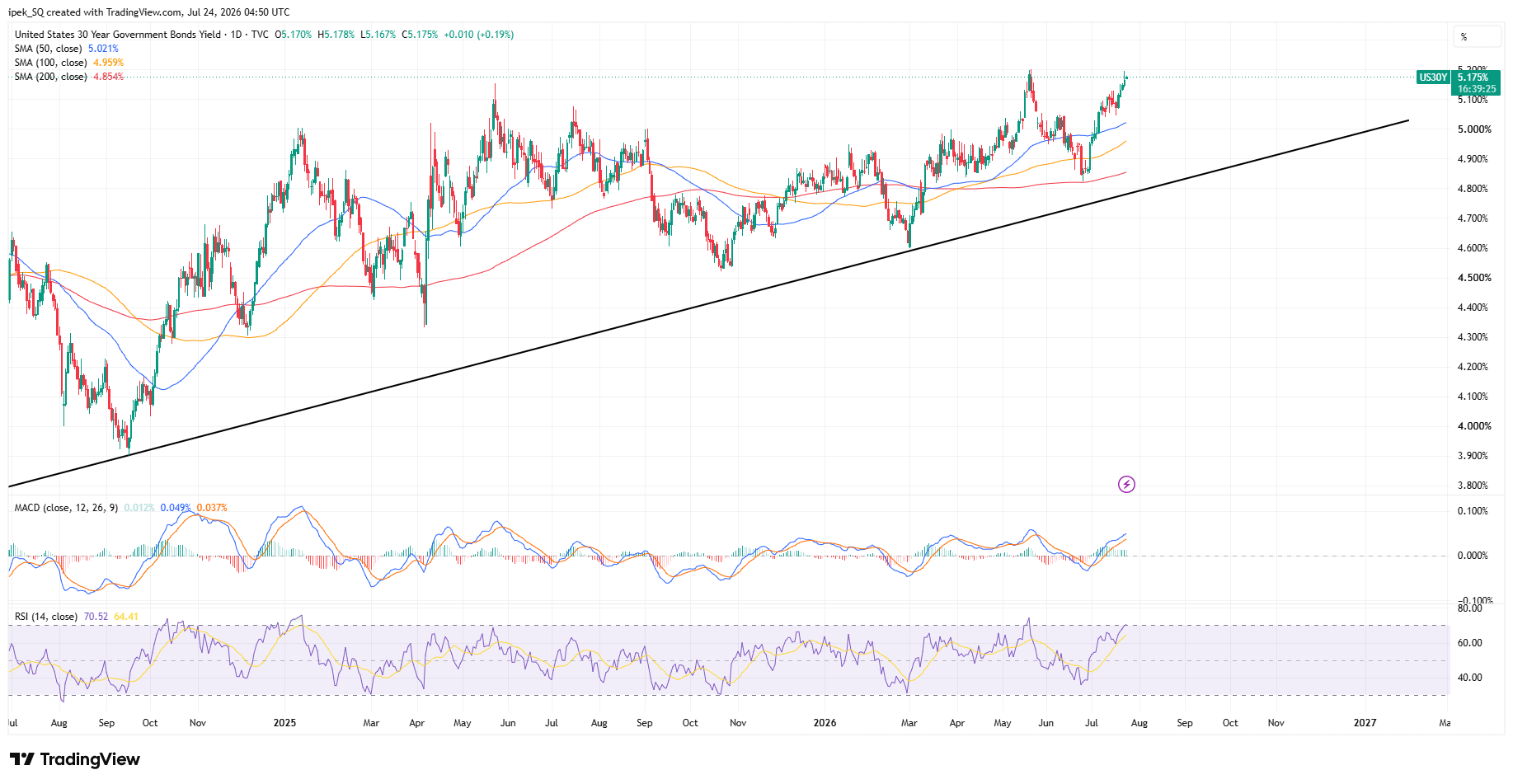
The US 30-year Treasury yield, for example, has remained above the 5% mark for 14 consecutive days and is now testing the 5.20% level, close to the peak reached in May during the first weeks of the Iran war. Rising oil prices are certainly playing an important role, but the prospect of sustained AI spending alongside deteriorating cash flow is clearly not helping.
As a result, the S&P 500 fell 1.21% following the Alphabet and Tesla earnings releases, while the Nasdaq 100 lost 1.87%. The Magnificent Seven led the decline, falling 4.63%. Alphabet plunged nearly 7%, breaking below its 200-day moving average. It closed the session more than 20% below its May peak, putting the stock on the doorstep of a bear market. Tesla, meanwhile, nosedived 14.5%. The stock has lost more than a third of its value since its December peak, yet bears may still see room for further downside, with the company's PE ratio still hovering around 320, suggesting that the valuation remains driven more by optimism surrounding Elon Musk's futuristic ambitions than by the company's underlying fundamentals.
In summary, the sight of negative free cash flow from two of the biggest AI spenders rattled the major US indices (along with rising energy prices), but semiconductors bucked the trend. VanEck's Semiconductor ETF gained 1.15%. Intel reported strong earnings and issued upbeat guidance after the closing bell, sending the stock up as much as 13% in after-hours trading. Those gains, however, quickly faded. Meanwhile, South Korea's Kospi index—the bellwether of the global chip trade—is down more than 5% today, suggesting that investors are beginning to look beyond AI spending plans and focus instead on how these companies will finance that spending, and whether they will ultimately be able to deliver the returns needed to justify it.
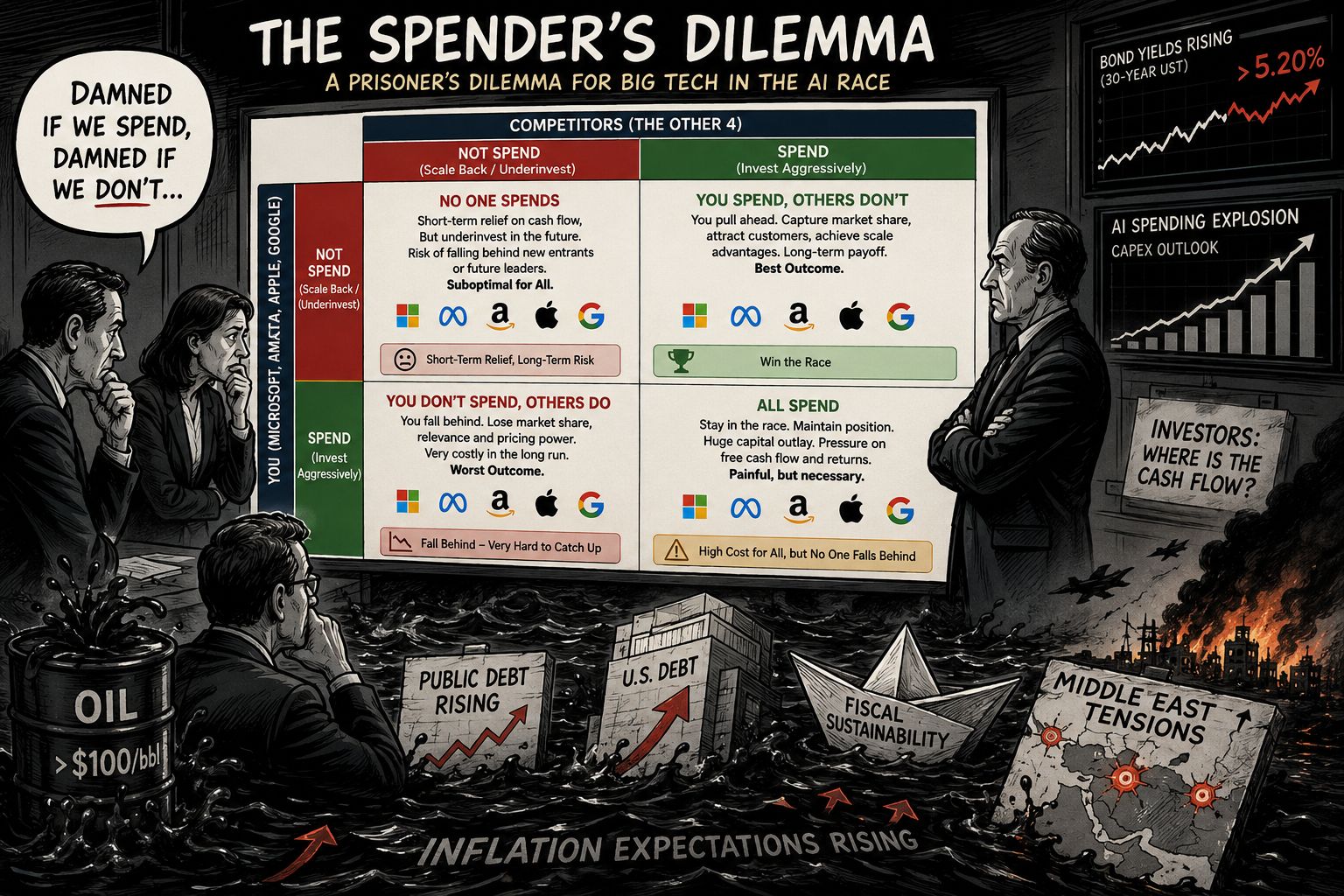
The Spender’s Dilemma
Next week, Microsoft, Meta, Amazon and Apple will step into the earnings confessional—or rather, the spending confessional. Investors will be far less interested in headline earnings than in how much these companies plan to spend, and how much free cash flow they have left after quarters of pouring billions into AI to stay in the race. The bigger the spending plans, the stronger the tailwind for chipmakers and the broader AI ecosystem, from data centre operators and server manufacturers to power suppliers and construction companies building the infrastructure behind the AI boom.
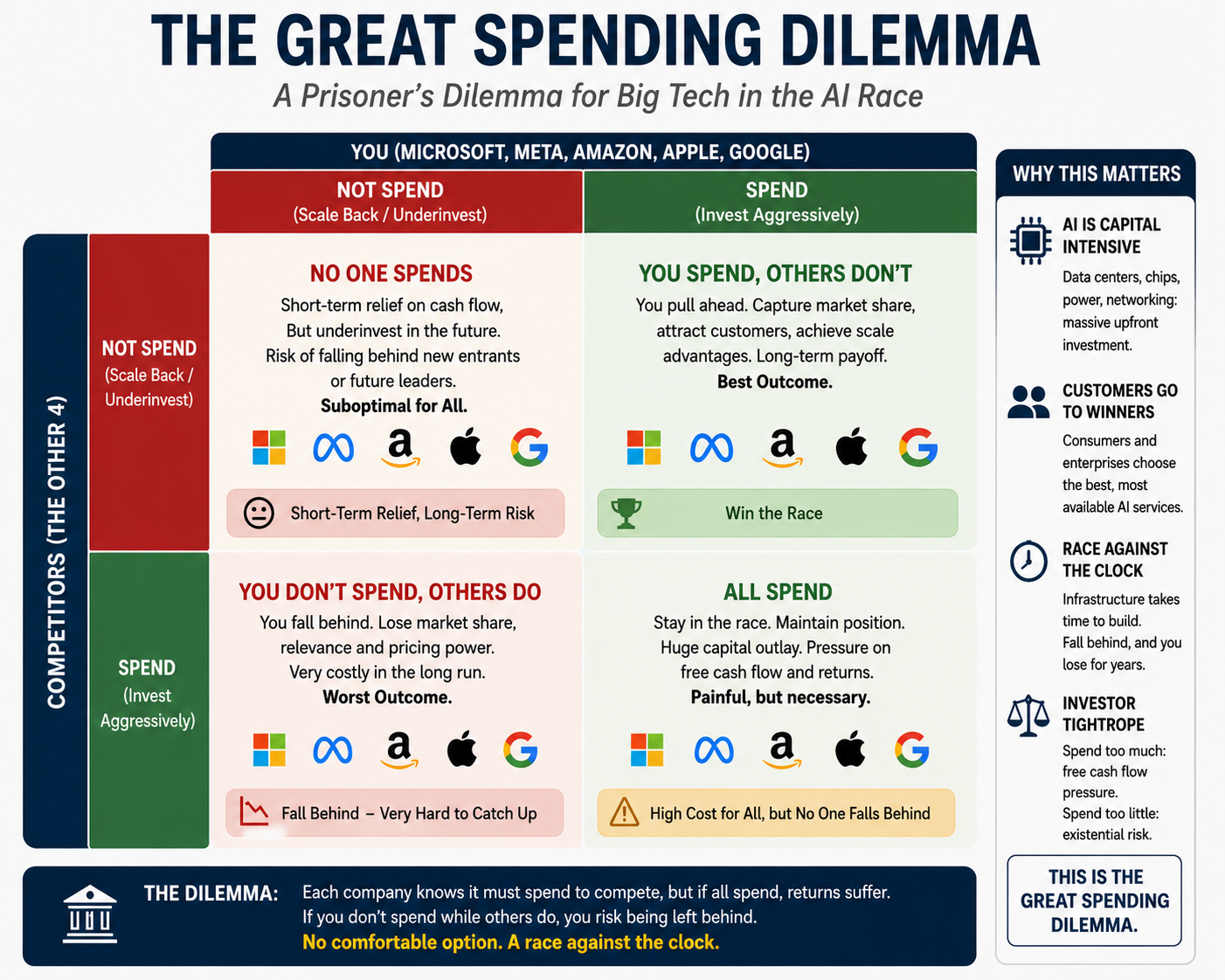
The good news is that, at this point, the game is clear. None of the Big Tech names can afford to scale back their investment plans. AI is an extraordinarily capital-intensive business: before you can sell AI services, you first have to build the infrastructure—data centres, chips, networking and power capacity—and that infrastructure comes with an enormous price tag. Fall behind in building it, and customers will migrate to competitors that didn't. Building AI infrastructure has become a race against the clock. It's a classic prisoner's dilemma—or, perhaps more fittingly for Big Tech, the Great Spending Dilemma. Spend aggressively and risk upsetting investors with shrinking free cash flow. Spend too little and risk falling irreversibly behind in the AI race. The only viable option is to keep spending, even if it is becoming the least attractive option for all of them – until investors say ‘enough’.
Brent soars past $100pb
On the macro front, Middle East tensions continue to escalate, pushing oil prices higher. US crude surged past $96 per barrel yesterday, while Brent climbed above $100 pb and is consolidating around that level this morning.
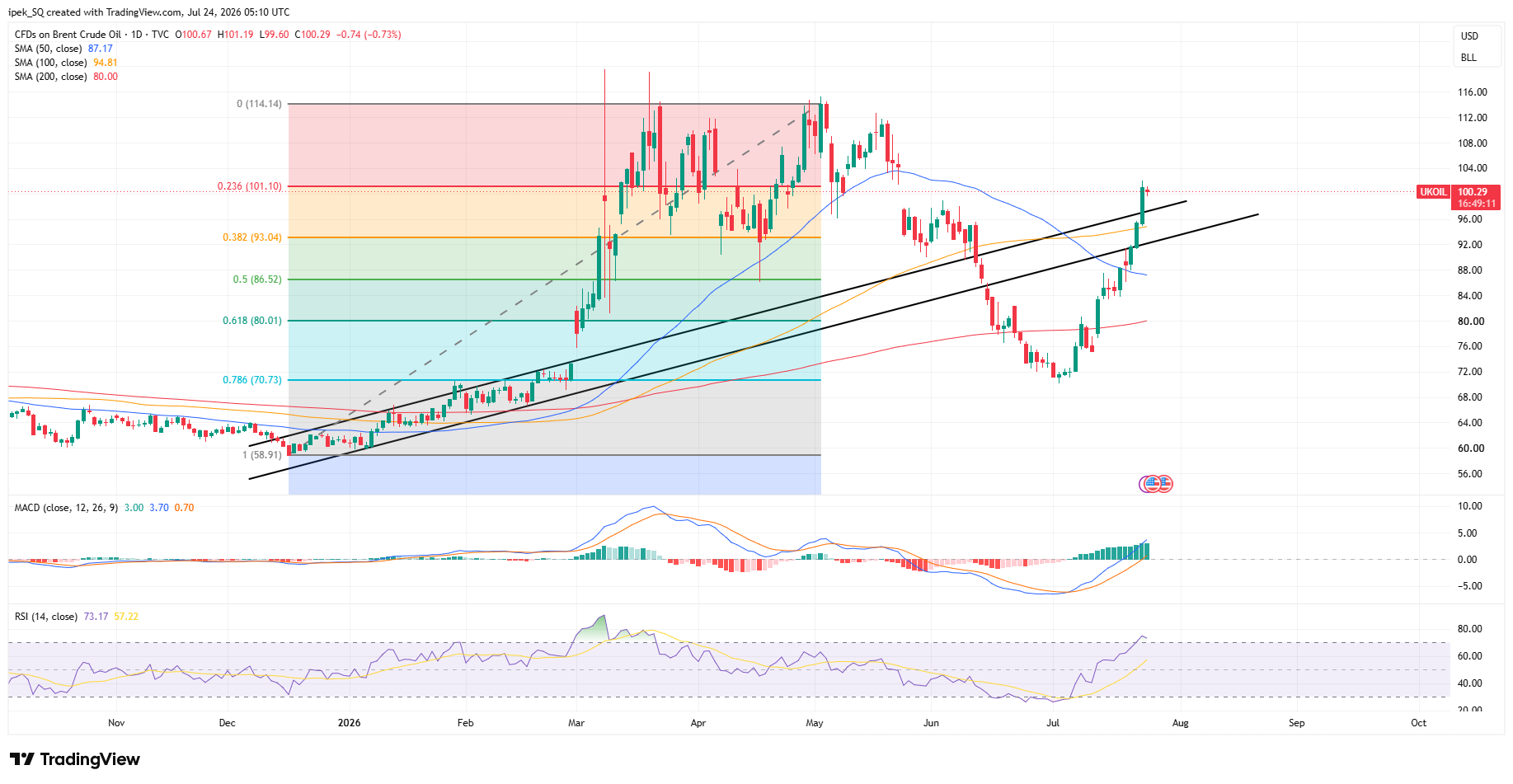
Rising oil prices are once again fuelling inflation expectations. The European Central Bank (ECB) left interest rates unchanged yesterday but kept the door open to a September hike if higher energy prices prove persistent enough to feed through to broader inflation. The EURUSD slipped below 1.14 following the announcement, as investors judged that another ECB rate hike would further weigh on the euro area's already fragile growth outlook.
Elsewhere, the Fed is expected to leave rates unchanged next week, but expectations for a more hawkish stance continue to build alongside rising energy prices—a combination that should continue to support the US dollar until the dust in the Middle East begins to settle.
The content of this website is for informational purposes only and does not constitute financial advice. All opinions expressed are solely my own and should not be considered as recommendations to buy, sell or hold any financial instruments. Readers should consult a qualified financial advisor before making any investment decisions.
With love,
Ipek Ozkardeskaya