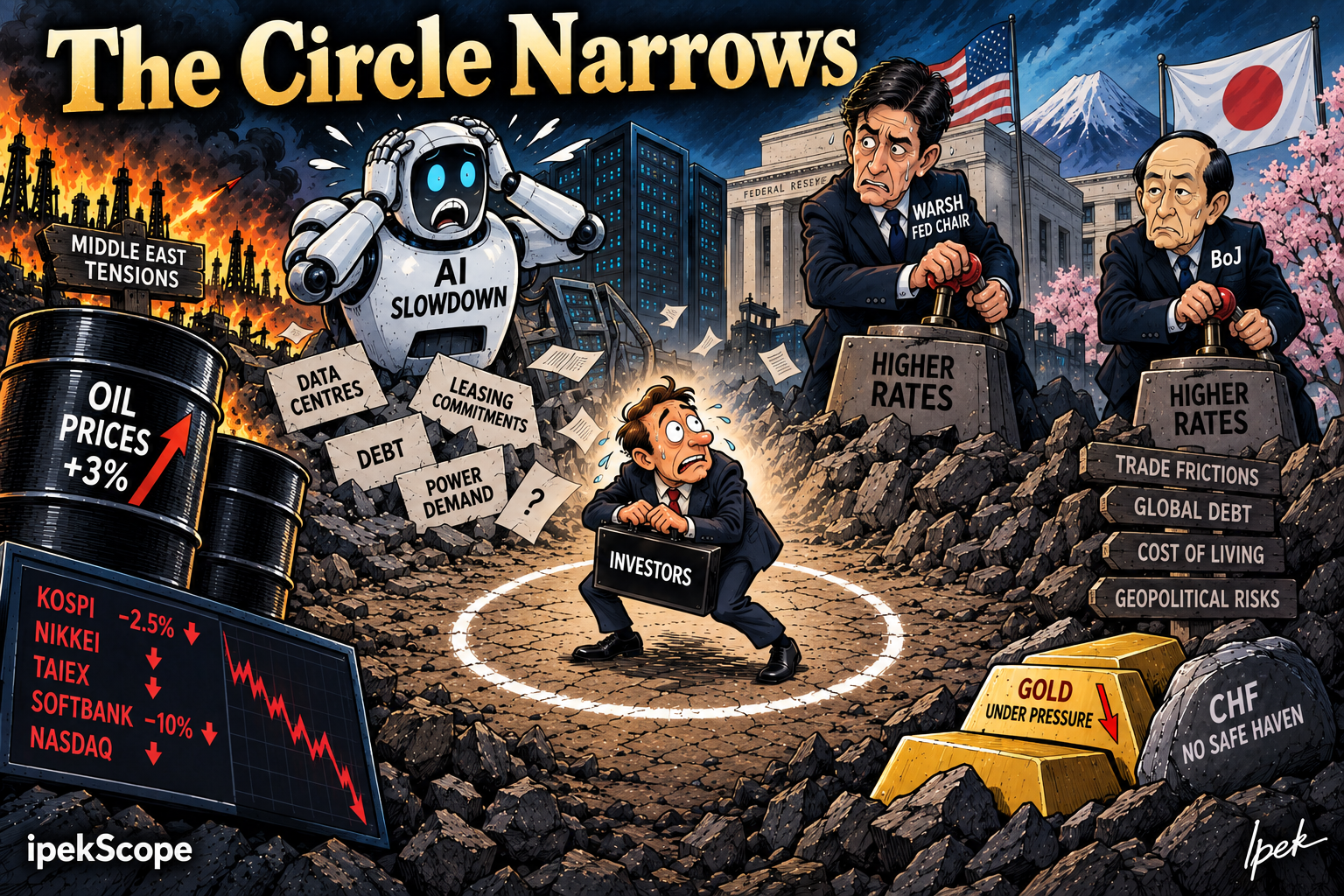

The week started with upward pressure on energy prices, US 10-year yield breaching the 5% mark and very uncomfortable questions regarding AI, and this time, it was not about the circular deals, financing capabilities, investor greed, earnings, the impact of AI on different sectors and businesses, the parabolic rise in market prices, PE ratios and so on. It was about the existential question of whether AI developments should happen at this speed.
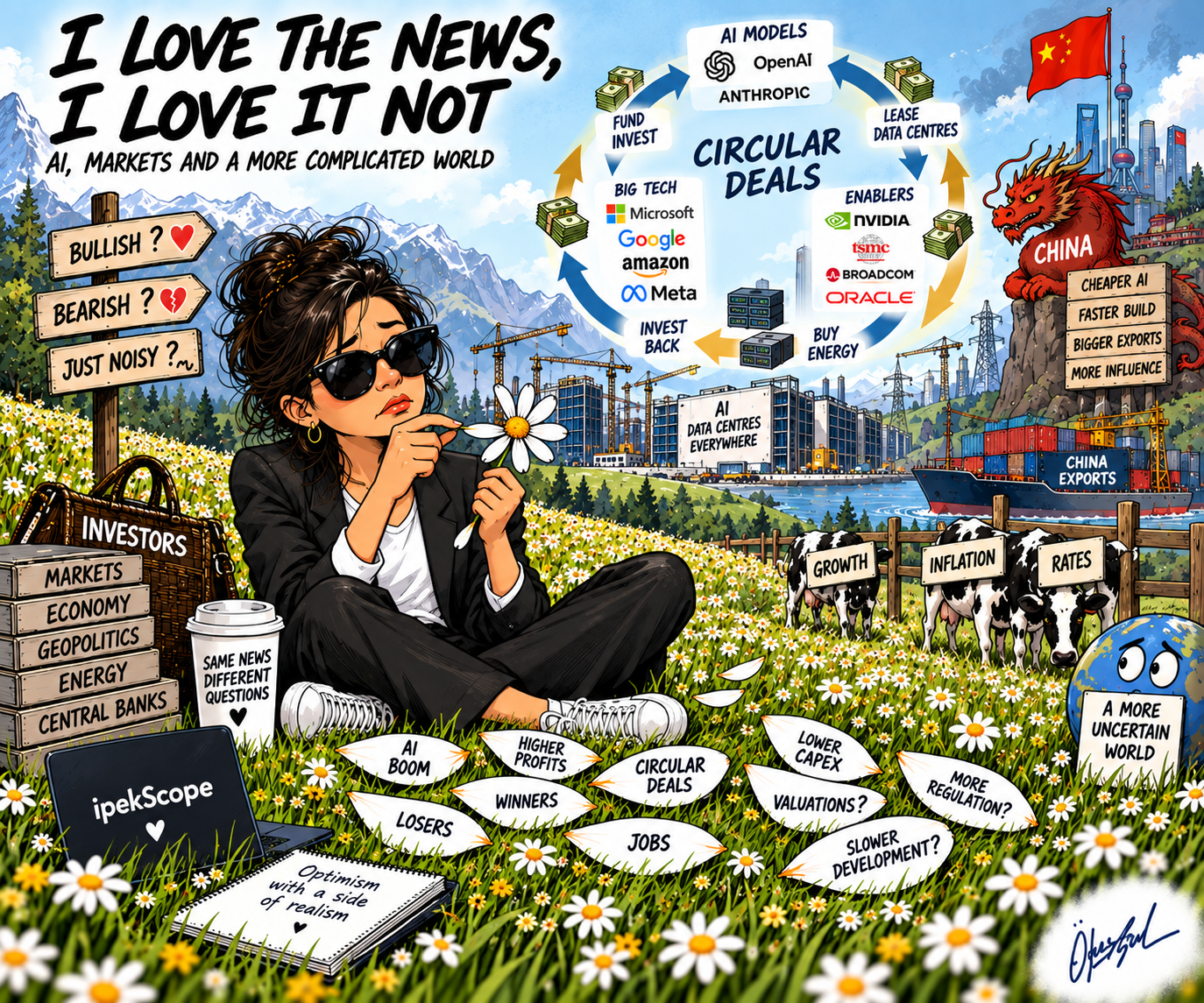
For the big winners of AI, the faster the progress can be monetised, the better for their investment returns. AI companies (the likes of OpenAI and Anthropic) received a lot of funding from investors and companies around the world. In return, they made huge commitments to lease data centres, which then made commitments to build these data centres and buy chips, energy and other raw materials from providers. Some of these AI enablers then invested back in the AI model providers themselves (I am looking at you, Nvidia!), so that worldly financing issues would not prevent them from growing and from needing more compute capacity, more chips, more energy and so on.
Alas, the risks that AI poses to humanity seem to be worrying AI leaders more than how fast they can turn their investments into revenue – and no matter the ethics behind the thinking, that is a problem for some investors.
Love the news, love it not
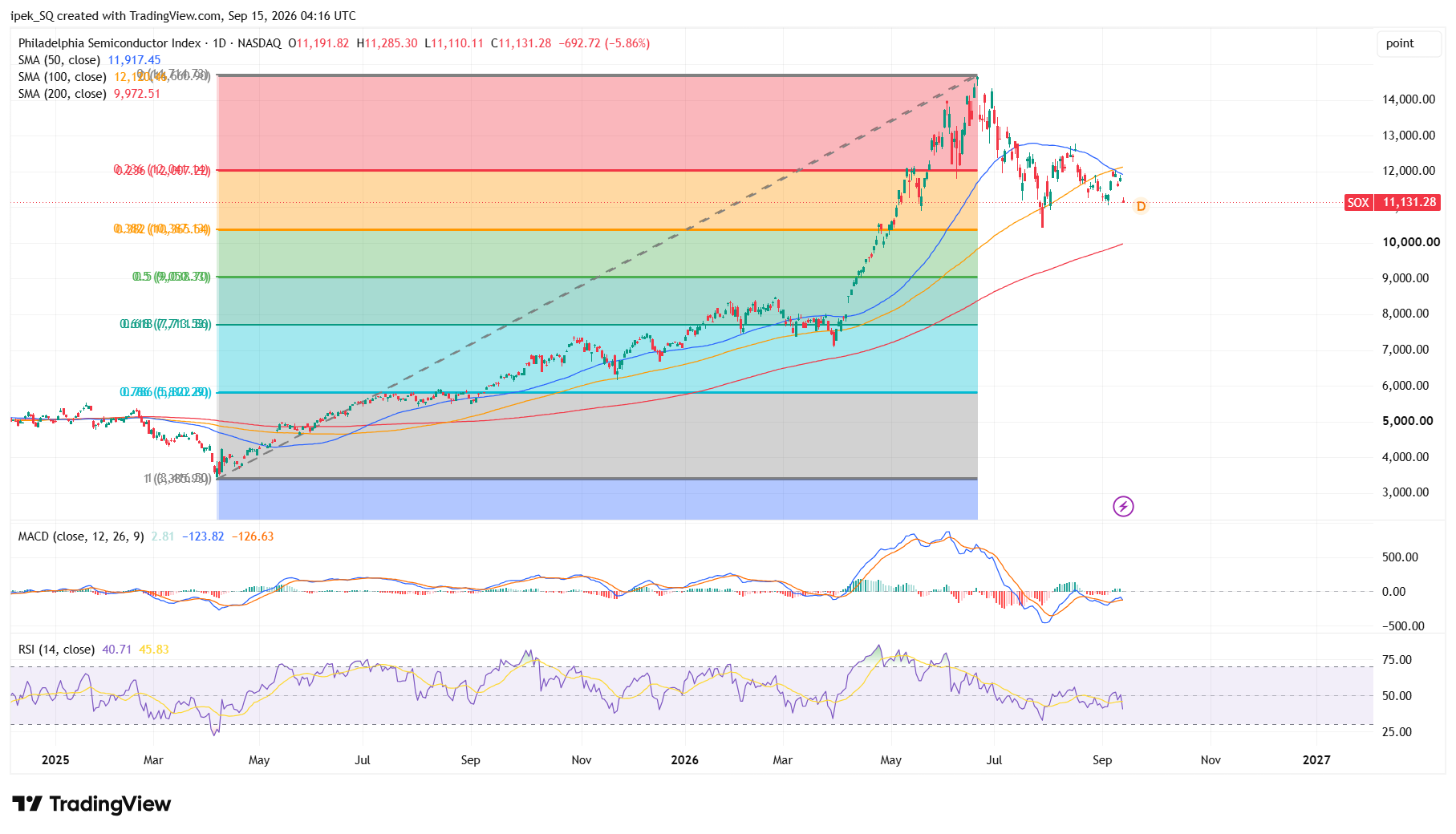
Unsurprisingly, the market reaction was a swift selloff in AI winners. Philadelphia’s semiconductor index tanked nearly 6%.
Those sitting on the other side of the table did very well, however. The likes of Google and Meta rallied on the news, as a slowdown in frontier models would justify slower spending (a thing that investors would love to hear now that most free cash is gone), and a slower pace of development would also give these companies time to monetise what they have already built.
Software stocks couldn’t be happier. The iShares Expanded Tech-Software Sector ETF jumped 5% for obvious reasons.
Whether this is just a blip or will develop into a broader theme remains to be seen.
From a macro perspective
The good news is that AI adoption at the industry level won’t necessarily decelerate with slower progress in frontier models. Existing AI capabilities have been enough to give a boost to growth and productivity across global economies, and adoption will continue as companies and economies seek help from the technology to increase productivity and decrease costs.
Another piece of good news is that China somewhat agrees with the idea that AI risks should be taken seriously – although we all know that China had better keep up its own pace of development to catch up with Western AI hubs in this ultra-complicated geopolitical context.
The bad news, however, is that slower model development will undoubtedly slow AI investment – which, by some estimates, accounted for around half of US economic growth in the first half of 2025 – at a time when the Western world needs AI-led growth to keep its head above water. Trade tensions, wars, disrupted trade routes, spiking energy prices, rising inflationary pressures and rising borrowing costs could only be neutralised by something very powerful – like AI.
Hitting the brakes could provide a negative backdrop for cyclical sectors (and jobs) – particularly industrials and consumer discretionary.
From a central bank perspective
For a central bank, slower economic growth should have a cooling effect on inflation (and hence on the monetary policy outlook). But today, a demand-led pullback in inflation would perhaps be insufficient to reverse broader inflationary pressures stemming from an external energy supply shock, rather than from excess demand. And AI-led productivity gains are supposed to be disinflationary. That’s a view that Warsh has been defending!
So it’s in this very complicated macro and micro context that the Federal Reserve (Fed) starts its two-day policy meeting today. The decision will land tomorrow, and we don’t really know what it will be.
Yes, activity in Fed funds futures assesses a great chance – 93.5% – of a 25bp hike this week, but that’s what investors are positioned for. It is not what the Fed said it would do.
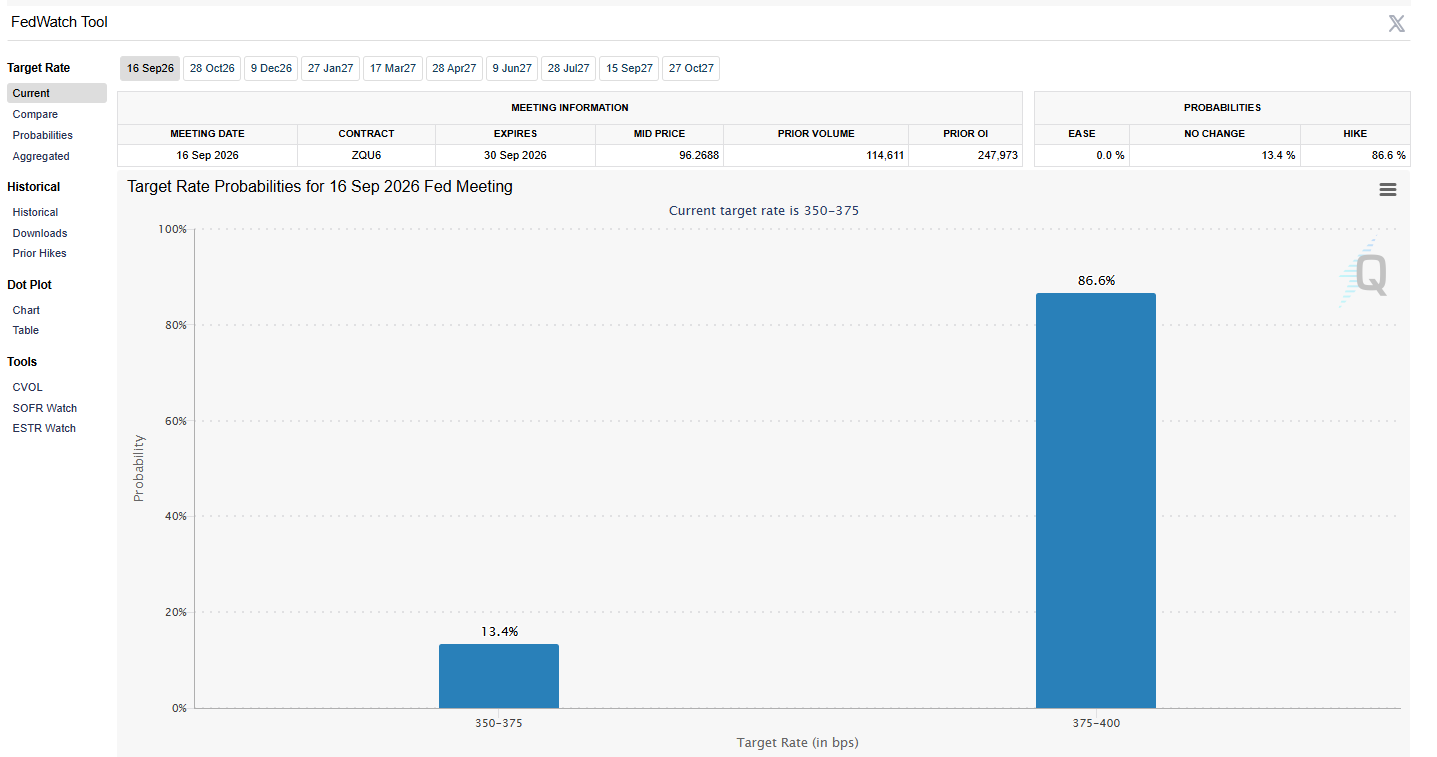
The Fed – under the new Chair Kevin Warsh – stopped guiding markets towards a policy decision. Kevin Warsh scrapped the idea of forward guidance and left investors guessing about what the Fed’s next move will be. As such, implied probabilities from activity in Fed funds futures now reflect ‘what would you do, how would you react to the data and the broader economic/geopolitical factors, if you were in Fed officials’ shoes?’, knowing that you won’t be in the room voting on the rate decision. Fed officials will, and the decision could be different from what you expect. That’s a risk to keep in mind at this – and future – FOMC meetings.
I don’t think that Kevin Warsh is bold enough to go against market expectations, and I think that we will get the 25bp hike this Wednesday (because if the Fed kept rates unchanged, we could see the US dollar tank across the board and yields spike further on exploding inflation bets, while markets fall – no one needs that). It’s better to deliver that 25bp hike and avoid further trouble across markets – and explain to the Big Boss that adding a market selloff to the mix wouldn’t be politically great when energy prices are this high and borrowing costs are biting hard. It would just steepen the yield curve and make things worse!
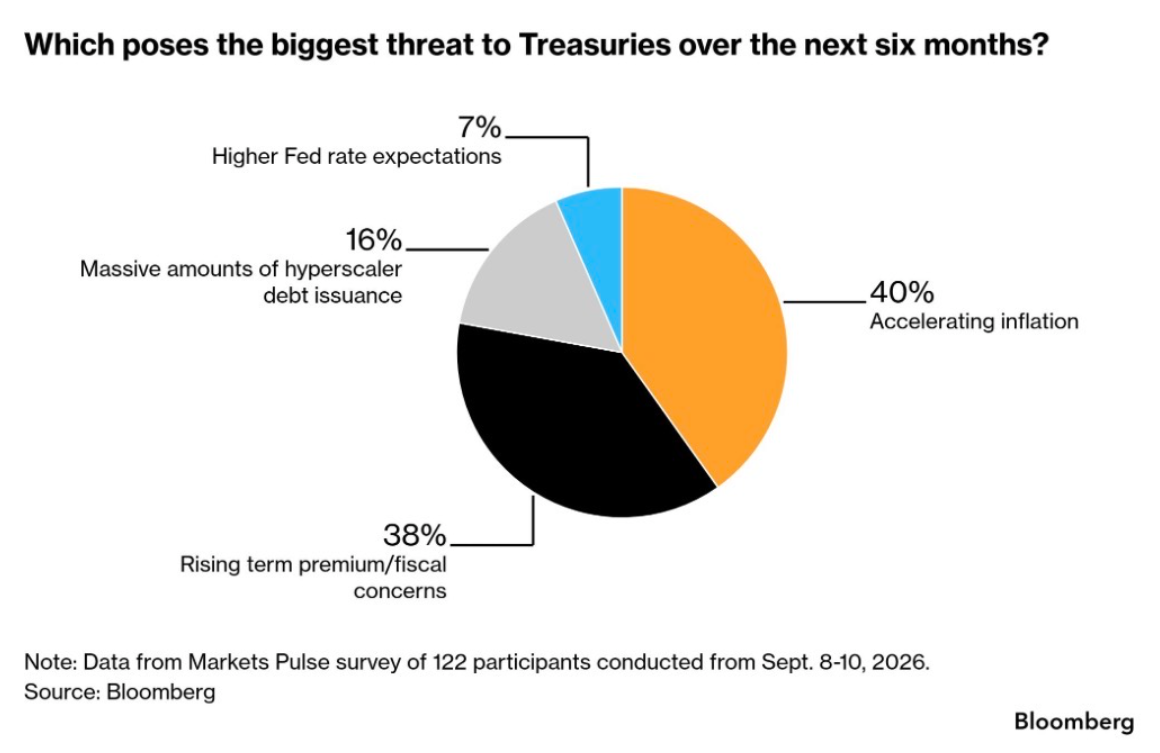
According to a recent Bloomberg survey, Fed hikes are not even the biggest worry for bond investors. Only 7% of respondents said that higher Fed rate expectations were the biggest threat to Treasuries over the next six months. The biggest threat is accelerating inflation (40%), followed by a rising term premium due to FISCAL CONCERNS (38%), while some 16% also pointed to the massive amounts of hyperscale debt issuance coming to compete with government bonds.
And yes, we are heading towards that point where Google’s debt looks almost as safe as the US government’s... And it’s not just a gut feeling. In fact, Alphabet and the US government now carry the same AA+ rating at S&P. Moody’s still rates Uncle Sam one notch higher – but we're getting remarkably close to a world where lending to Google and lending to the US government sit in almost the same credit neighbourhood.
So what do you buy in this environment?
Probably less of what depends on cheap money and aggressive growth assumptions, and more of what generates cash today. Energy and mining companies remain interesting in a world of expensive commodities and persistent inflation, while companies with strong balance sheets, low leverage and solid free cash flow should be better positioned to weather higher borrowing costs.
And if the AI story becomes less about building the next gigantic model and more about monetising what already exists, the next opportunity may increasingly lie with the users of AI rather than its builders. In this context, Big Tech could come back into the frame if capex slows and rising revenues help these companies rebuild their cash reserves.
The content of this website is for informational purposes only and does not constitute financial advice. All opinions expressed are solely my own and should not be considered as recommendations to buy, sell or hold any financial instruments. Readers should consult a qualified financial advisor before making any investment decisions.
With love,
Ipek Ozkardeskaya