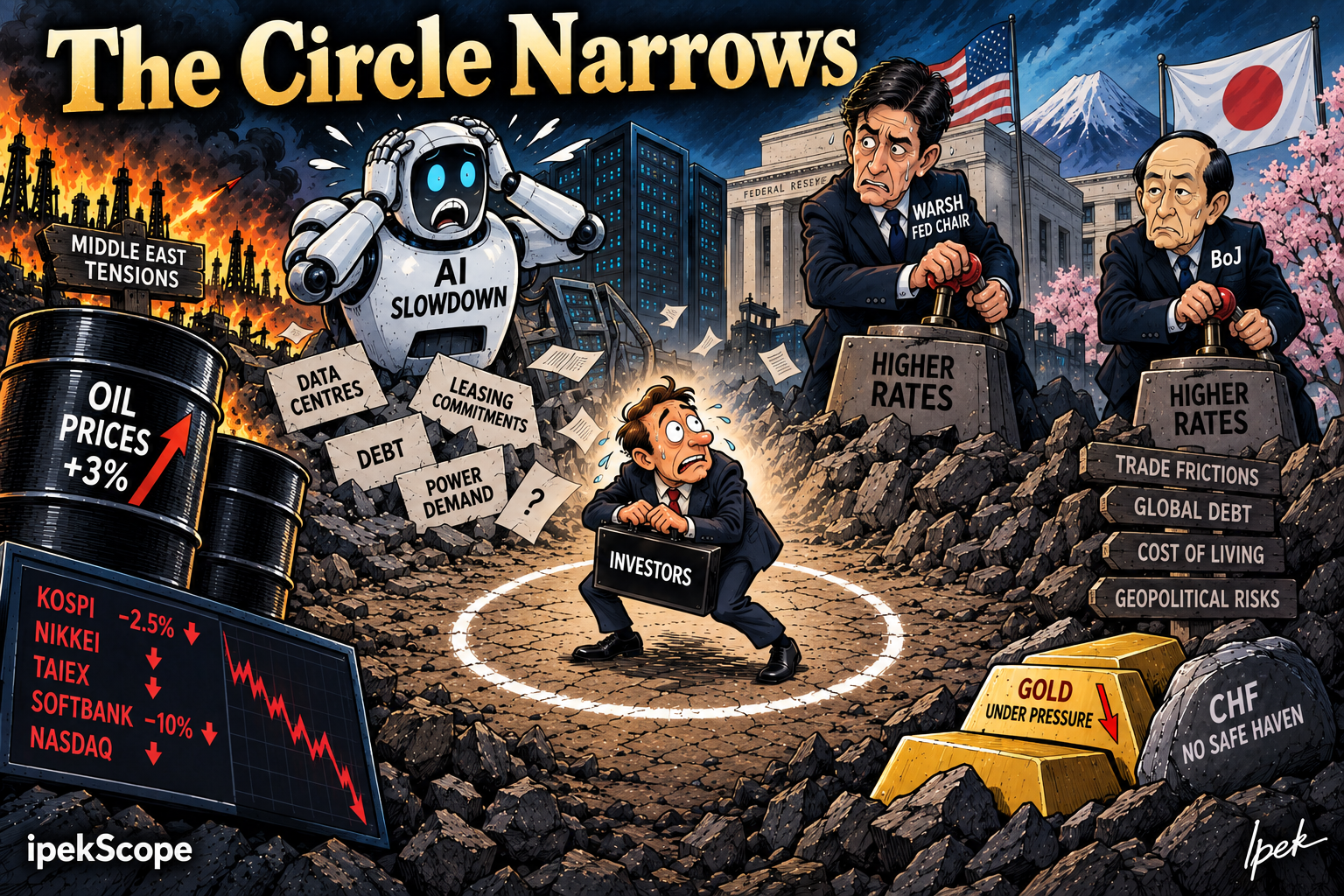

The week starts with a surprise development in the Middle East – or rather, the lack thereof. The US has halted its attacks on Iran since Friday without explaining why, and Iran has said it won't retaliate further. US crude kicked off the week with a more than 8% retreat, though it has pared a small part of those losses as traffic through the Strait of Hormuz remains near a standstill and Yemeni Houthis reportedly targeted Saudi Aramco's facilities.
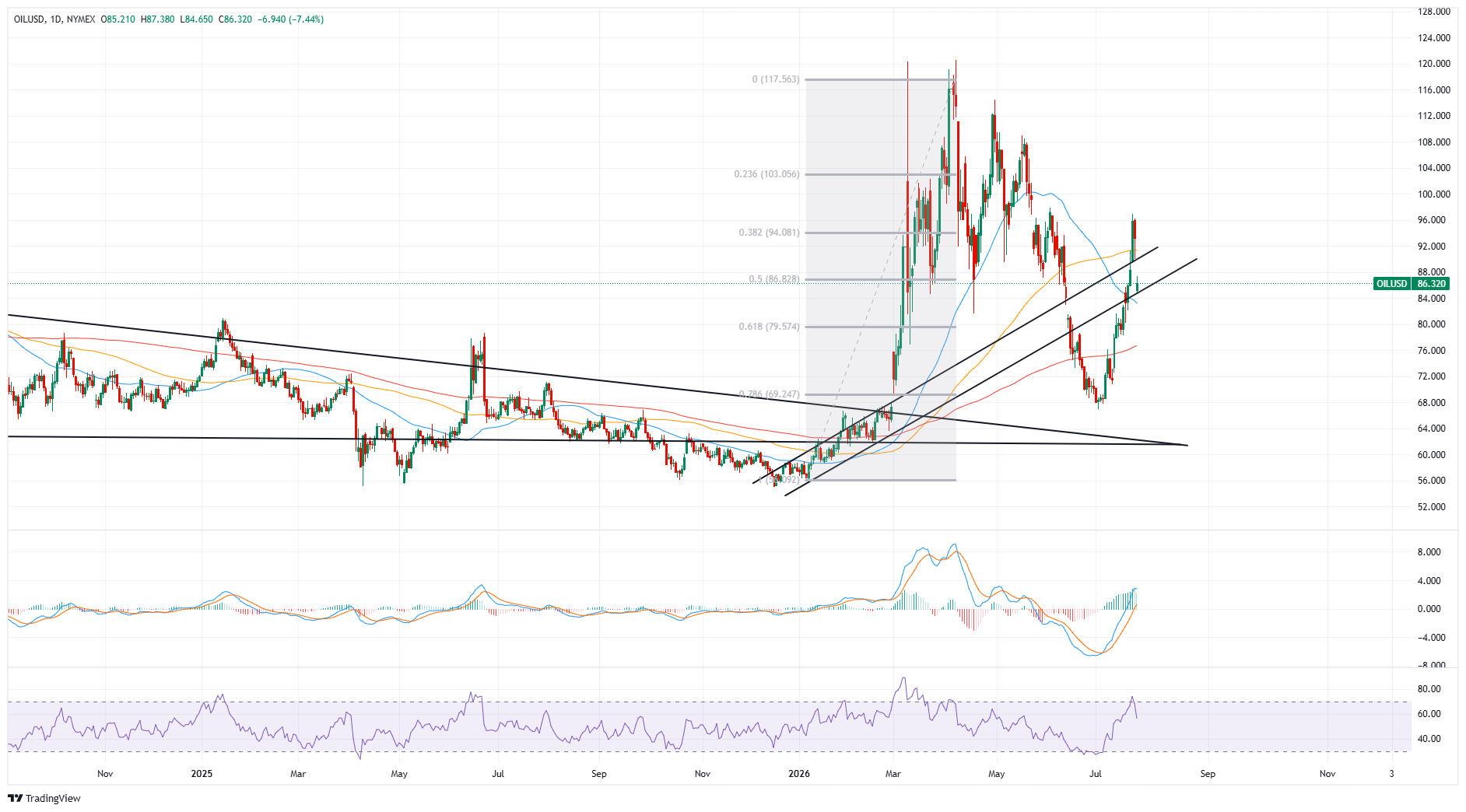
The geopolitical situation remains highly uncertain and risks are still tilted to the upside for oil prices. But the calmer weekend and the pullback in energy prices this Monday are supporting bond demand in the early hours of the week. The Japanese 10-year yield is back below 2.80%, while the US 2-year yield, which reflects Federal Reserve (Fed) rate expectations, is down 5bp in Asia.
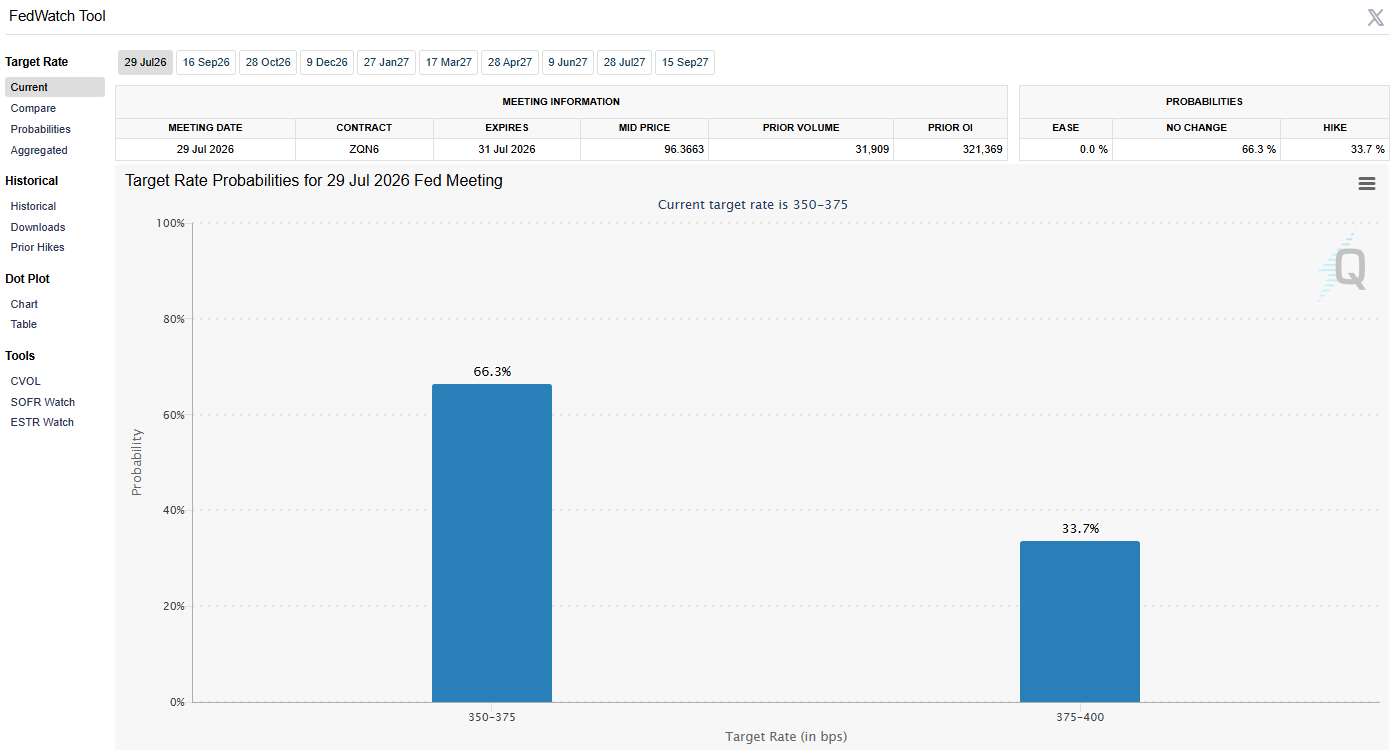
The Fed will meet this week and is expected to leave rates unchanged. Activity in Fed funds futures assigns around a two-thirds probability to that scenario. But because the Fed is changing its communication and guidance strategy under the new Chair, Kevin Warsh, a surprise 25bp hike this Wednesday wouldn't come as a huge surprise. The fact that the latest inflation figures came in softer than expected could encourage the Fed to kick the can down the road until September. But the fact that energy prices have been rising again, with no easy resolution in either the Middle East or Ukraine, suggests that the Fed will deliver that rate hike sooner rather than later. I still think September is the better time for action – the summer months tend to see thinner liquidity and amplified market reactions. But whatever the Fed does, the accompanying statement will likely remain cautious, hinting at multiple possible scenarios that will depend on macroeconomic and geopolitical developments, as well as incoming economic data.
Two other central banks will also decide this week: the Bank of England (BoE) and the Bank of Japan (BoJ). Both are expected to keep rates unchanged, but both will likely maintain a hawkish bias in the face of mounting inflationary pressures. The BoJ, especially, should make sure that its decision to stand still doesn't further hammer the Japanese yen, which is trading well beyond the previous pain threshold for the Japanese authorities – above 160 against the dollar. Last week, the pair tested the 164 level as the US dollar gained broadly on the re-escalation of Middle East tensions and rising oil prices. The Japanese know that throwing money at the problem isn't the answer, so it will be up to the BoJ to fix the mismatch between its policy rate – which today stands below 1% – while Japan's latest headline CPI reading came in at 1.7%.
Over in the UK, political developments add another layer of complexity to the BoE decision. There, too, the latest inflation figures came in soft enough to buy the BoE some time before announcing a rate hike, but the market fully prices in 75bp of tightening by mid-2027 – equivalent to three 25bp hikes over roughly the next year. Yet even that hawkish outlook doesn't make sterling more appealing to FX traders. The weak growth outlook offsets the potentially favourable rate differential – and I say "potentially" because other major central banks are also expected to adopt a more hawkish policy stance in the coming months to fight inflation, or at least ensure they don't fuel it further. And based on growth prospects, the Fed’s got the strongest hand for tightening, and the latter should continue to support the US dollar.
Bullish start to a busy week
On the equity front, investors are reacting positively to the pullback in oil prices. US and European futures are pointing to a positive start, the Japanese Nikkei is eking out a 0.72% gain at the time of writing, but the Korean Kospi is flat, pressured by a major IPO in Shanghai.
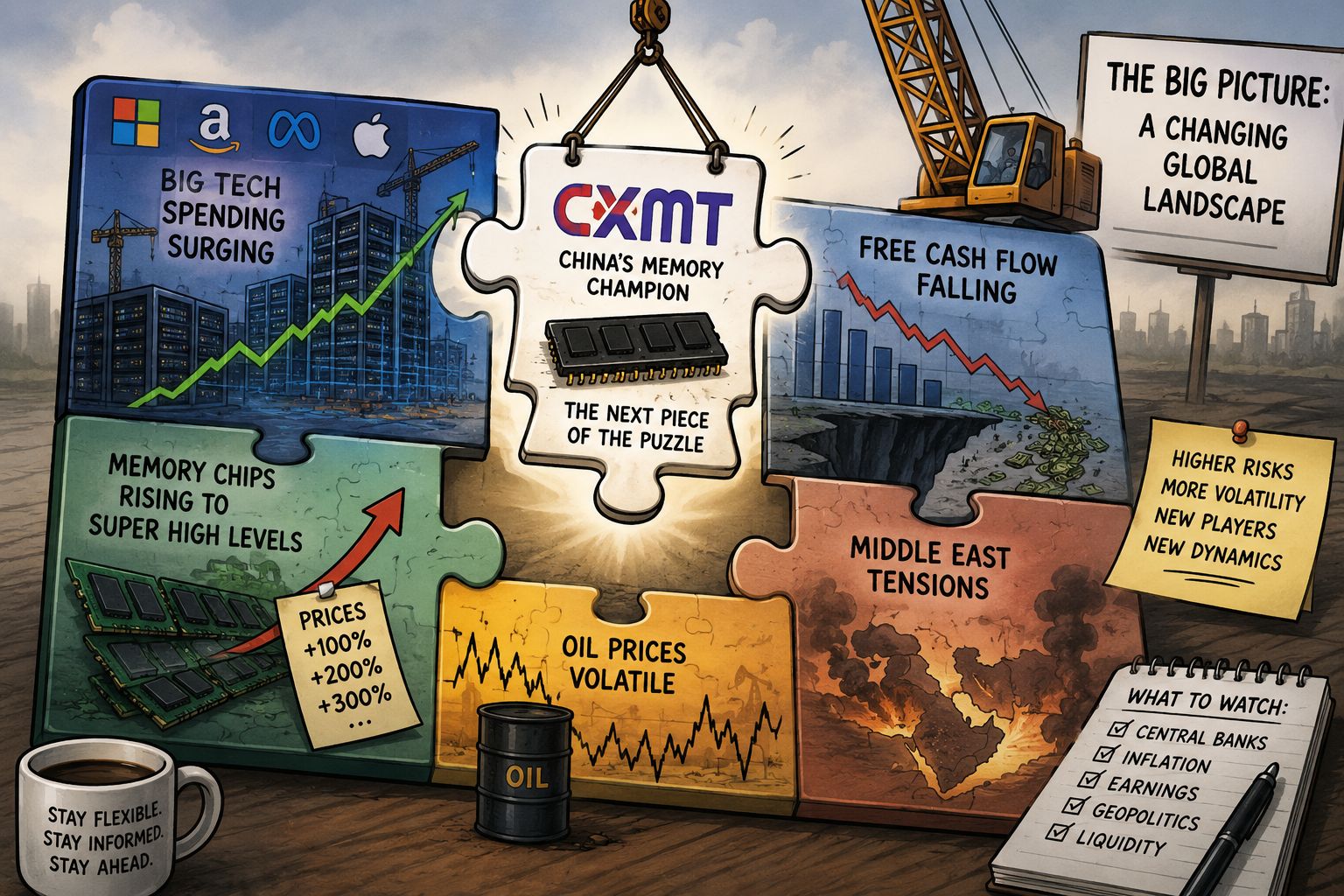
Chinese memory-chip maker CXMT just made its market debut on the Shanghai Stock Exchange in one of China's biggest IPOs, and its stock price rallied more than 500%. You may have never heard of this company before – I'd never heard of it either – but it has quietly become China's national memory champion and the world's fourth-largest DRAM maker. The company was founded less than a decade ago, but it has been growing at breathtaking – Chinese-scale – speed, benefiting from booming AI demand as well as Beijing's push for semiconductor self-sufficiency. It now controls around 8-10% of the global DRAM market, and some analysts see that rising into the high teens by 2028 as it aggressively expands production to take on Samsung, SK Hynix and Micron – three of the hottest stocks of the past year. Indeed, CXMT's rapid expansion could eventually add pricing pressure on these companies, which have been raising memory-chip prices like there is no tomorrow. Remember, in some cases we were talking about high triple-digit percentage price increases over the past months. Beyond the pricing story, CXMT is another reminder that China is quietly building its own AI supply chain from chips to models, reducing its dependence on Western technology while becoming an increasingly serious competitor to the incumbents. Could the latter help Hang Seng amass capital flows? To be followed.
Focus on Big Tech spending
The news doesn't bother Nasdaq bulls this morning, but we are heading into a busy week for earnings. Four Big Tech companies – Microsoft, Amazon, Meta and Apple – will reveal how they performed in Q2, but more importantly, they will update investors on their spending plans.
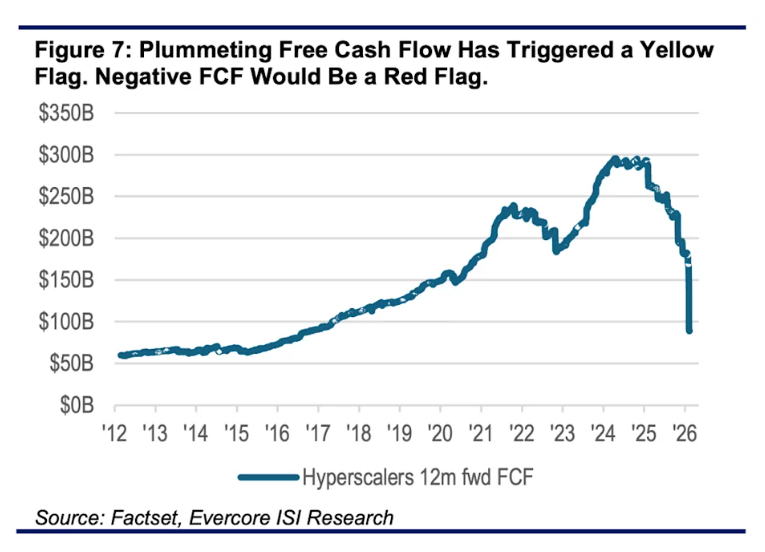
Remember, investors are growing increasingly uncomfortable with the hyperscalers' AI spending as their free cash flow evaporates, forcing them to seek additional financing through stock and bond sales in an environment of rising interest rate expectations. The most notable takeaway from Alphabet's announcement last week wasn't the 82% growth in its cloud business, but the fact that its free cash flow turned negative in Q2. As such, the real market movers will be: first, how much these companies expect to spend in the coming quarters; second, how much cash they have left after heavy AI investment; and third, how investors react.
Note that higher spending could provide another boost to AI supply-chain companies for a while, but it will also increase pressure on Big Tech valuations as these companies undergo an important structural change: they used to be capital-light businesses with abundant free cash flow. They are now becoming increasingly leveraged, capital-intensive behemoths. And that makes them far more vulnerable to changes in interest rates.
The content of this website is for informational purposes only and does not constitute financial advice. All opinions expressed are solely my own and should not be considered as recommendations to buy, sell or hold any financial instruments. Readers should consult a qualified financial advisor before making any investment decisions.
With love,
Ipek Ozkardeskaya