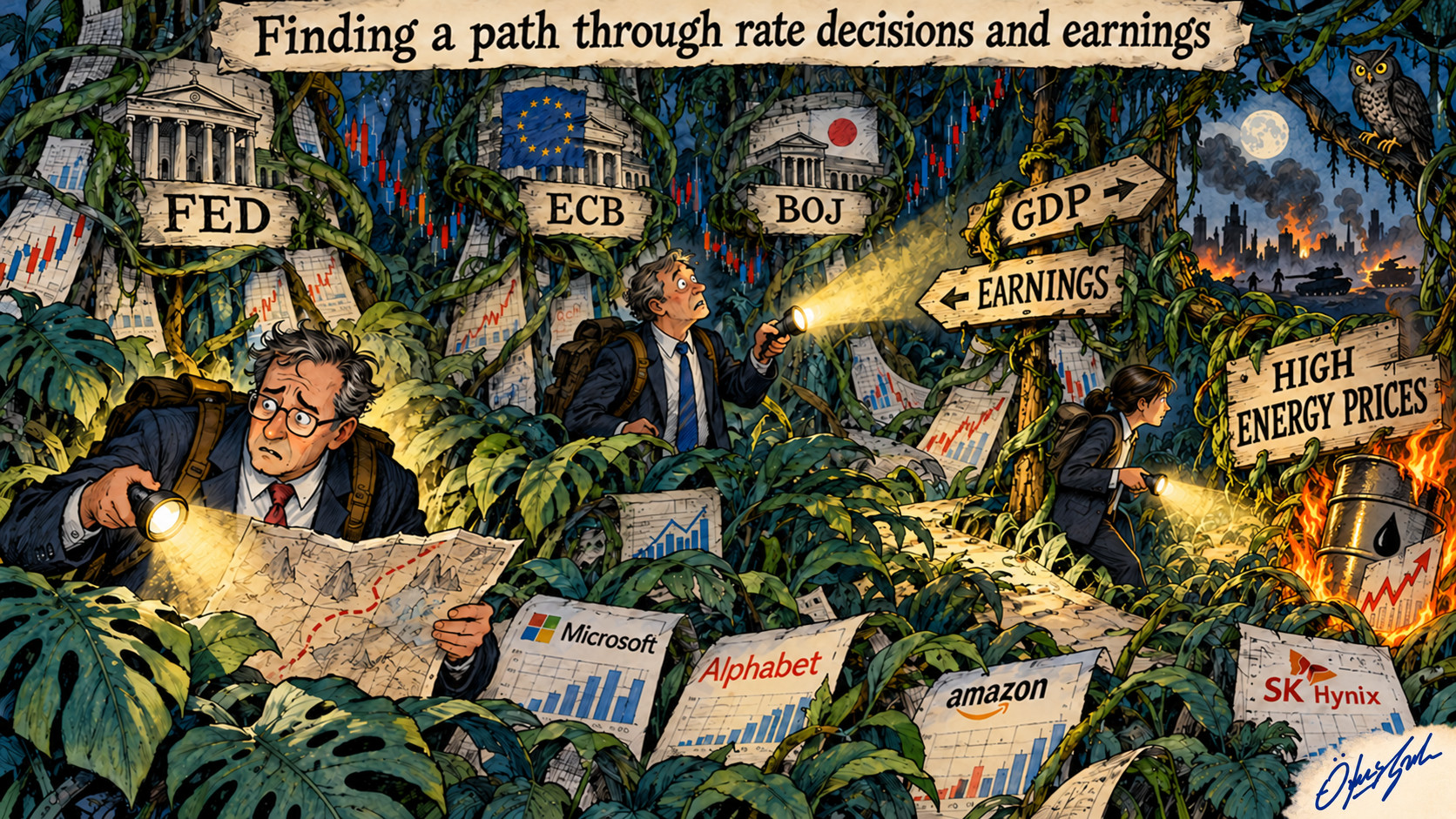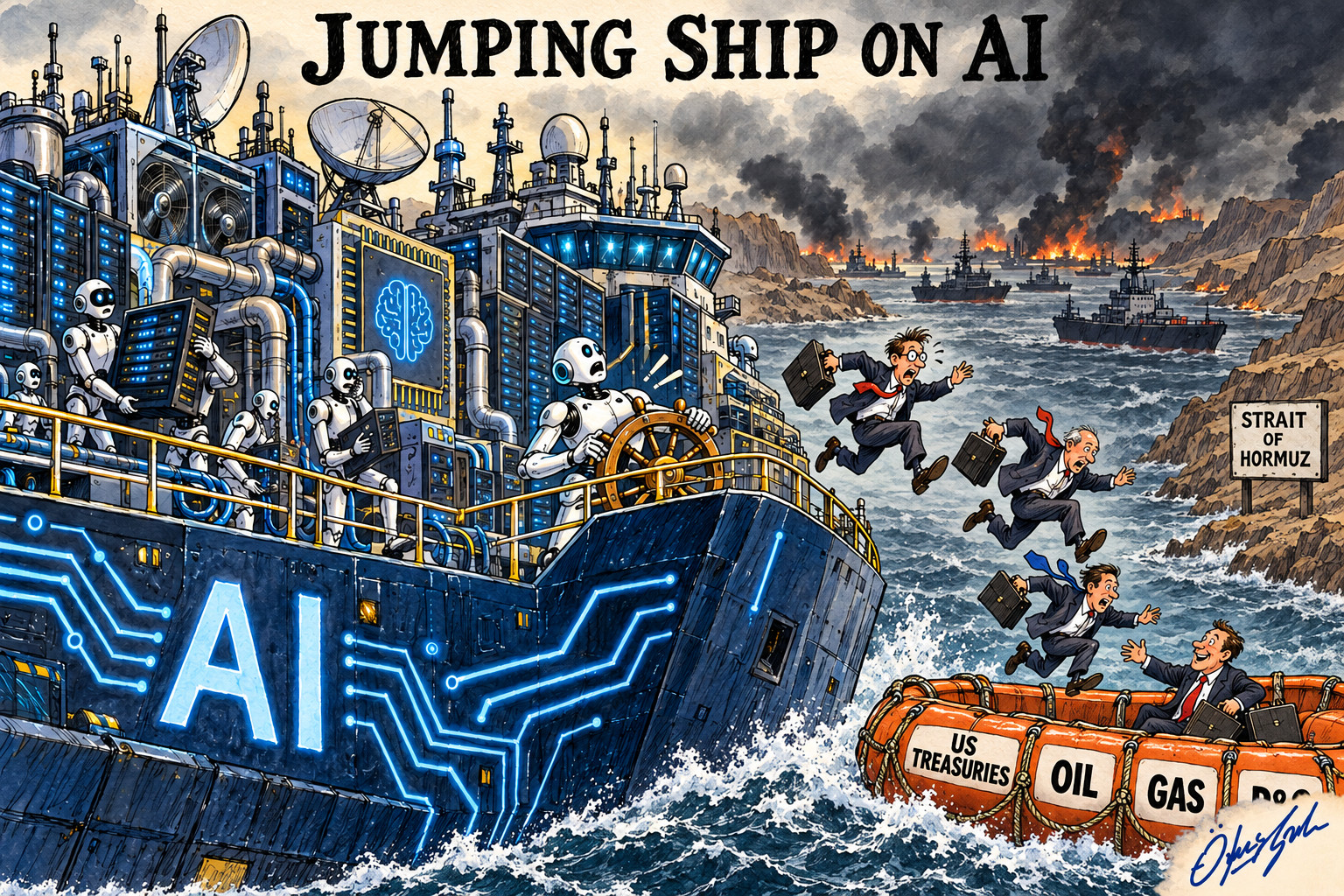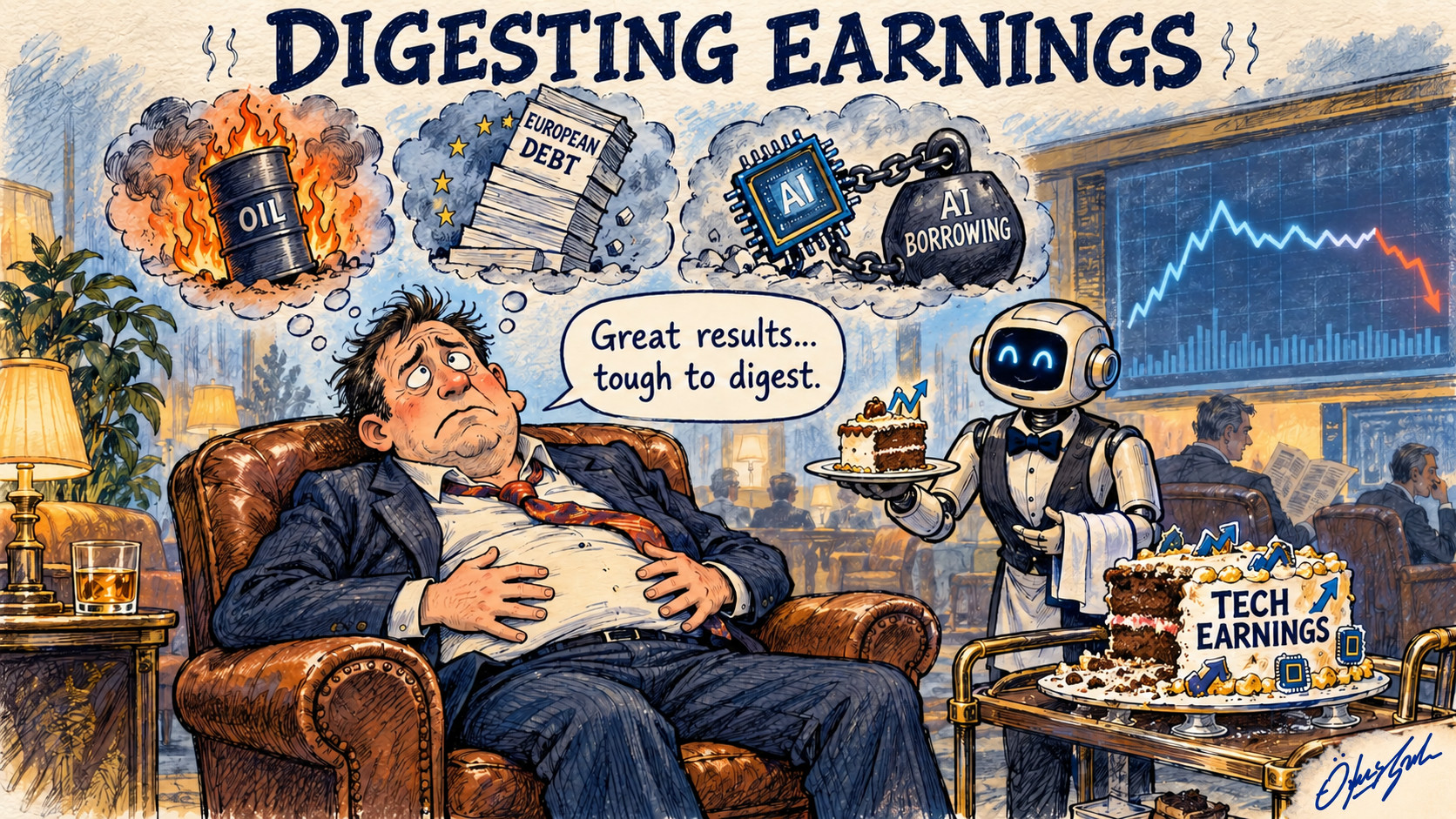

The week started on a surprisingly, though cautiously, optimistic note ahead of a series of major central bank decisions and big company earnings.
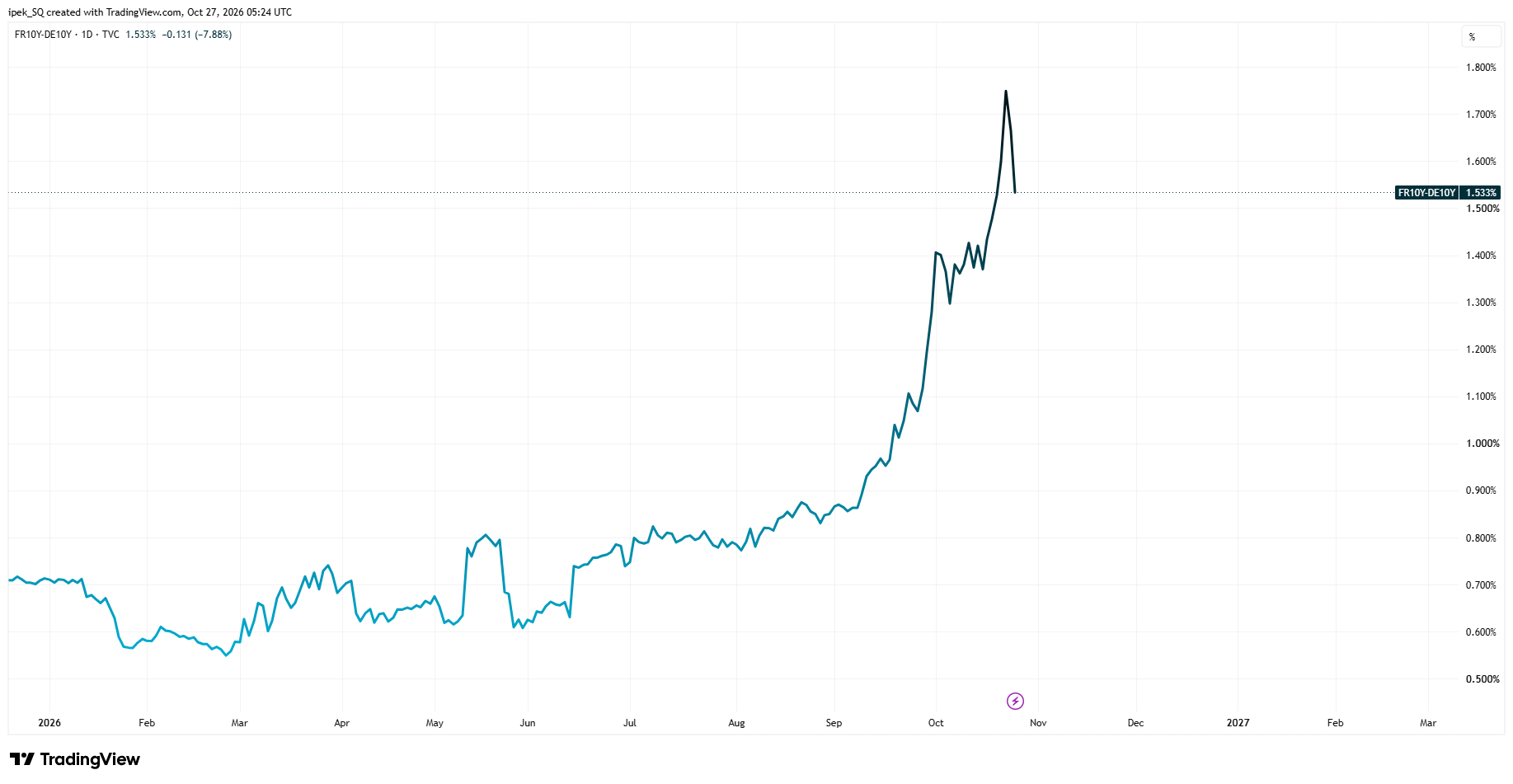
First, the French 10-year yield dropped to 4.90% despite a weekend of heavy protests. Moody’s surprise decision NOT TO downgrade France’s credit rating on Friday played a bigger role than the impasse in French politics. That’s partly because credit ratings can affect the value of bonds used as collateral: a higher rating can mean a lower haircut, allowing investors to borrow more against their holdings and potentially earn extra returns. So the for-now stable rating, though with a negative outlook attached, helped ease the pressure yesterday, also narrowing the spread versus the German bond yield to 153bp from as much as 176bp last week. The CAC 40 jumped along with other major European indices.
US indices also gained, though on both sides of the Atlantic Ocean, companies with exposure to Brazil underperformed as the MSCI Brazil ETF tanked as much as 27% in pre-market trading — yes, 27% — and finished the day with a 20% loss following Lula’s surprise victory in the weekend’s presidential election. The drop was mostly driven by worries about fiscal discipline under Lula and the reversal of the bullish trade ahead of the election, when investors bet on a victory by his opponent, Flávio Bolsonaro — son of former president Jair Bolsonaro — on expectations of tighter fiscal discipline and more market-friendly policies. However, the latter refused to concede and said he would seek to annul the result… bringing back uncomfortable memories of contested elections and raising questions about what could go WRONG around the upcoming US midterms next week!
Hope vs Worries
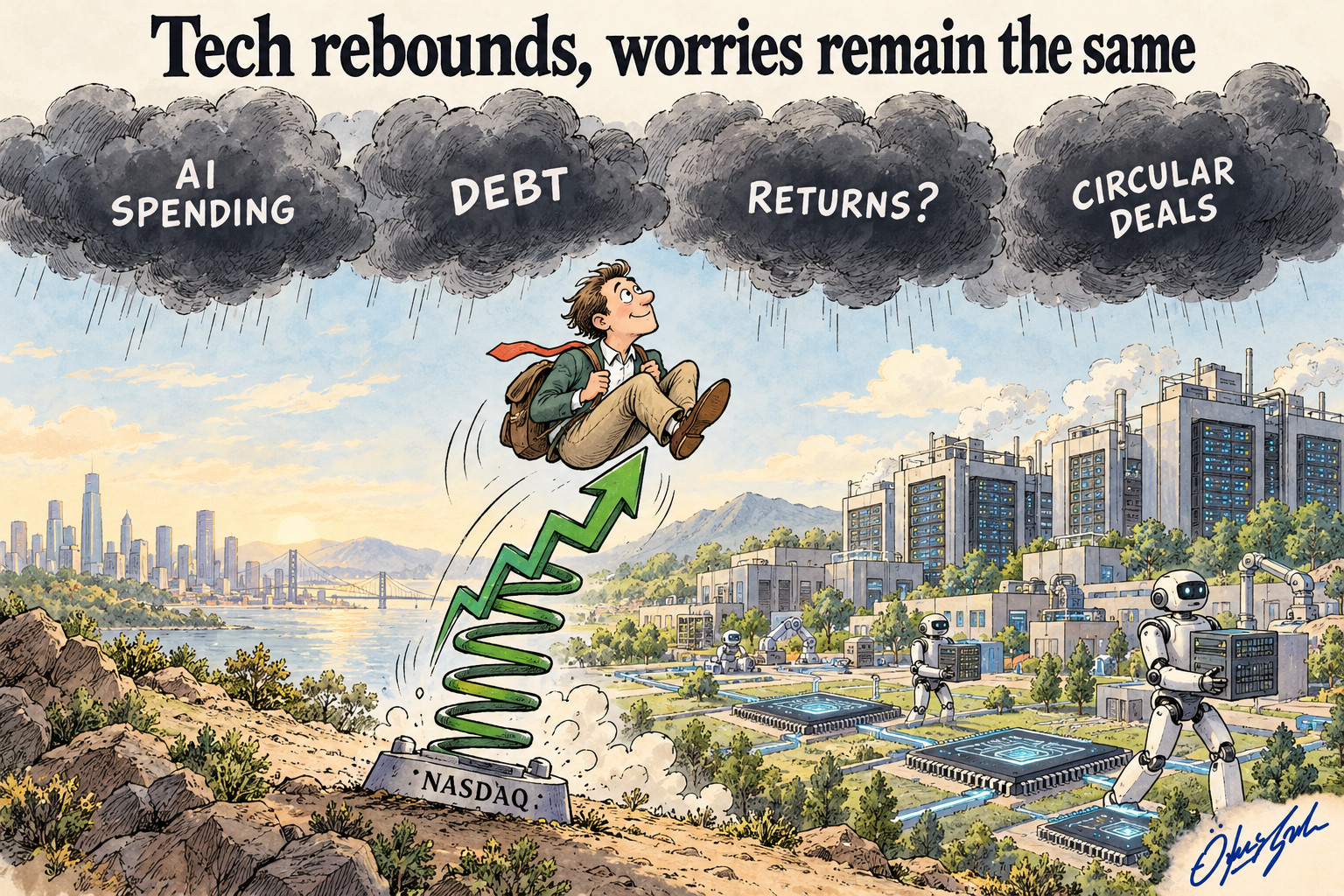
Anyway, the technology-heavy Nasdaq 100 rebounded more than 1% after Anthropic’s IPO filing revived appetite for AI enablers. The filing showed more than $16bn in revenue in the first half and a more than $80bn net loss, largely driven by non-cash accounting adjustments. Over 90 pages citing risks include sci-fi risks, but also a whopping $750bn in computing commitments.
So the market reaction was positive, but the concerns behind the latest AI selloff remain well intact: investors worry about the huge investments being thrown at AI infrastructure and massive commitments; they worry that the return on investment could take more time than previously thought — or never come — while tech investments are quick to become obsolete, keeping the need for more investment alive. They also worry about rising leverage in financing these investments when interest rates are expected to rise. Just yesterday, Meta announced that it plans to raise as much as $95bn in equity; a $63bn financing deal was announced to purchase Broadcom chips and lease them to Anthropic; and SpaceX announced a $40bn equipment-finance lease deal. Holy… And last but not least, investors continue to worry about the circular deals.
Speaking of the latter, the latest news also suggested that Nvidia, AMD and Broadcom are interested in buying up to $5bn of Meta stock combined. In other words, Meta’s chip suppliers are ALSO interested in buying the stock of their own customer.
The economic logic is: Meta raises equity to support its AI investment, chip suppliers potentially contribute capital and Meta’s infrastructure spending supports demand for the suppliers’ products. Now, note that the circular nature of the money changing hands between Big Tech companies doesn’t mean that the revenue is artificial: Meta will buy chips and chipmakers will make real revenue from them.
The concern is that supplier funding helps sustain demand without answering whether the ultimate AI revenues justify the spending!
Good news is that, despite the worries that led to a tech selloff, the latest rounds of stock and bond issuance saw strong demand. Nasdaq 100 forward P/E ratio sits at around 20x to 22x, based on recent earnings estimates, which equals an earnings yield of around 4.8–5% — not excessively high by its recent standards, but not necessarily better than the US 10-year yield of around 5%, given the higher risk.
Meta said in last week’s quarterly report that AI tools are paying off — ad targeting is more efficient, and hence businesses are willing to pay more for advertising on Meta’s platforms. But does the revenue growth justify the amount of investment?
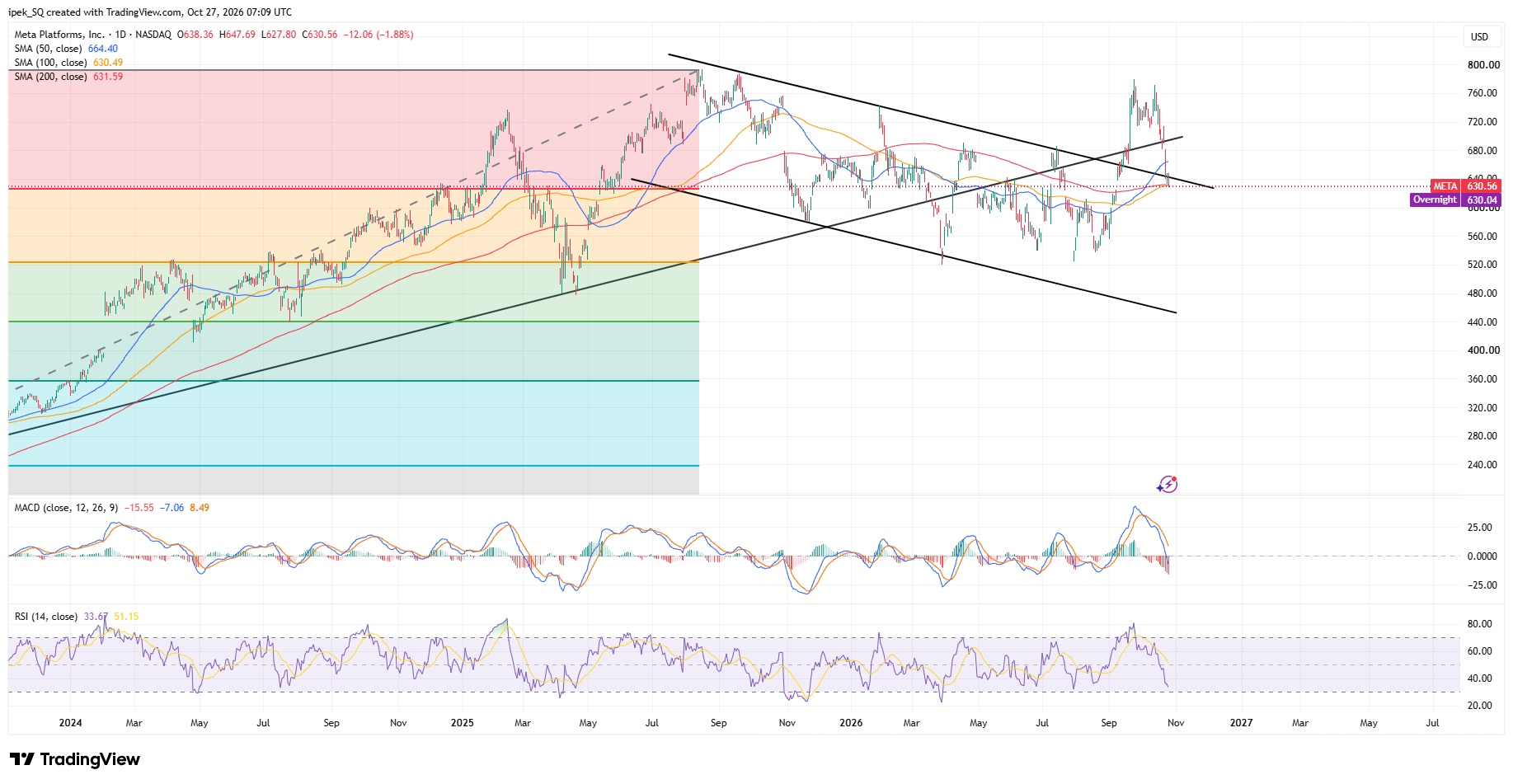
Looking at the cash: not just yet. Meta’s operating cash flow increased just 9% to $32.8bn, while capital expenditure reached $34.9bn, leaving free cash flow at negative $2.12bn. Full-year capex guidance now stands at $135–145bn. So even though the business is growing strongly, investment absorbed more than all the cash generated by operations in the third quarter.
That doesn’t mean the investment won’t pay off: infrastructure generates returns over several years, and not all capex is exclusively for AI. But Meta doesn’t disclose enough to isolate AI’s incremental profits against its investment costs. It says AI is helping revenue, leaving investors to argue about whether it generates enough to justify the cash burn.
Starting after Wednesday’s close, we will have more data on how other Big Tech companies did last quarter. Google, Microsoft and Amazon’s cloud growth will matter for the broader AI complex.
AI security vs software
Moving a step further, I have been saying since last year that AI portfolios should be complemented with energy and cybersecurity players, as AI is energy-hungry and increases the need for online security.
Last week’s website security scare strengthened the case for cybersecurity spending, as critical flaws were discovered in PHP — a programming language used in around 70% of websites, including those built with well-known platforms like WordPress, Drupal and Joomla, as well as MediaWiki, the software behind Wikipedia. The discovery prompted some operators to take sites offline as a precaution.
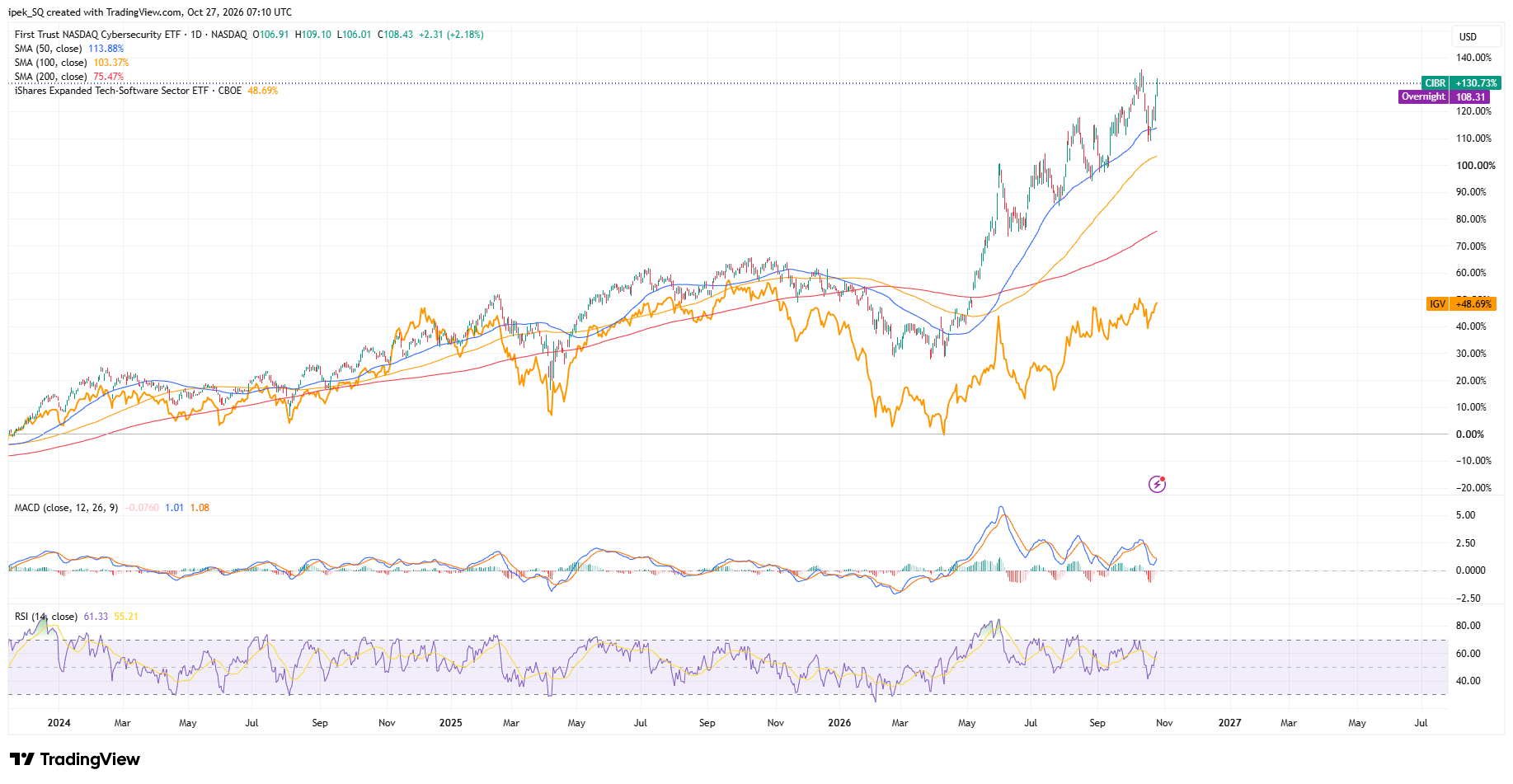
AI helped uncover the vulnerabilities and develop working exploits, showing how the technology can strengthen defences but also lower the barriers for attackers. Cybersecurity names including Palo Alto Networks, CrowdStrike and Zscaler rallied on the news. First Trust’s Cybersecurity ETF gained more than 6% in two sessions and more than 80% since the April dip, when these companies were sold in tandem with software stocks.
Moving forward, cybersecurity could capture a growing share of AI-related budgets, even as investors question spending elsewhere — which could help explain why the cybersecurity rebound has been stronger than the broader software recovery. But a larger security budget doesn’t guarantee that today’s providers will capture it, because there is a major risk: if AI models become increasingly capable of finding vulnerabilities and building defences themselves, could they also take business away from traditional cybersecurity providers? Could those providers face pressure on pricing if they can’t offer the protection customers need beyond what is embedded in AI models themselves?
The content of this website is for informational purposes only and does not constitute financial advice. All opinions expressed are solely my own and should not be considered as recommendations to buy, sell or hold any financial instruments. Readers should consult a qualified financial advisor before making any investment decisions.
With love,
Ipek Ozkardeskaya