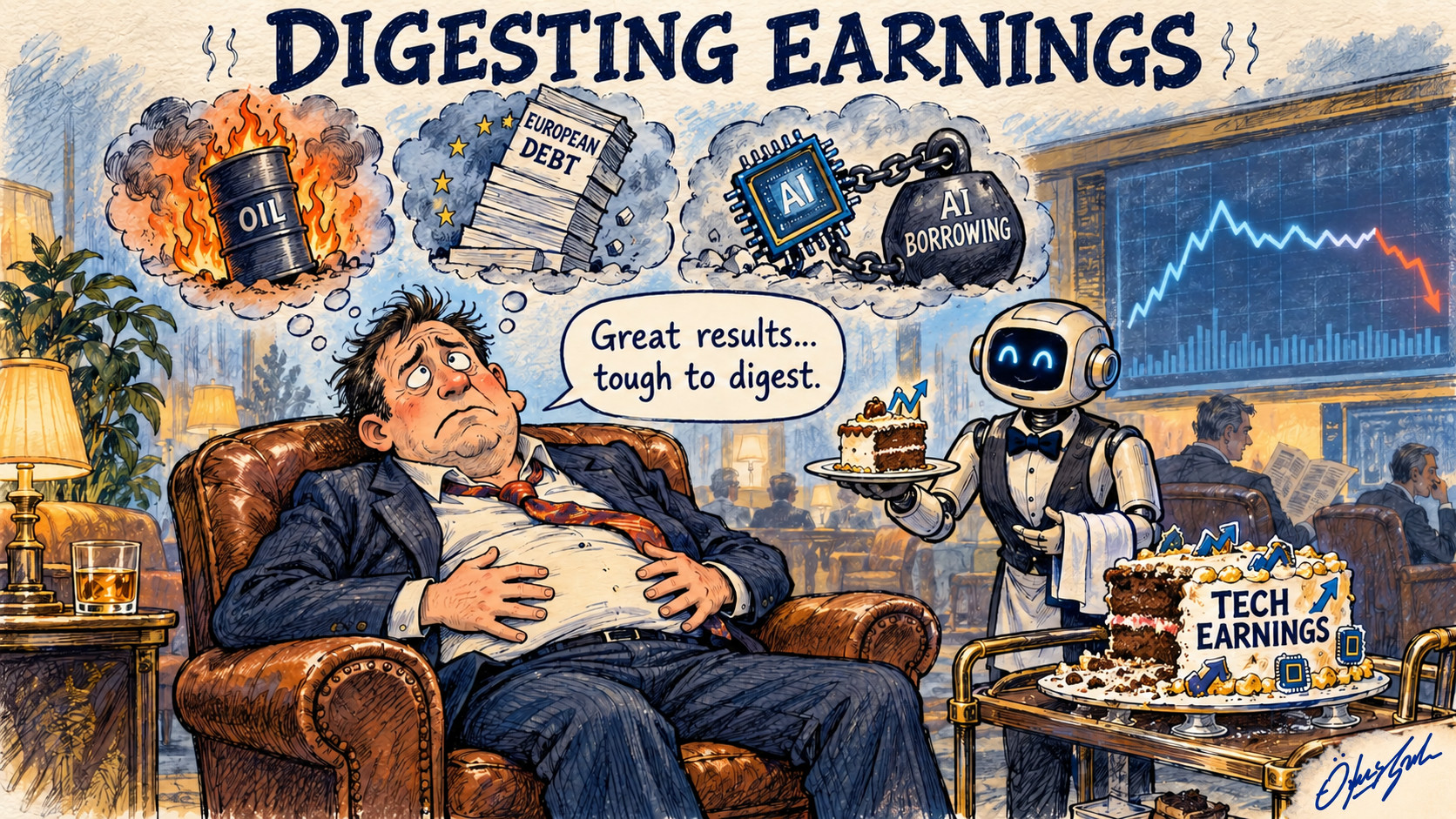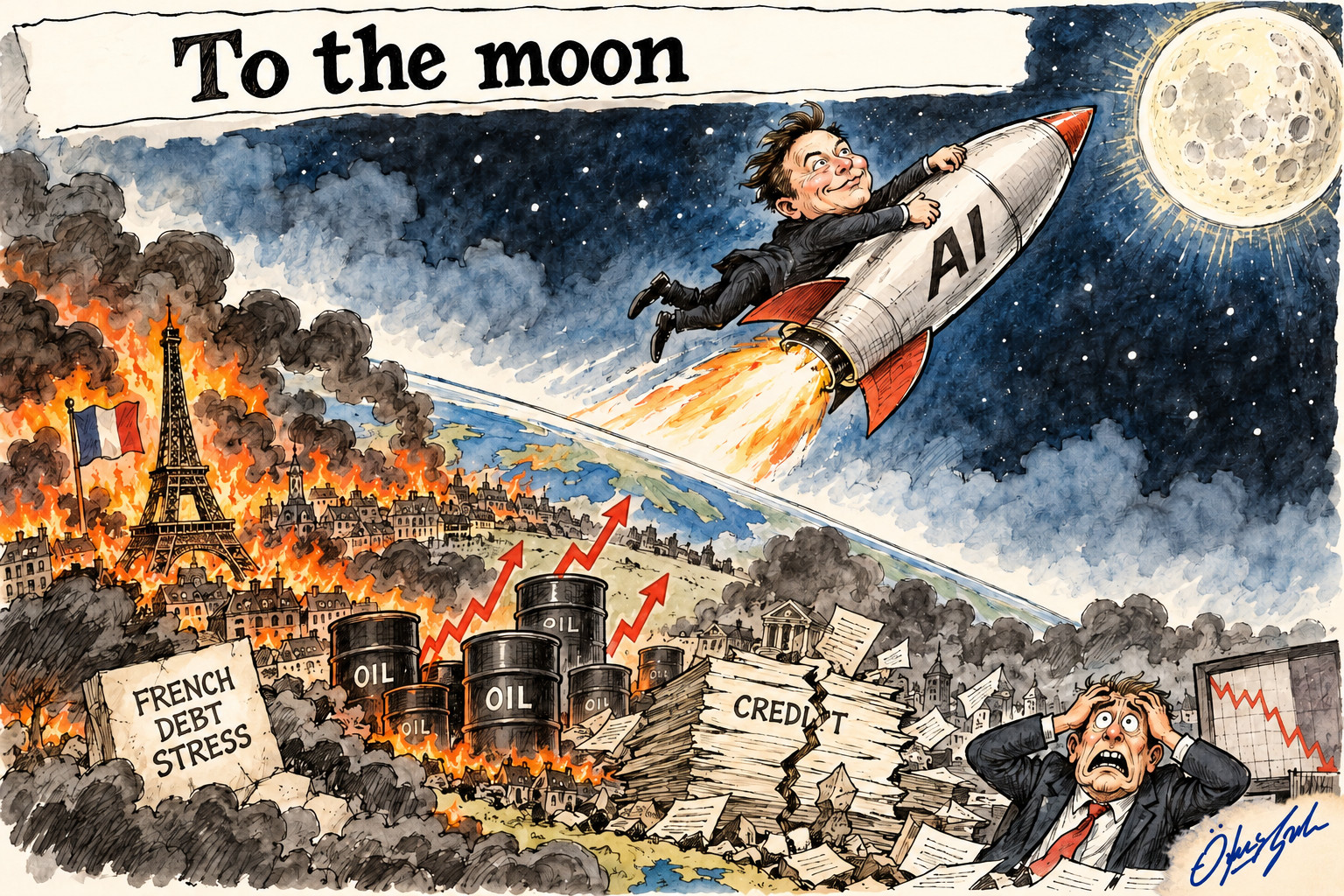

Nope, it wasn’t enough. Strong tech earnings this week — especially Meta’s report, showing investors that its AI investments are paying off and that Q3’s cash burn was much, much lower than analysts expected — couldn’t ease fears about that high-speed spending. Meta shares — initially higher in after-hours trading — took a major U-turn: they ended up falling 7%. Meta’s credit risk surged to a record high, with $825bn committed to future leases and contracts, largely related to its AI buildout. Five-year CDS spreads for Oracle, SpaceX, Amazon and Nvidia also spiked to fresh records.
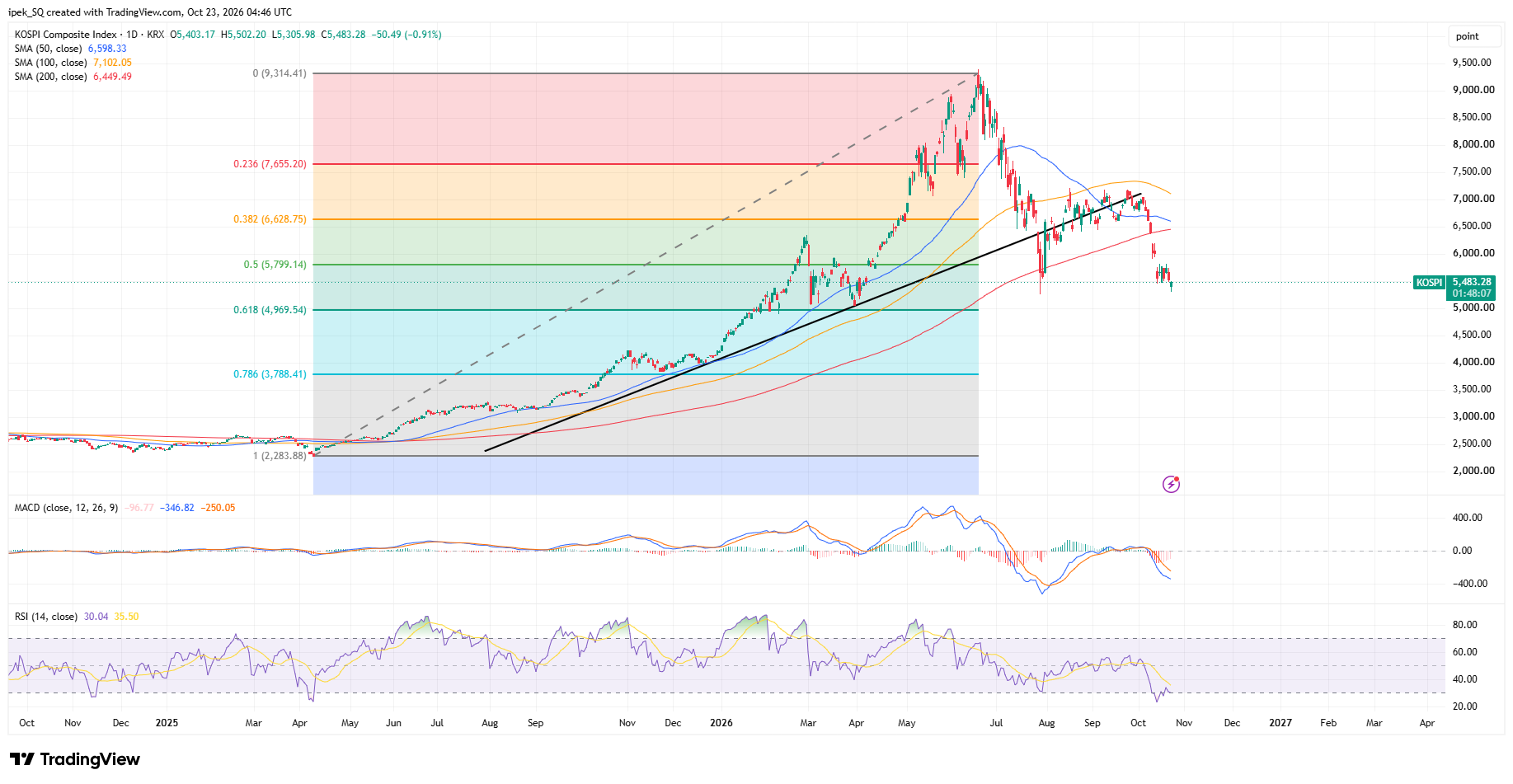
A similar sell-off-following-strong-earnings story unfolded when Western Digital beat earnings expectations and delivered strong guidance yesterday. The shares reversed an initial rally to fall around 6% after hours, as rising costs and higher capital spending unnerved investors. The Kospi index is under pressure this morning, extending losses to a fresh low since the summer.
Given the more than 50% retreat in memory chipmakers’ share prices from their peaks, we could now argue that their exponential rise was a bubble, and that the bubble has burst.
These memory chip companies continue to benefit from strong AI-related demand, and they’re trading at very low forward earnings multiples: Samsung and SK Hynix at around 3–4× — yes, 3–4 times! Alas, buyers are nowhere to be found.
Jumping ship
A Goldman Sachs report highlighted by Bloomberg suggested that hedge funds are the most bearish they have been on stocks in five years: Goldman’s clients are reportedly shorting stocks at around five times the rate at which they are buying them.
All in all, with retail investors bruised by the past few years’ buzziest chip trade and hedge funds pulling back, the market is losing support.
The Nasdaq 100 dropped 2.90% on Thursday, the Nikkei is testing its 200-DMA, and money is flowing into US Treasuries as investors move towards ‘safer’ corners of the market.
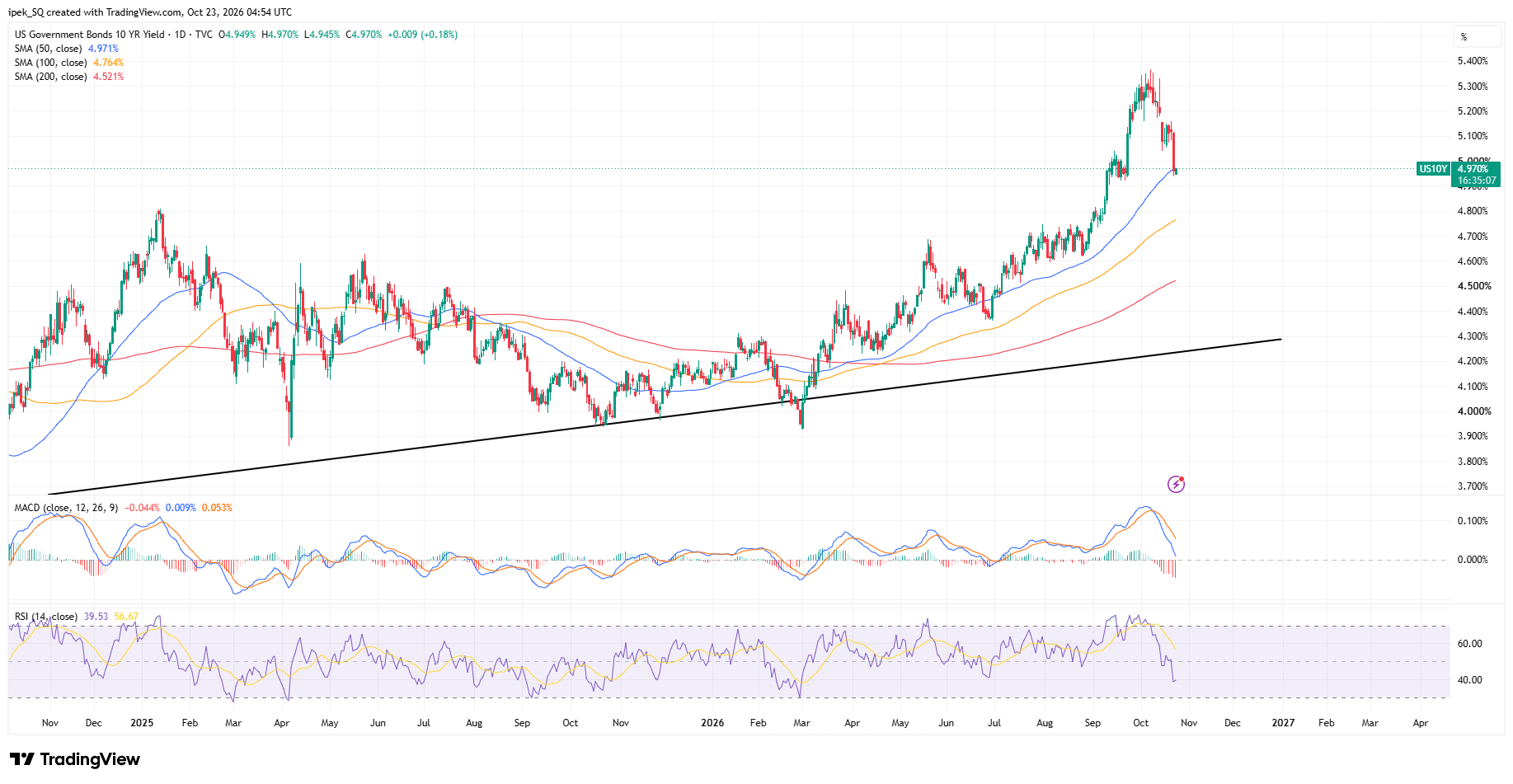
The US 10-year yield tumbled 17bp yesterday to below 5%, while the 30-year yield eased below 5.30%. But the 2-year yield also came down despite a rise in oil prices, suggesting that troubles in AI could weigh on growth expectations and temper expectations for further Federal Reserve (Fed) interest rate hikes.
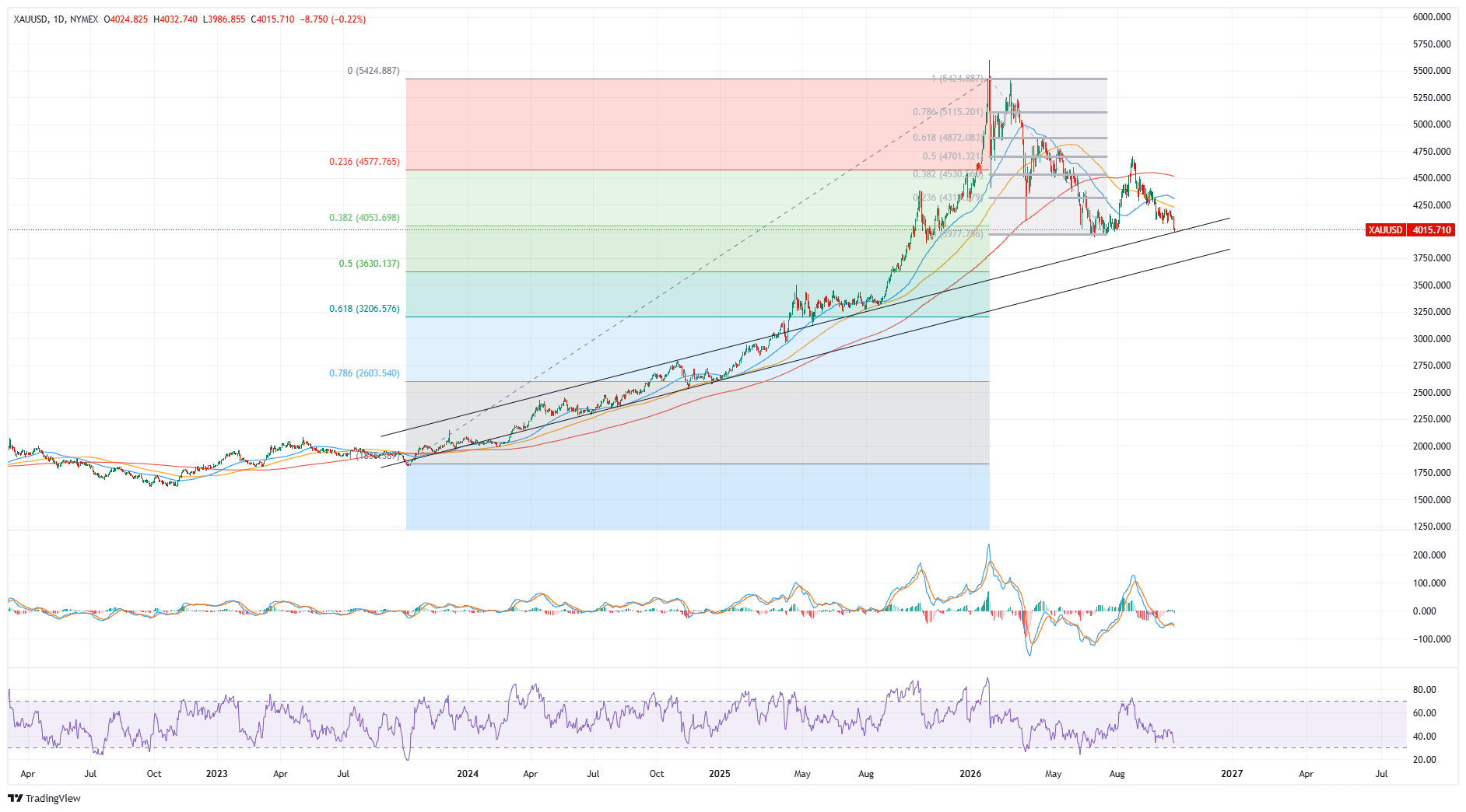
Interestingly, gold didn’t blink when yields came down. The price of an ounce slumped 2.82% — by a similar amount to the Nasdaq 100 index — as neither the risk sell-off nor falling yields helped bring investors back in. This unusual behaviour suggests that gold has not yet regained its safe-haven status following the exponential rise that preceded its decline from near $5’500 per ounce, reached back in January. Today, the price is just above the top of its long-term bullish trend range of $3’750–4’000. If the tech rout deepens and yields ease further, gold could find support after its sell-off since January. Note that lower gold prices could encourage strategic buyers, including central banks, to accumulate gold, supporting the asset over the longer run.
Other troubles
The spread between French and German 10-year bond yields spiked to 175bp — we’re now above levels seen during the European sovereign debt crisis of 2011/2012. Spreads between German and other euro-area bond yields are also rising, though they remain far from their crisis levels. This means that the French turmoil has not yet turned into a full-blown European debt crisis. Still, spreads should be watched closely as street unrest echoes across other European nations. The weekend will be important.
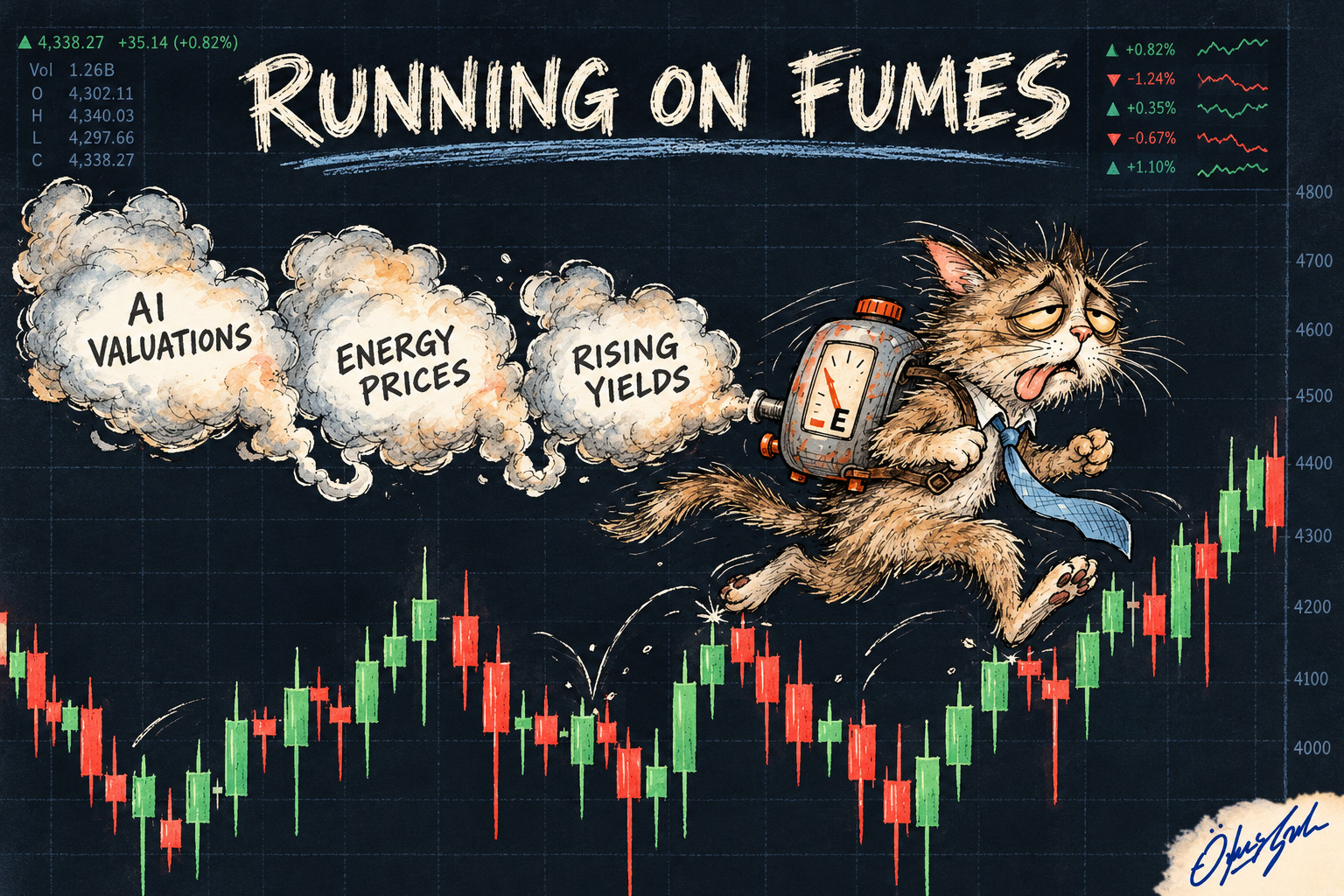
Rising yields, also fuelled by rising energy prices, weigh on European equities. But that’s not all. The European luxury sector continues to suffer from the Middle East war and China’s weakened appetite for luxury. Gucci’s Q3 sales fell short of expectations, and Hermès also missed estimates.
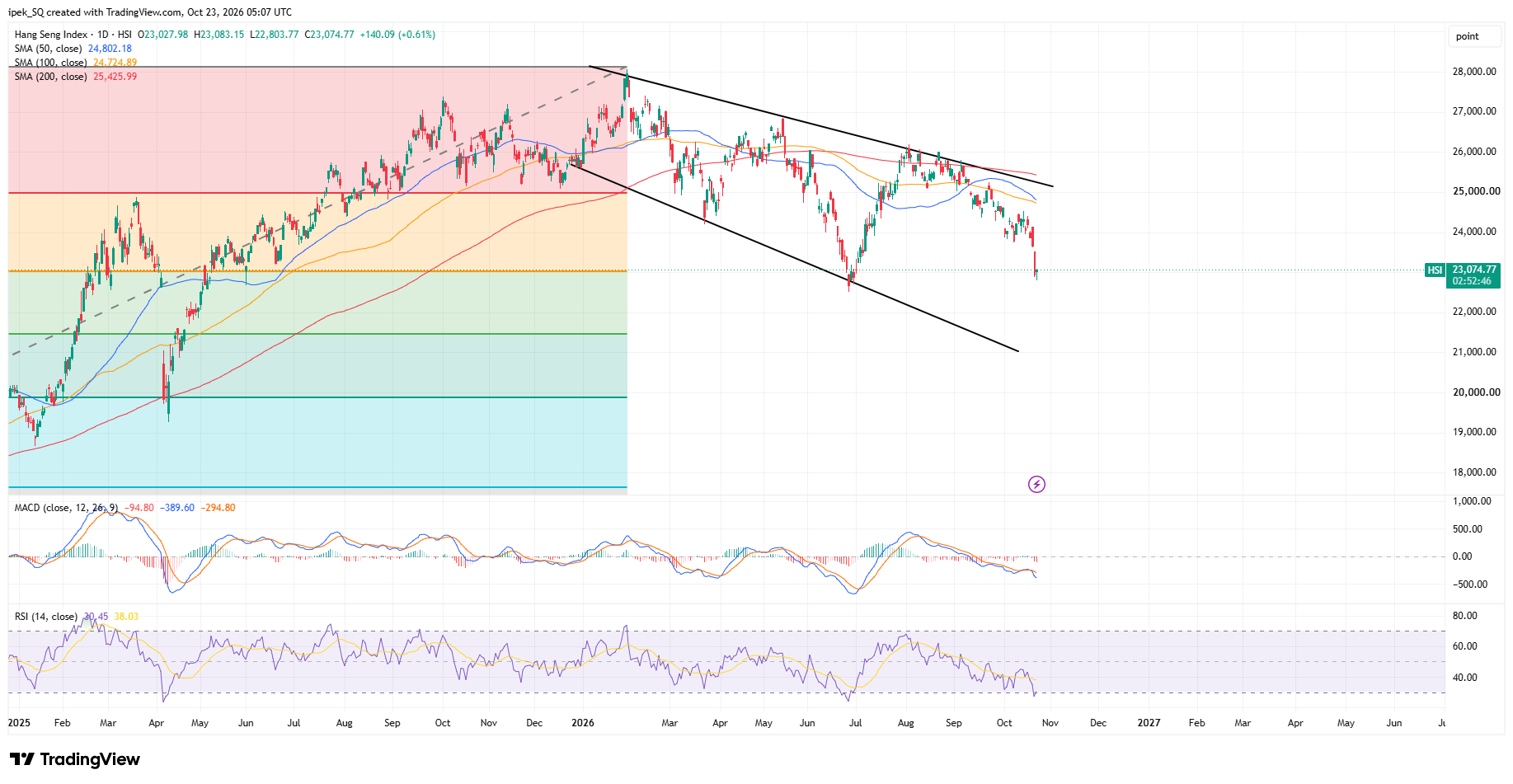
On the other side of the world, the Hang Seng is on the verge of entering a bear market — a 20% fall from its recent peak. China’s consumer spending remains weak. Tech exports have so far been the bright spot, but concerns about trade restrictions and profitability weigh on appetite. Add to that the latest rise in regulatory risks — Alibaba is now under pressure over the quality of products sold on its platforms — and you have a pretty bleak picture challenging the massive growth potential of China’s tech sector.
Yesterday, I was saying that tech is still a high-potential sector, with the possibility of a sudden U-turn still on the table, that US Treasuries offer very interesting returns, and that defensive and value names could offer interesting diversification opportunities.
Indeed, P&G soared more than 5.5% yesterday after beating sales and profit expectations. Its selective approach to raising prices is said to be paying off: raising prices on essential products that consumers can’t do without while keeping prices in its discretionary range contained, so price-sensitive shoppers keep buying. Eni just announced an extraordinary dividend thanks to another strong quarter led by high energy prices.
Next week
Technology earnings will accelerate next week, with Microsoft, Google, Amazon and Sandisk due to report their latest results. Given robust AI demand, expectations are strong. What’s less certain is whether investors will buy that strength.
The dominant theme of the moment is no longer impressive AI-driven growth, but how much that growth is costing companies and economies when free cash flow is under pressure.
Debt is growing, borrowing costs are climbing and capacity constraints are emerging. And those constraints are not only about chip and equipment production, but also about the energy and natural resources needed to support such impressive growth at scale.
Look, Bloomberg reports that Australia’s $70bn data centre boom has hit a speed bump. Of the more than 40 large projects planned or under construction in Sydney and Melbourne, only 23% have publicly confirmed that they have secured electricity supply or grid connections. Stretched power grids and local opposition threaten the rest. Therefore, the next big wave of the AI trade could be energy — a sector that has so far attracted less attention than the buzzy chip and equipment trades, but is becoming a bottleneck in the AI buildout, at least until SpaceX finds a way to put data centres into orbit.
The content of this website is for informational purposes only and does not constitute financial advice. All opinions expressed are solely my own and should not be considered as recommendations to buy, sell or hold any financial instruments. Readers should consult a qualified financial advisor before making any investment decisions.
With love,
Ipek Ozkardeskaya