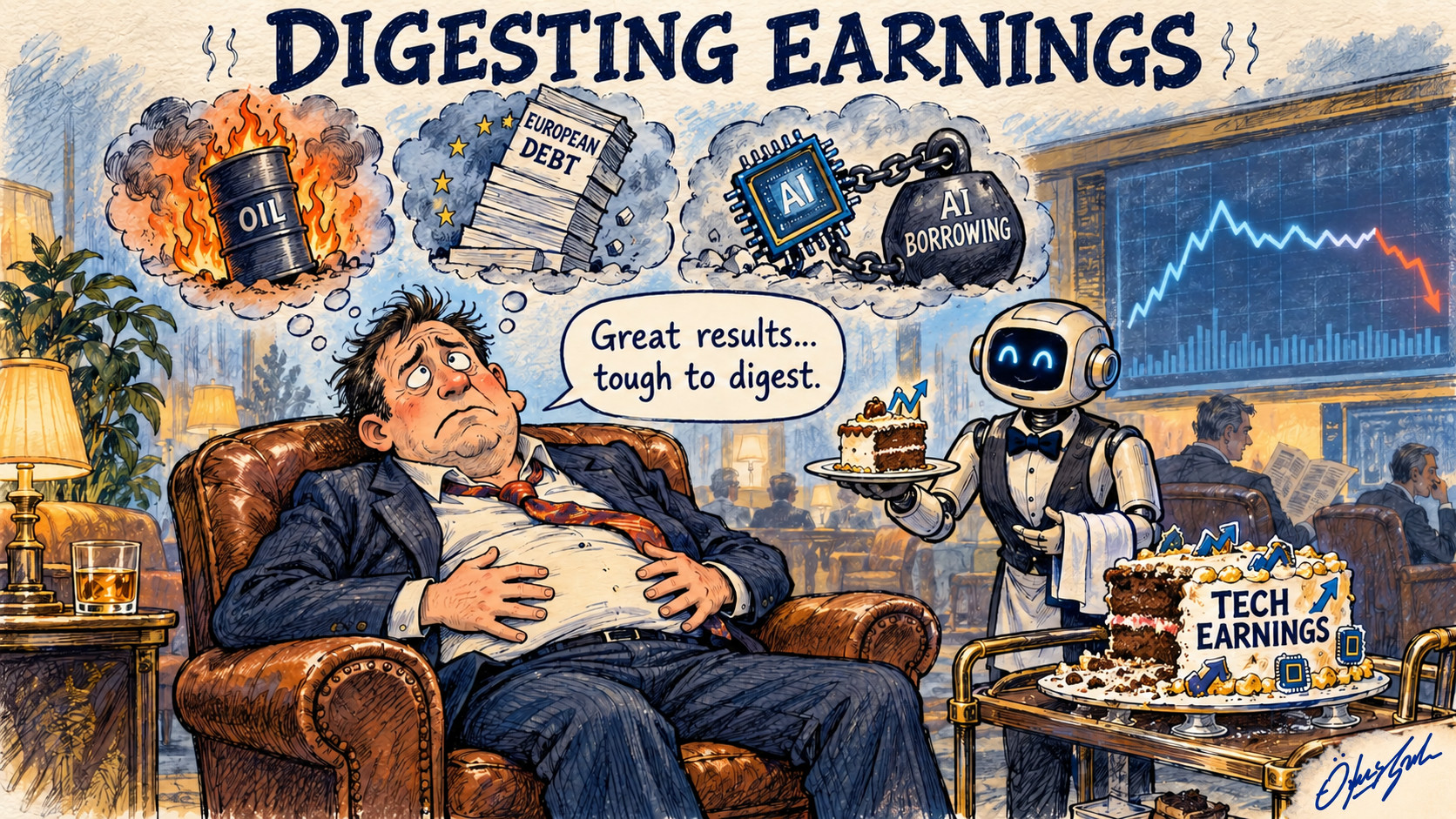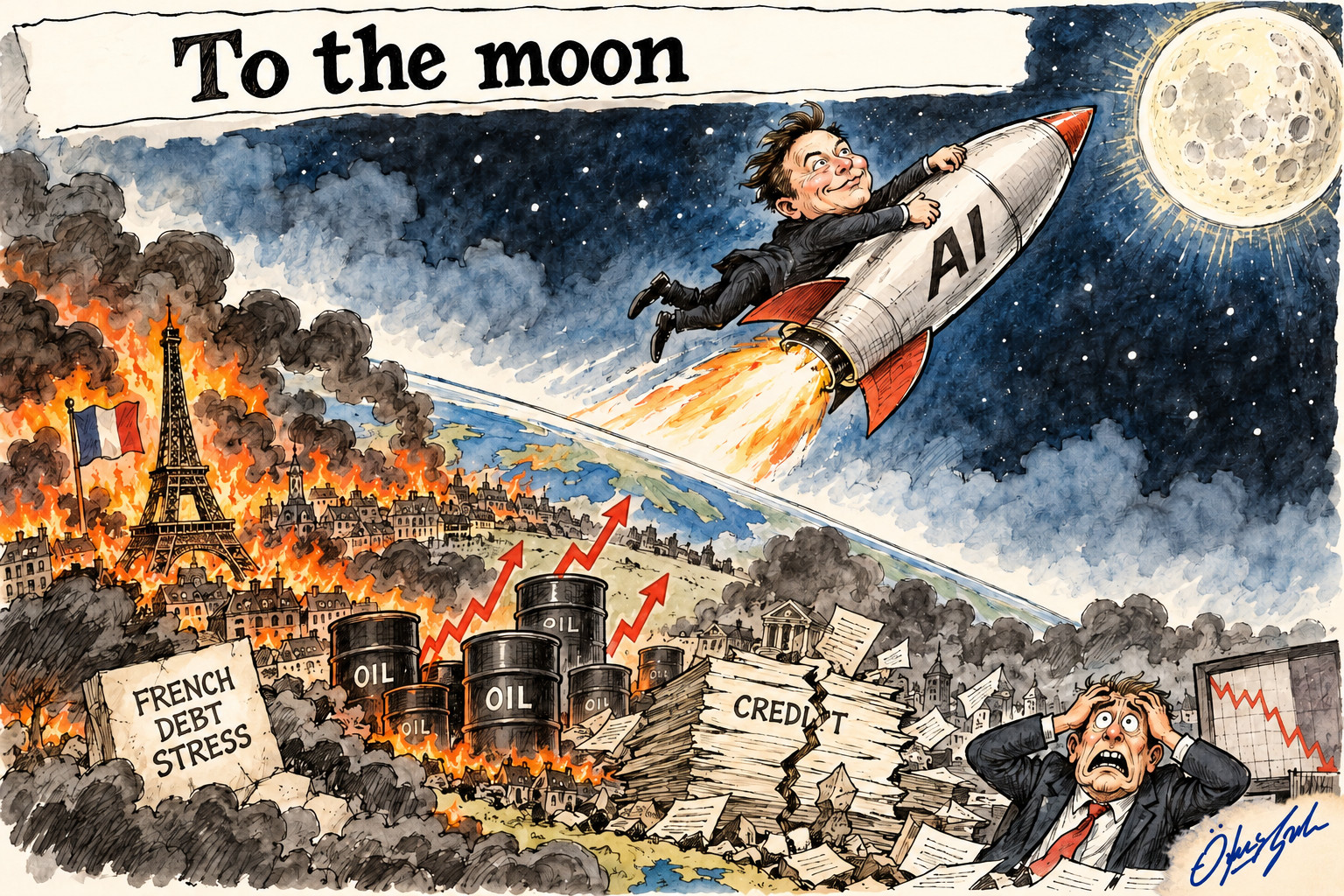

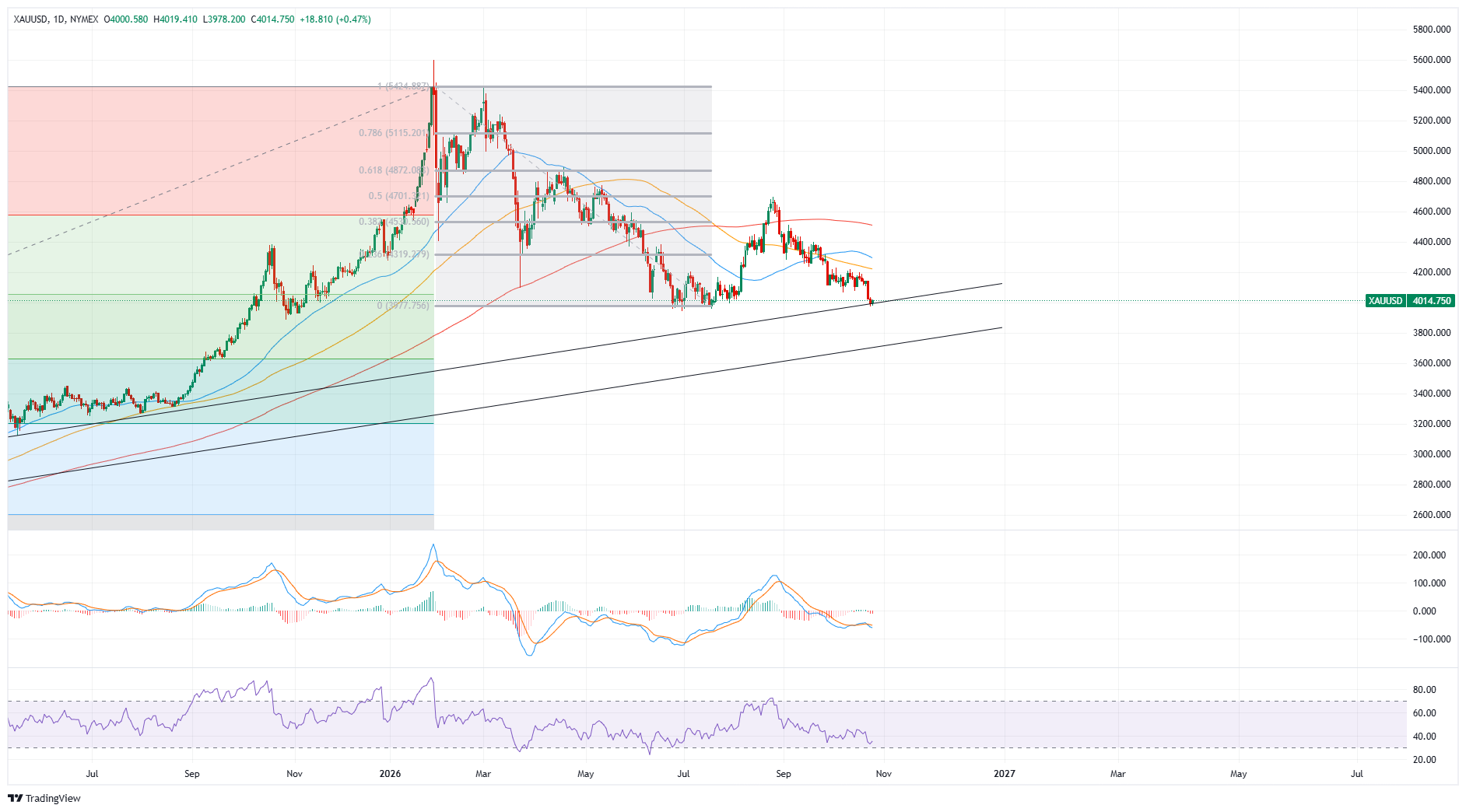
Last week was marked by escalating worries regarding the AI trade, the first batch of tech earnings’ inability to ease concerns about the massive AI buildout despite strong results, and a flight to safety — with US Treasuries attracting most of the inflows while gold was left behind. The yellow metal is testing support at $4’000 right now, with an increasing chance of attracting buyers as US Treasury yields fall. All this was compounded by escalating Middle East tensions, no progress in the Russia–Ukraine war, rising oil prices — with US crude spiking past $105 per barrel on Friday — and unrest in France that escalated again over the weekend – though the early market moves suggest that the latter was priced in and it won’t be a disaster in the markets.
Still, the US 10-year yield is pushing lower again this morning, with gold finding support near $4’000, suggesting that investors are kicking off the week with visible interest in safe-haven assets. But interestingly, major US and European indices point to a slightly positive start, with tech-heavy indices lagging slightly behind their peers.
Now, it will be a very, very busy week on the economic calendar, central-bank and earnings fronts.
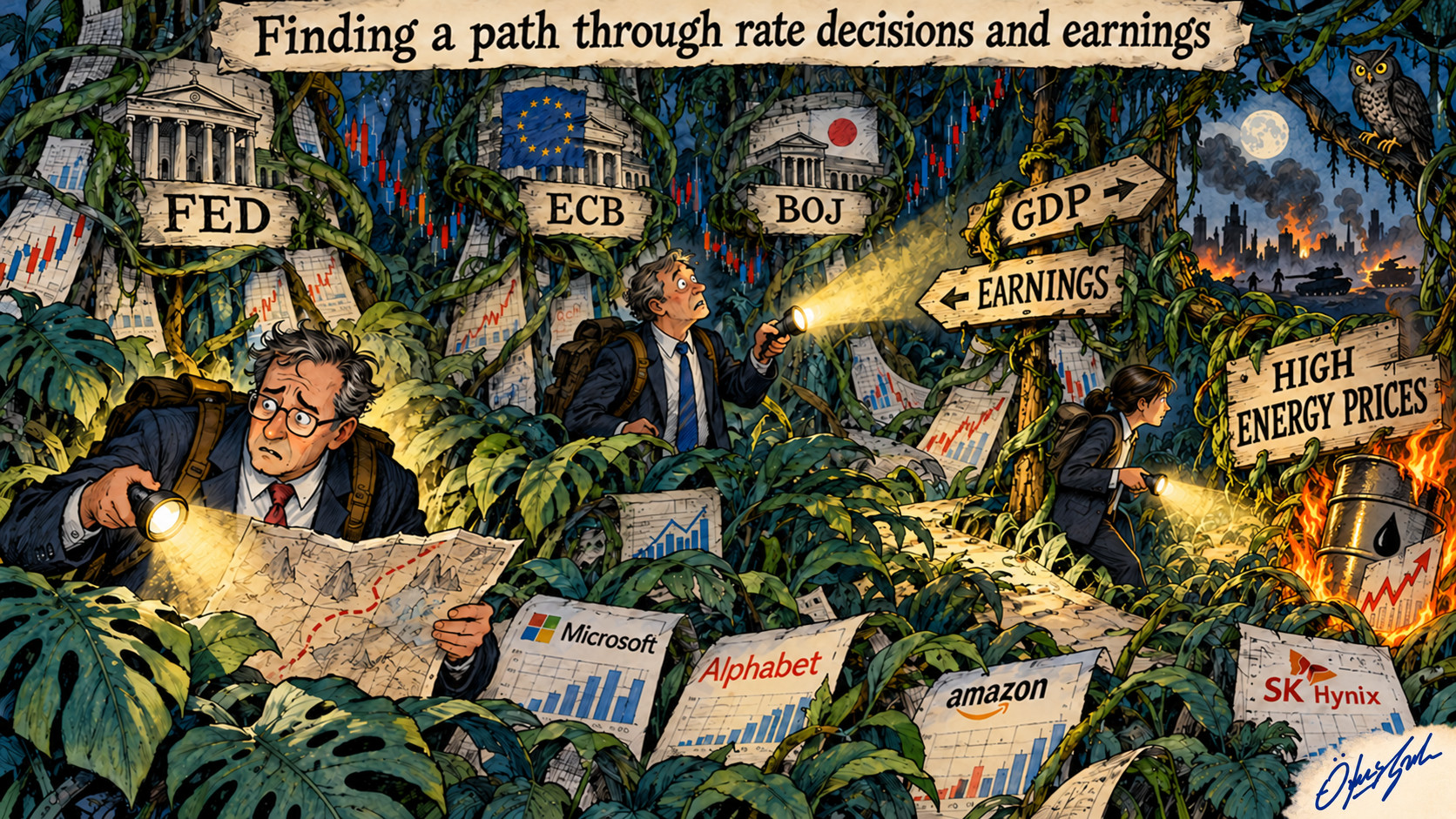
We have interest rate decisions from the Federal Reserve (Fed), the Bank of Japan (BoJ) and the European Central Bank (ECB), third-quarter growth figures from the US and the eurozone, and another heavy round of earnings, including European banks, US big oil and big tech companies.
This means the week will present plenty of opportunities to either restore confidence or give investors another reason to question how much they are willing to pay for the AI dream.
Keeping up with the central banks
All three — the Fed, the ECB and the BoJ — are expected to keep their rates unchanged. The focus will be as much on what policymakers signal for December as on what they do this week. Even if interest rates remain unchanged, the combination of elevated energy prices, persistent inflation risks and increasingly nervous financial markets leaves plenty to discuss.
For the Fed, the question is how to balance a resilient US economy and inflation pressures against recent signs of weakness in the labour market. Many economists — including one of my favourites, Mohamed El-Erian — warn that hiking rates when price pressures come from war-driven energy price spikes and the AI buildout won’t help balance the economy. On the contrary, it would increase pressure on areas already under considerable strain, such as housing and consumer borrowing.
For the ECB, the challenge is particularly uncomfortable: higher energy prices threaten to keep inflation elevated while squeezing an already fragile economy, and rising political unrest risks spreading to other euro area countries. Bond yields are pushing higher across the bloc, while spreads over German Bunds are widening — meaning that financial conditions are already tightening without the ECB having to raise rates further.
On the contrary, it will be very interesting to see whether officials signal a willingness to intervene, and how they could do so without appearing to finance the mounting deficits of governments unable to address their fiscal problems. Will they come up with another programme, with another reassuring acronym — perhaps BOND: Buying Others’ Neglected Debt (?!) - to make the intervention look different this time? The week will also be busy with European bank earnings, where fixed-income desks will be in focus.
Moving to Japan, investors will watch how firmly the BoJ signals further policy normalisation — and what that means for the yen, Japanese yields and the appeal of bringing money back home. Lately, attractive Japanese yields have encouraged investors to seek returns at home rather than abroad. Indeed, US fiscal worries and now the European debt turmoil provide further incentives to keep Japanese funds at home, also helping the yen gain ground against the US dollar and the euro.
Keeping up with the economic data
In an environment of rising interest rates, growth matters for forecasting currency moves. And the US growth story has been robust thanks to the AI buildout, but also the country’s energy independence and ample government spending. Euro area growth, meanwhile, has been much weaker but surprisingly resilient in the face of rising ECB rates, high energy prices, transport disruptions due to low river levels through the hot and dry summer months, and troubles across the European car industry adding pressure on employment and investment — only partly offset by the AI buildout and productivity gains.
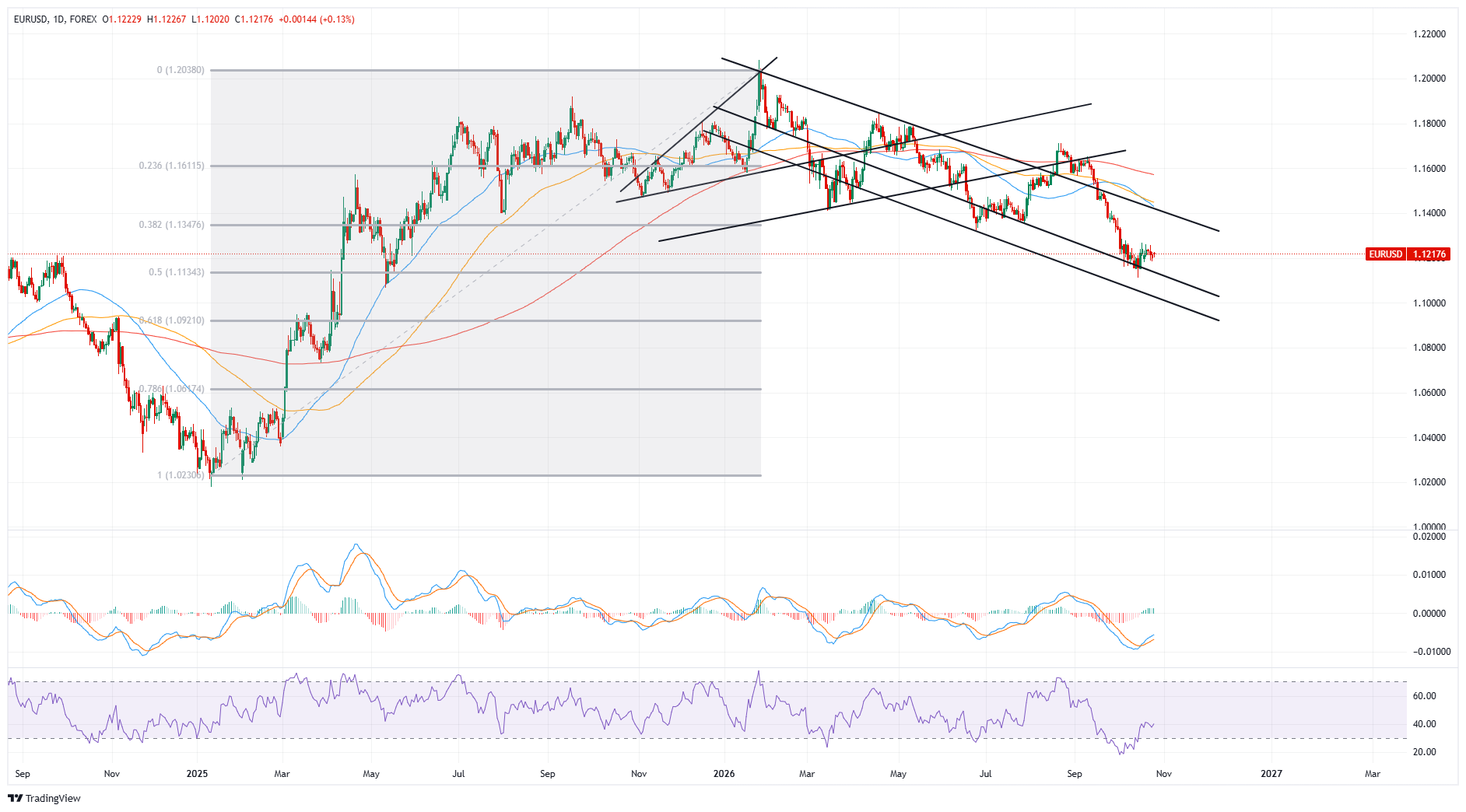
But the question is whether that momentum can hold up amid all this, and how the latest unrest in France — potentially spreading to other euro area countries — will affect growth. The EURUSD is under pressure after entering a medium-term bearish consolidation zone at the beginning of October, and will remain in this bearish zone below 1.1350 — the major 38.2% Fibonacci retracement of the 2025–2026 rally.
The COST of the AI-fuelled growth
Coming back to the resilience of US growth, there is one question increasingly troubling markets: how sustainable is the AI spending boom underpinning part of that strength? What is the COST of that strong growth?
This brings me to corporate earnings, as this week some energy and technology heavyweights will enter the earnings confessional, including ExxonMobil, Chevron, Microsoft, Alphabet, Amazon and SK Hynix. Expectations are high, and chances are that these companies will beat them.
But for tech, that’s not the issue. Investors are no longer impressed by big growth numbers. They are worried about the cost — and the increased leverage — involved in delivering those numbers. Meta was heavily punished last week for spending too much on AI, even though it showed that this spending is boosting its revenue.
Therefore — and judging by the market’s reaction to early results — strong beats won’t guarantee stock rallies. Investment plans will matter: investors want to hear about lower spending — or at least no further increases in the current environment — and will cheer companies that return to spending discipline.
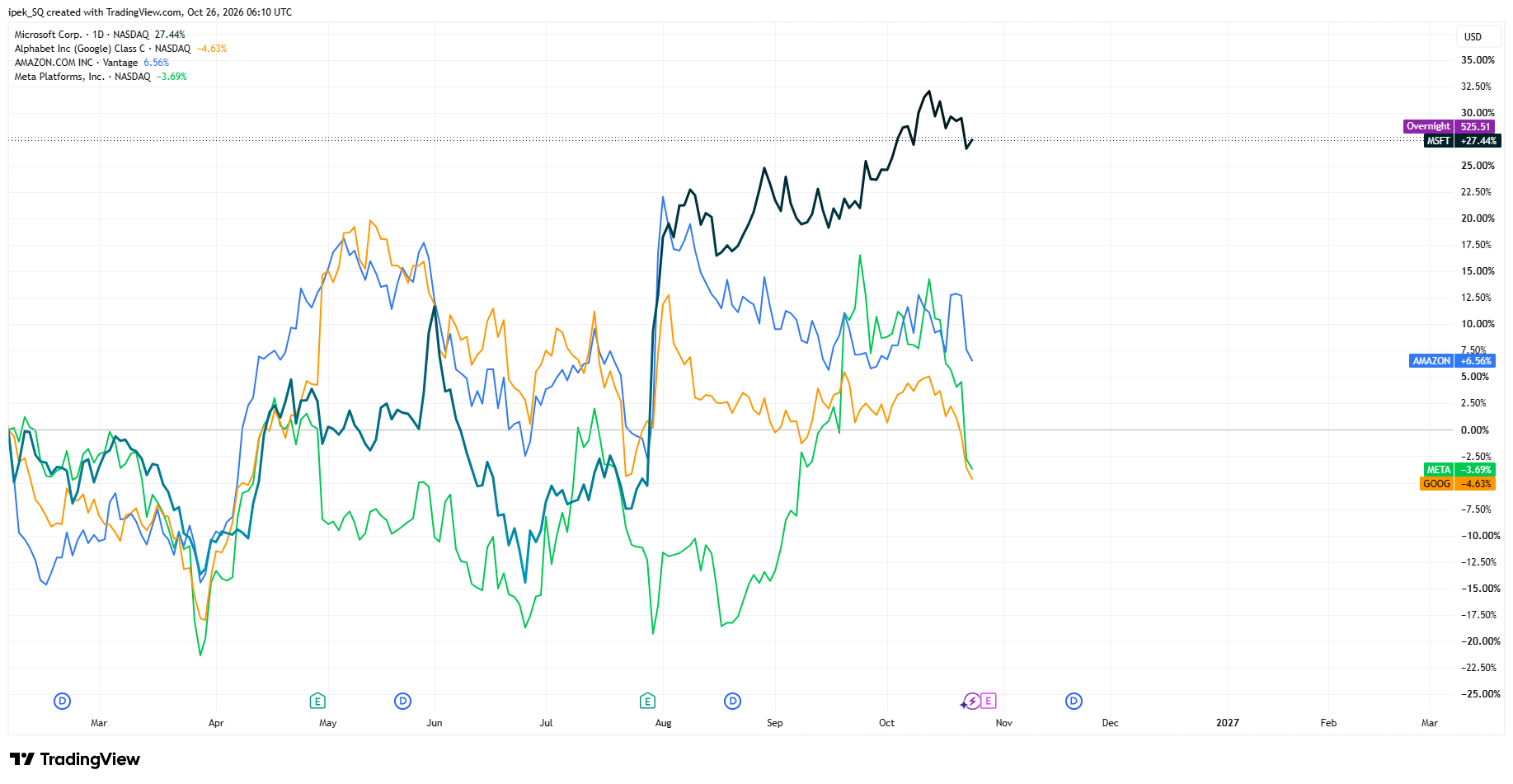
In this sense, Microsoft — having decided to contain spending — has outperformed its major peers, including Alphabet, Amazon and, less comparably, Meta, which doesn’t rent out computing capacity.
Let’s see if this trend continues to shape the AI investment theme.
The content of this website is for informational purposes only and does not constitute financial advice. All opinions expressed are solely my own and should not be considered as recommendations to buy, sell or hold any financial instruments. Readers should consult a qualified financial advisor before making any investment decisions.
With love,
Ipek Ozkardeskaya