
I'm not going to beat around the bush. The first earnings from the Big Tech companies came in strong, but spending was even stronger, leaving some investors nervous and others relieved.
Tesla reported a 23% rise in Q2 revenue compared with the same period last year (when revenue had taken a hit due to the political controversies surrounding Elon Musk, remember). Record vehicle sales brought in the money, but AI spending ate into margins: the operating margin fell from 4.1% to 1.4%. The company reiterated plans to spend around $25–26 billion this year on AI infrastructure, robotaxis, Optimus and custom chips. Investors didn't like what they heard and sent the shares down 4% in after-hours trading.
Over at Alphabet, the picture was much the same. Google parent Alphabet reported strong numbers: total revenue rose 24% to nearly $120 billion, operating profit climbed 34% to more than $40 billion and — this is the big number — cloud revenue surged 82%, well above the 63% cloud growth reported in Q1. That seems to support the idea that Google is right to invest heavily in AI infrastructure: the business is growing, and it is growing fast.
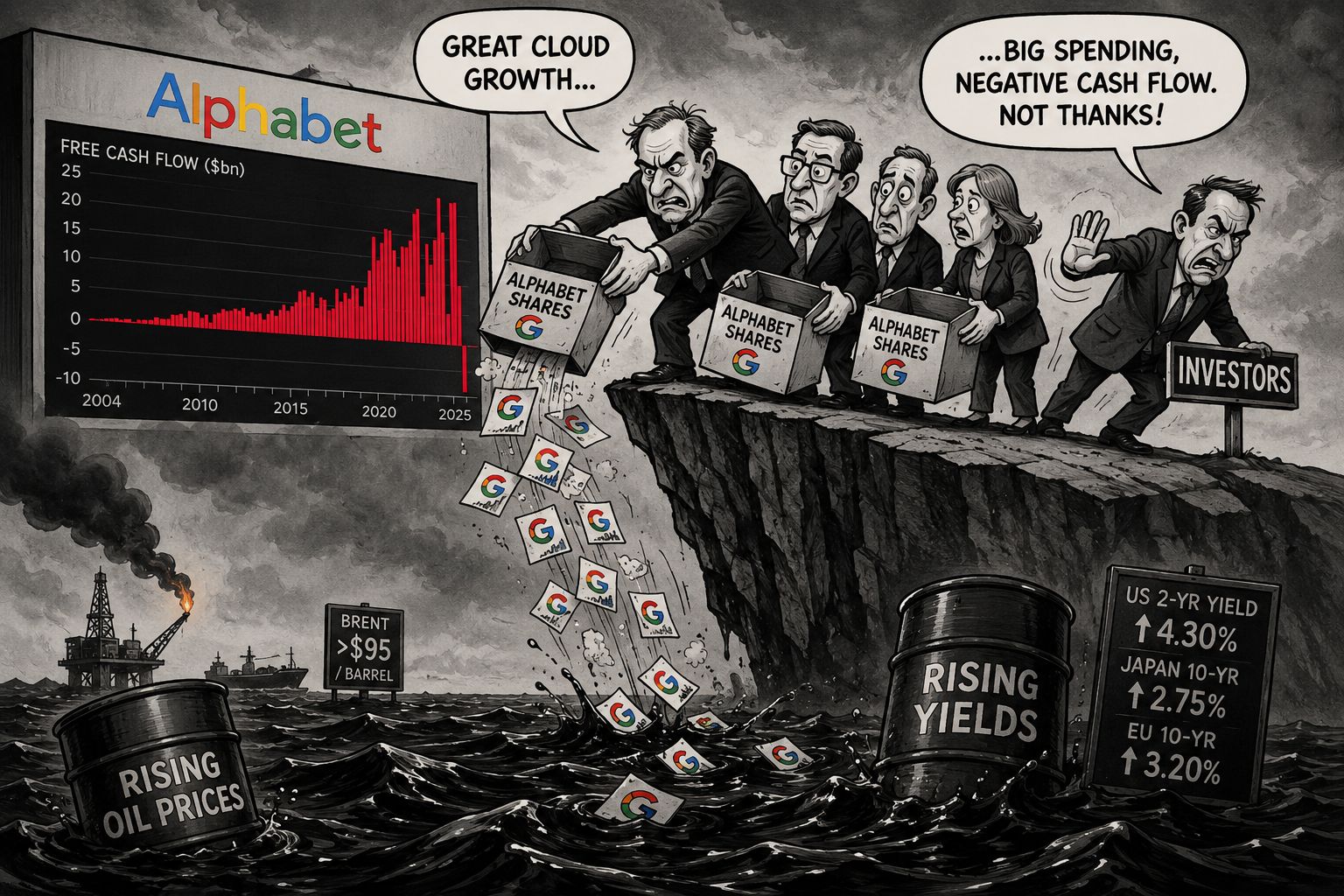
Alas, even these results failed to bring investors back on board, as the company raised its full-year AI spending guidance by another $15 billion to $195–205 billion, while its free cash flow turned negative.
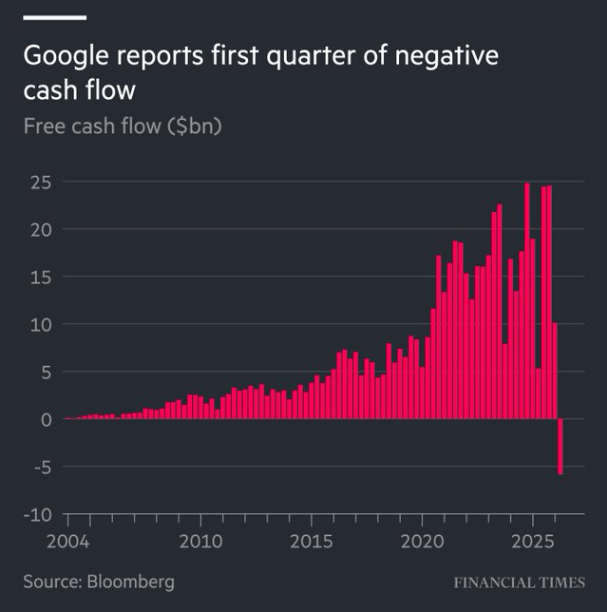
In other words, the company has burned through its cash, and the additional spending will have to be financed through debt and equity issuance. Unfortunately, rising interest rate expectations make that proposition far less appealing to investors. So despite an 82% increase in cloud revenue — a metric that would have thrilled investors a year ago — Alphabet shares fell 3%.
The knee-jerk reaction to Alphabet's earnings sets the tone for the upcoming Big Tech results: investors are increasingly focused on the mounting cost of AI ambitions rather than revenue beats. They don't want more spending, even if that spending boosts revenue and helps prevent a company like Alphabet from falling behind in the AI race.
Perhaps Big Tech sees this as short-term pain for long-term gain.
But as I predicted yesterday, Alphabet's higher spending outlook has echoed positively across Asian chipmakers, as that money will ultimately flow into their pockets.
Look at this chart, it speaks louder than the words.
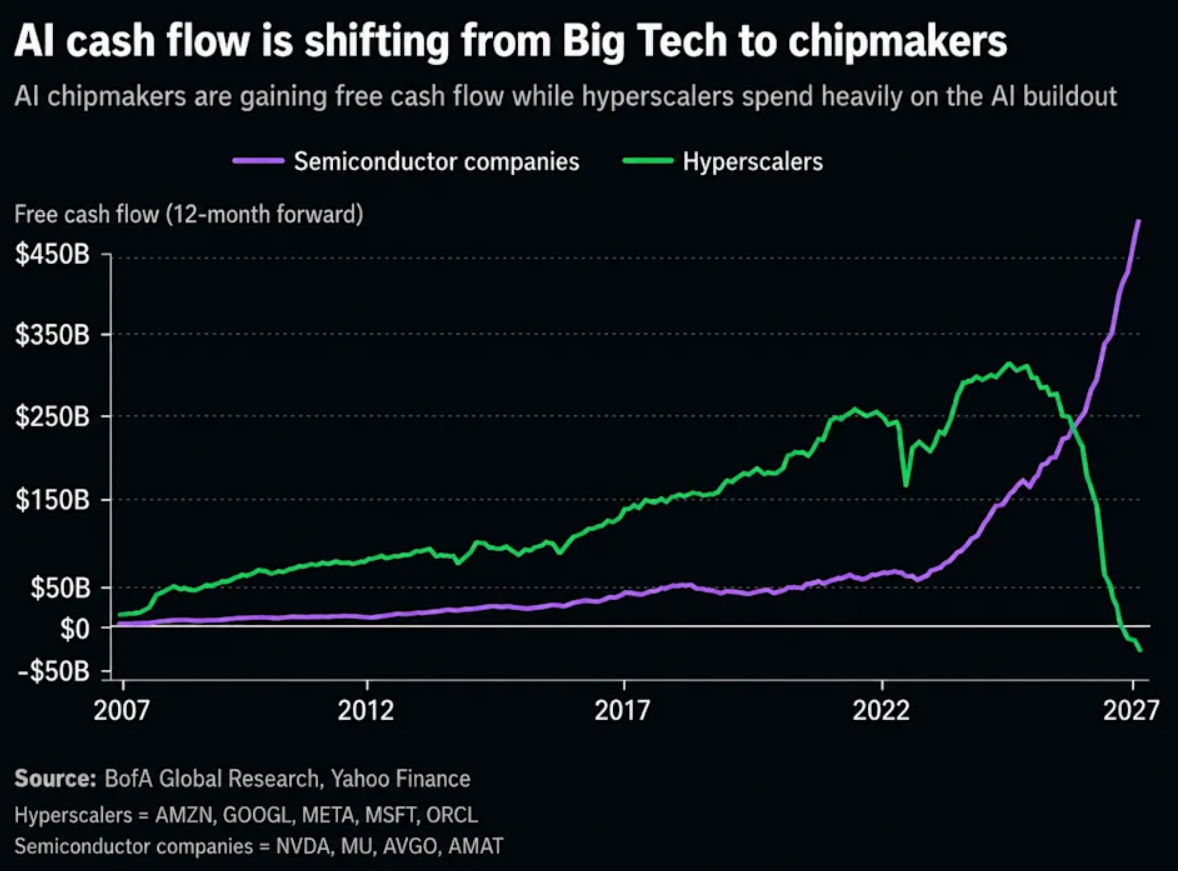
It is therefore no surprise that Korea's Kospi index is up 3.77% at the time of writing, while Japan's Nikkei is also trading higher despite mounting pressure on bond yields. TSMC, however, is struggling to catch a bid this morning, perhaps as investors grow increasingly uncomfortable with pressure from Washington to manufacture advanced semiconductors in the US — a move that would raise costs and squeeze margins.
More spending announcements in the coming days could put a floor under the sell-off in chip stocks, but the correction in Big Tech itself looks set to continue.
Today, Intel will release its Q2 earnings after the closing bell. I expect strong results, solid guidance and potentially a positive market reaction, as Intel sits on the right side of the table — among those receiving Big Tech's AI spending.
Darker macro setup
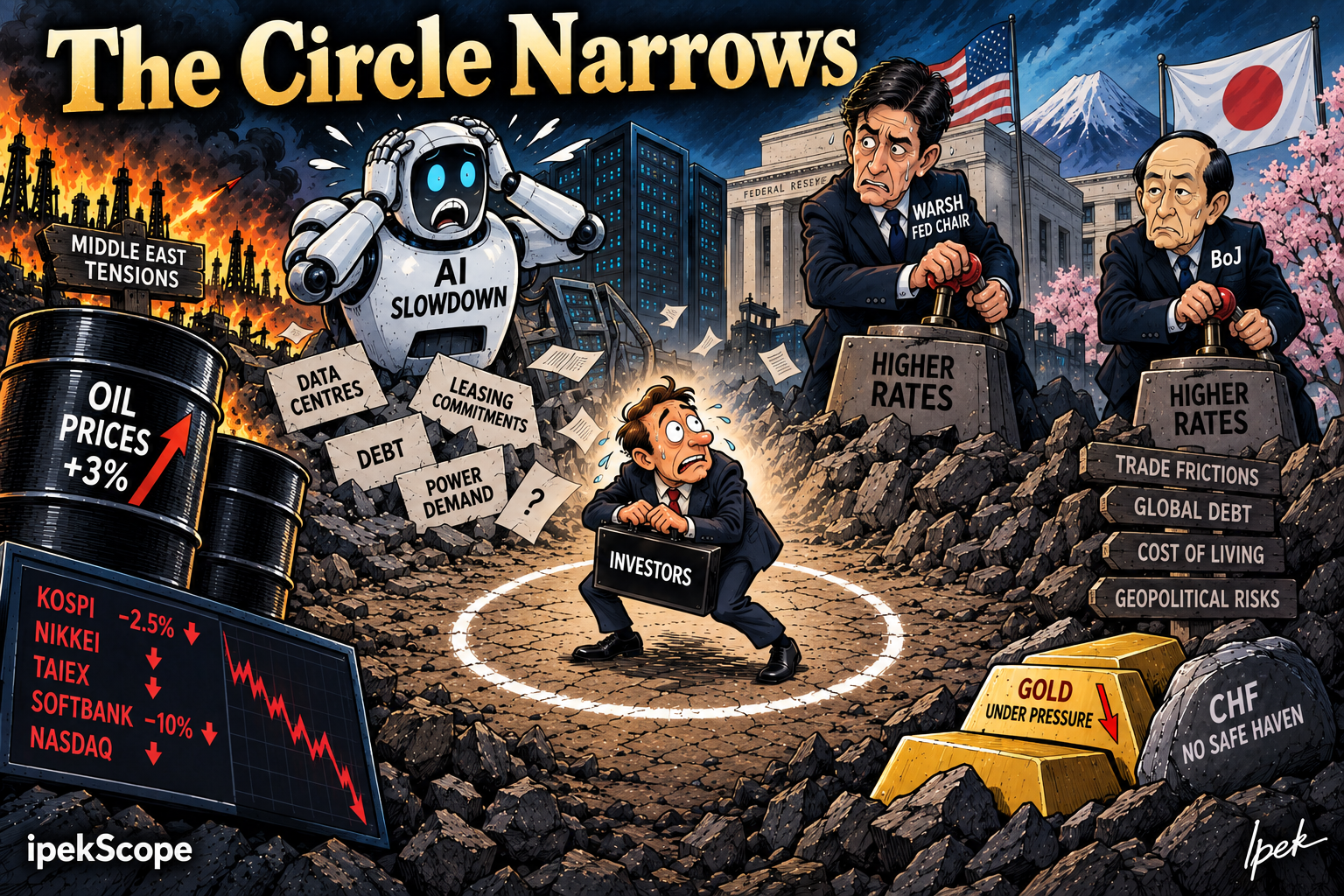
Zooming out, though, the global macro picture isn't looking any better. The Houthis reportedly targeted two Saudi Arabian tankers in the Red Sea in an effort to curb the country's oil exports from the Yanbu port, while traffic through the Strait of Hormuz remains near a standstill as the US and Iran continue to exchange attacks and threats. US crude climbed above $90 per barrel, while Brent surged past $95 per barrel — around 36% above the July low.
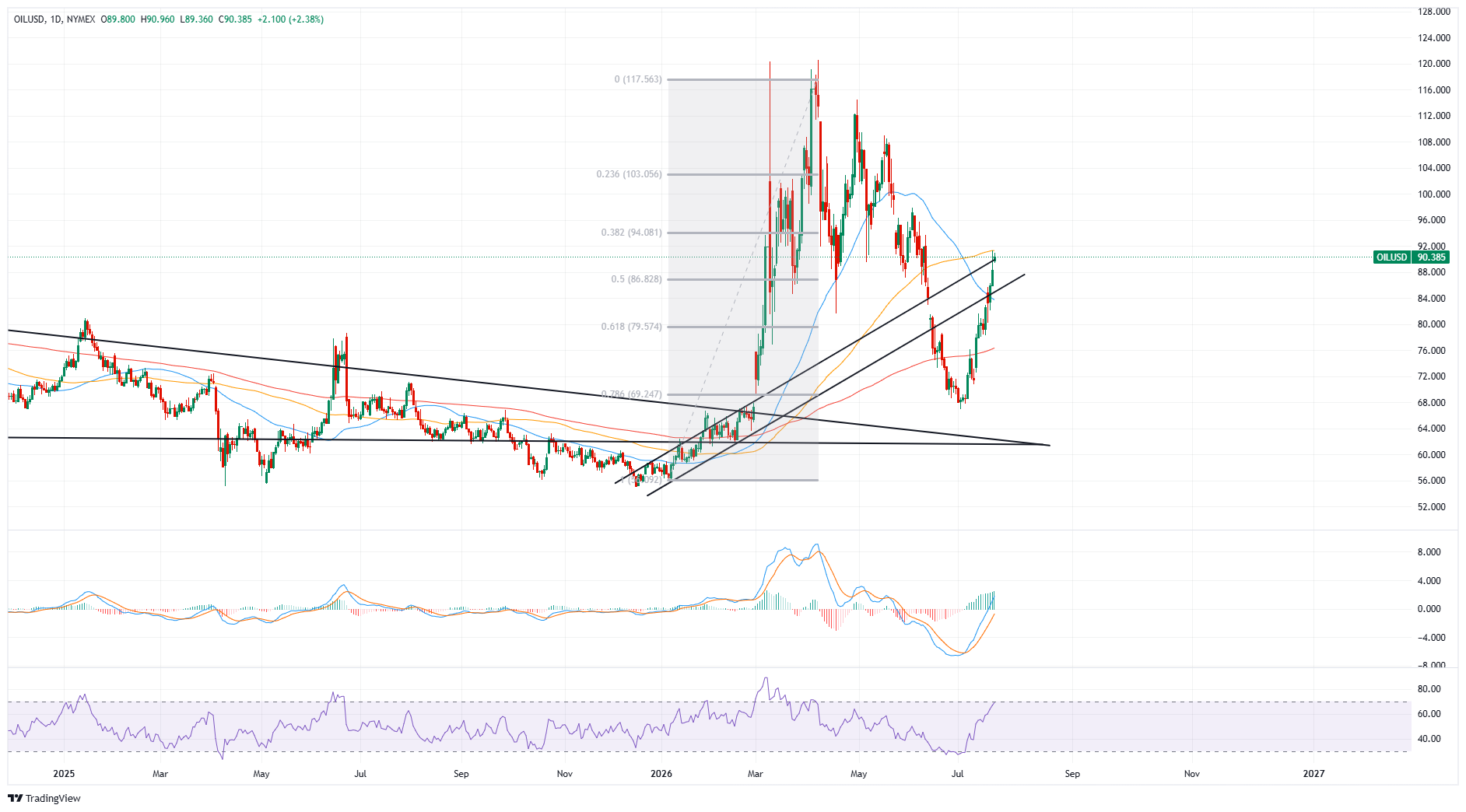
Rising oil prices are fuelling inflation expectations and pushing bond yields higher. The US 2-year Treasury yield — the maturity that best reflects Federal Reserve (Fed) rate expectations — climbed to 4.30%, its highest level since February 2025, as investors increasingly bet that the Fed will have to raise rates at upcoming meetings to preserve price stability. Japan's 10-year government bond yield is consolidating near 2.75%, close to a multi-decade high, as the Bank of Japan (BoJ) is also expected to continue normalising policy to counter inflation. The same is true in Europe. The benchmark European 10-year yield has returned to its highest level since the Iranian war, with rising oil prices pushing it to around 3.20%. It will likely continue to rise if energy prices keep climbing. European natural gas futures jumped 4.82% yesterday and are now up roughly 56% from their June low. All of this is being reflected in higher government bond yields.
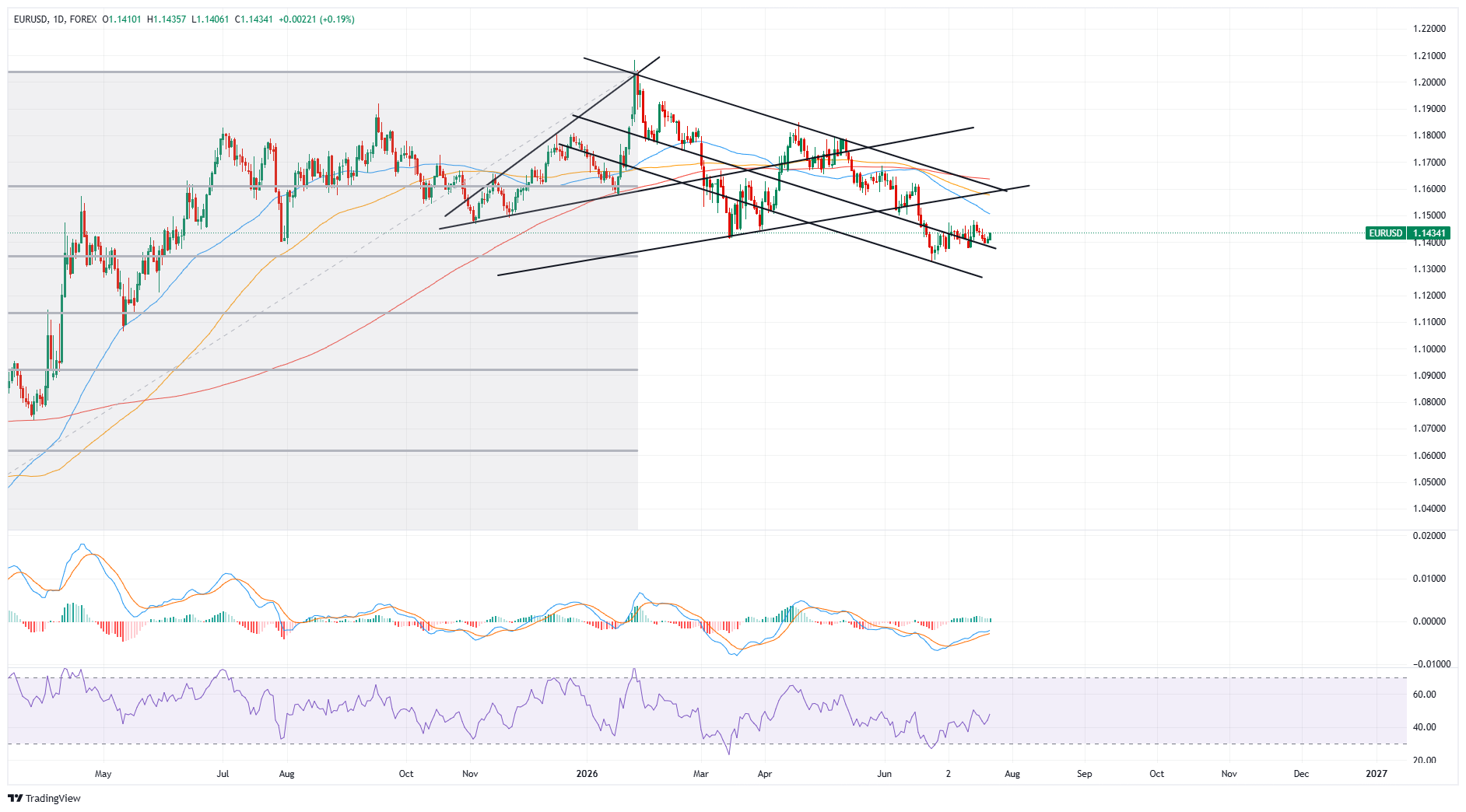
Today, the European Central Bank (ECB) is expected to leave rates unchanged, but President Lagarde will likely leave the door open to another rate hike should the geopolitical and macroeconomic backdrop deteriorate further. The EURUSD rebounded yesterday despite rising oil prices — an interesting move — while sterling barely reacted to softer-than-expected CPI data, as traders looked through the report knowing that upcoming inflation readings are likely to run hotter, if nothing because of the 13% increase in the energy price cap in July.
As such, rising energy prices continue to reinforce expectations of more hawkish central banks. In the near term, a hawkish message from the ECB could encourage a further rise in the EURUSD. Further down the road, however, if major central banks are forced to raise rates to fight inflation, both the euro and sterling could struggle to benefit, given Europe's much weaker growth outlook relative to the US, whose economy continues to be supported by AI investment and government spending. As a result, any advance in the major currency pairs could remain limited as long as the wars in the Middle East and Ukraine continue.
The content of this website is for informational purposes only and does not constitute financial advice. All opinions expressed are solely my own and should not be considered as recommendations to buy, sell or hold any financial instruments. Readers should consult a qualified financial advisor before making any investment decisions.
With love,
Ipek Ozkardeskaya