
US and European markets took a breather yesterday, on the back of a two-day decline in oil prices thanks to the brief easing of Middle East tensions. That window offered a glimpse of the underlying market dynamic once the geopolitical noise was filtered out: the rotation.
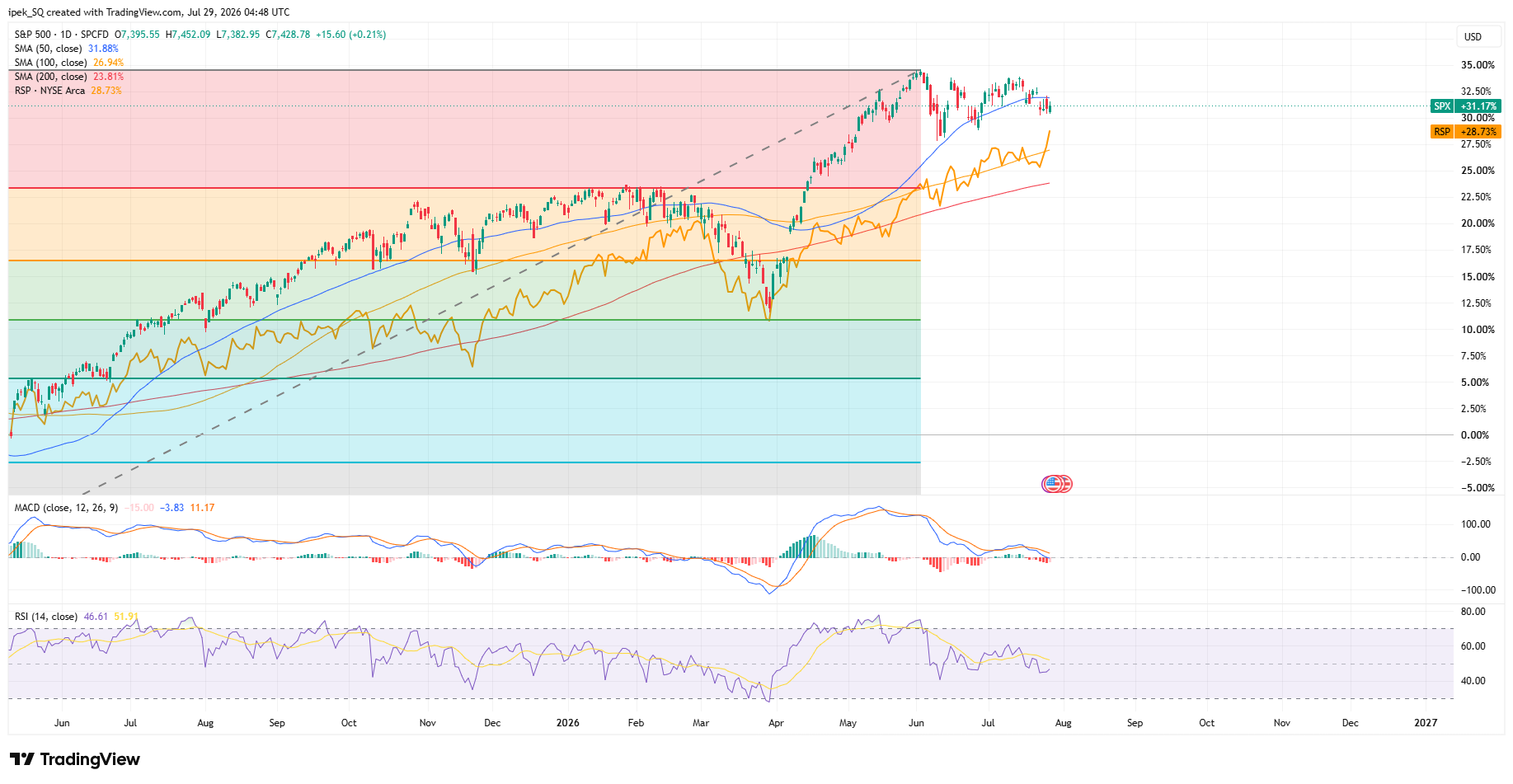
Investors directed capital toward technology-light indices. The FTSE 100 outperformed most European indices despite falling oil prices, and closed the session just a few points below an all-time high. The Dow Jones Industrial Average outperformed its US peers with a 1% gain, while the tech-heavy Nasdaq 100 fell another 1%. The S&P 500 Equal Weight Index advanced to a fresh record high, while the market-cap-weighted version saw its upside capped by pressure on technology valuations.
Earnings Season is going well!
On the micro front, the earnings season is going well for most US and European companies. European banks are following their US peers in announcing strong quarterly results (though a bit less impressive than those of their US counterparts, which is at times weighing on their share prices). Across the Atlantic, nearly a third of the S&P 500 companies have already reported results, and their earnings have grown by nearly 38% — well above the 23% growth rate pencilled in by analysts. Quite a surprise for a quarter that was marked by soaring energy prices!
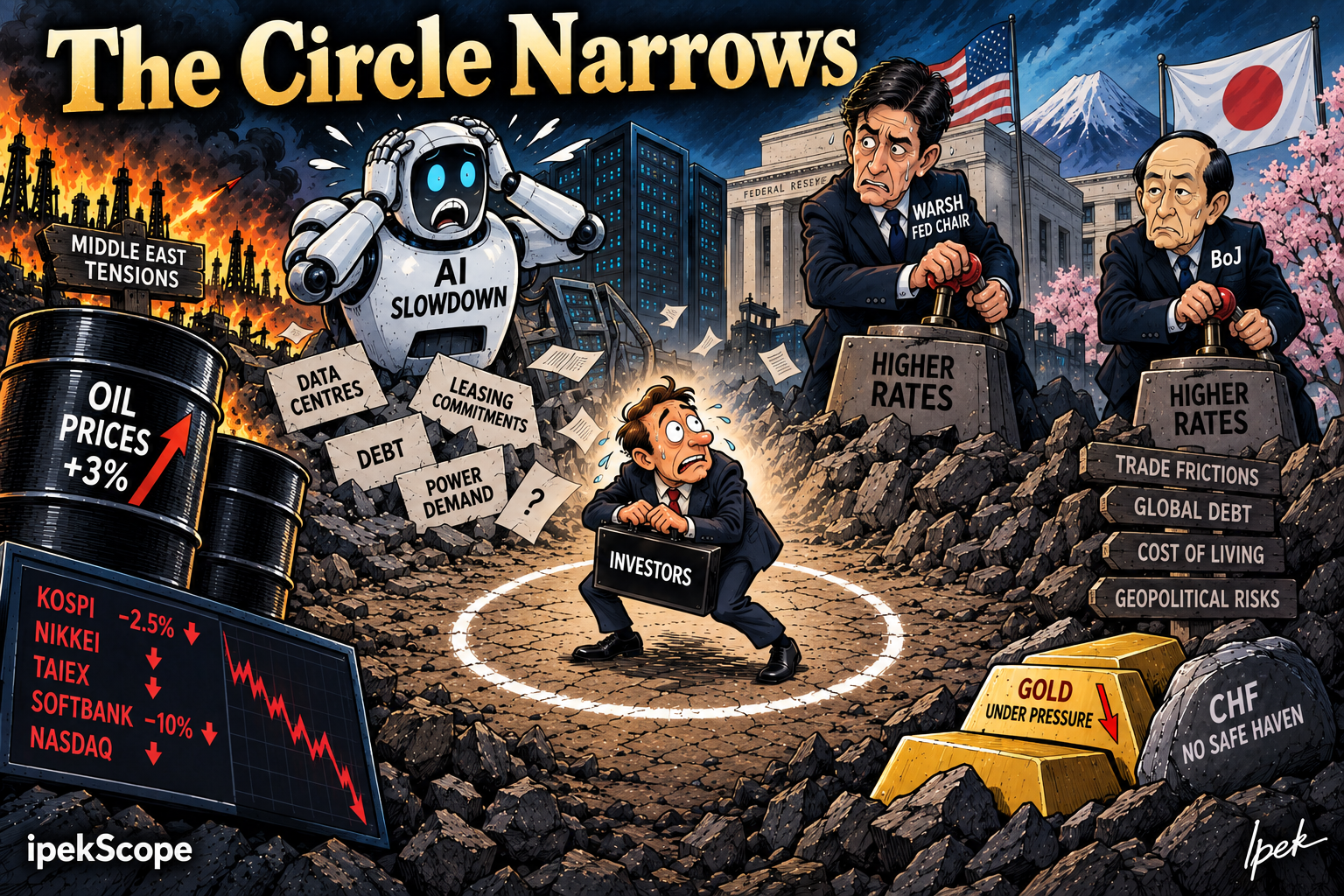
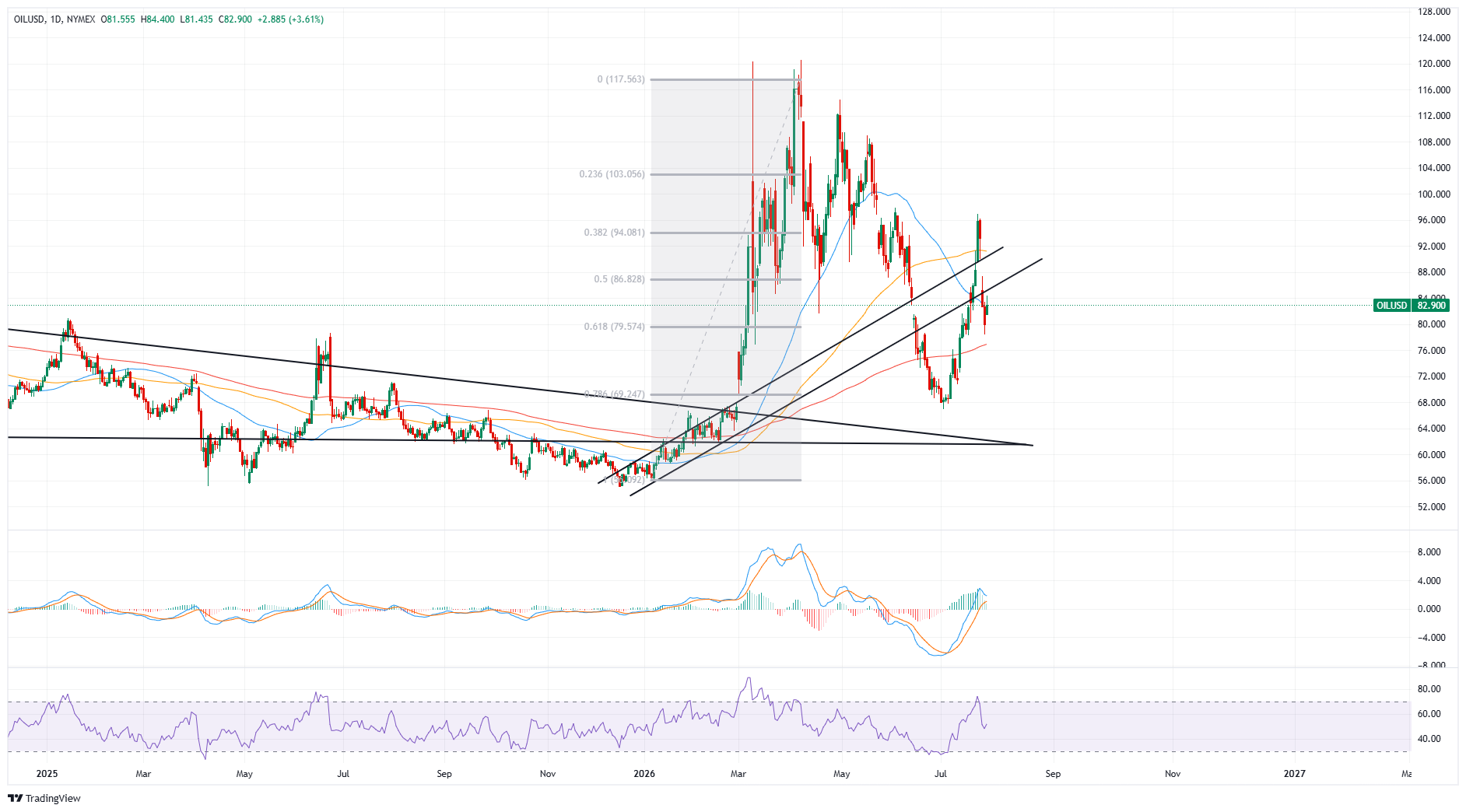
Therefore, it makes sense that a de-escalation in Middle East tensions and a pullback in energy prices would boost appetite for risk assets. The problem is, calm in the Middle East never lasts long. News this morning suggests that the US intercepted fresh Iranian attacks on its military bases. US crude is up more than 3.5%, while US and European futures point to a negative start.
The Fed Suspense
Later today, the Federal Reserve (Fed) will announce its second policy decision under its new Governor, Kevin Warsh. Activity in Fed funds futures implies no more than a 30% chance of a 25bp rate hike today. But because Warsh has abandoned forward guidance and refuses to steer markets toward future rate decisions, all options are — and will remain — open at this week's meeting and beyond.
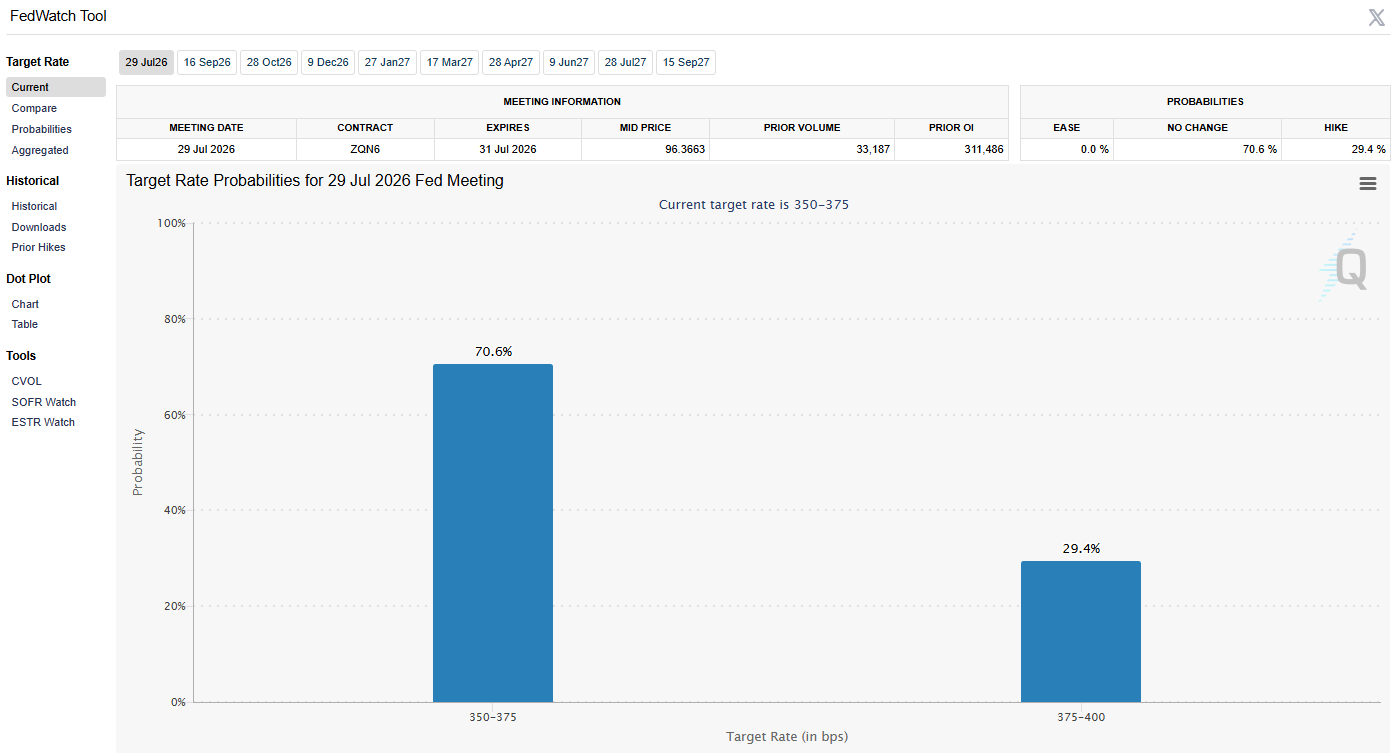
Again, I don't believe that the Fed is in a rush to raise rates this week. The latest inflation figures were soft enough to justify waiting until the September meeting. Yet the accompanying statement will likely remain cloudy — as cloudy as the situation in the Middle East — with a hawkish tilt, as Warsh is unhappy with inflation running above target for the past half-decade regardless of the recent surge in energy prices. So, we know that another Fed rate hike is coming; we just don't know when. A partially priced rate hike today would definitely spoil the market mood and would also be politically interesting to watch. No change — the base-case scenario — would keep the focus on geopolitical developments and earnings trends.
SK Hynix is thrown under a bus
SK Hynix revealed its Q2 results today, and the announcement didn't go smoothly — to say the least. The numbers were good, but expectations were even higher. The company reported record revenue while operating profit surged more than sixfold from a year earlier and margins more than 80%, driven by relentless demand for AI memory chips and strong pricing power in an environment of chip scarcity. Alas, that fell about 6% short of analysts' lofty forecasts.
More importantly, the earnings miss comes just days after Chinese competition in the memory chip market emerged, hinting at softer pricing power ahead – hence potentially softer margins. Now, it's worth noting that some argue China's entry into the memory chip market will mainly increase supply for lower-margin chips, leaving SK Hynix, Samsung and Micron with more capacity to increase production of higher-margin AI memory chips. But investors don't want to hear a word of it.
Another thing investors don't want to hear is higher spending. To that end, SK Hynix doubled down on its aggressive investment plans, saying capital spending will remain elevated as it expands HBM and next-generation memory production to meet long-term AI demand.
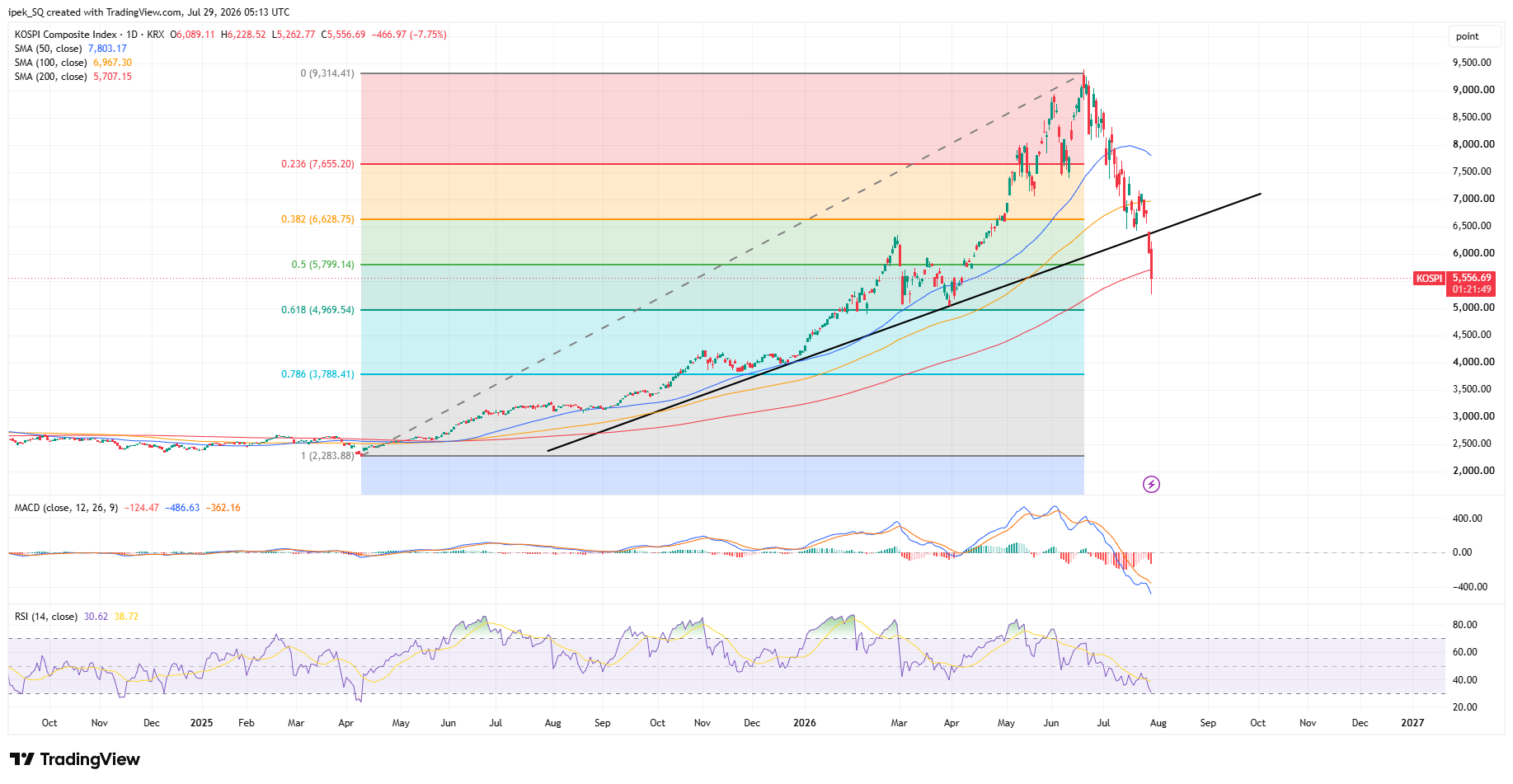
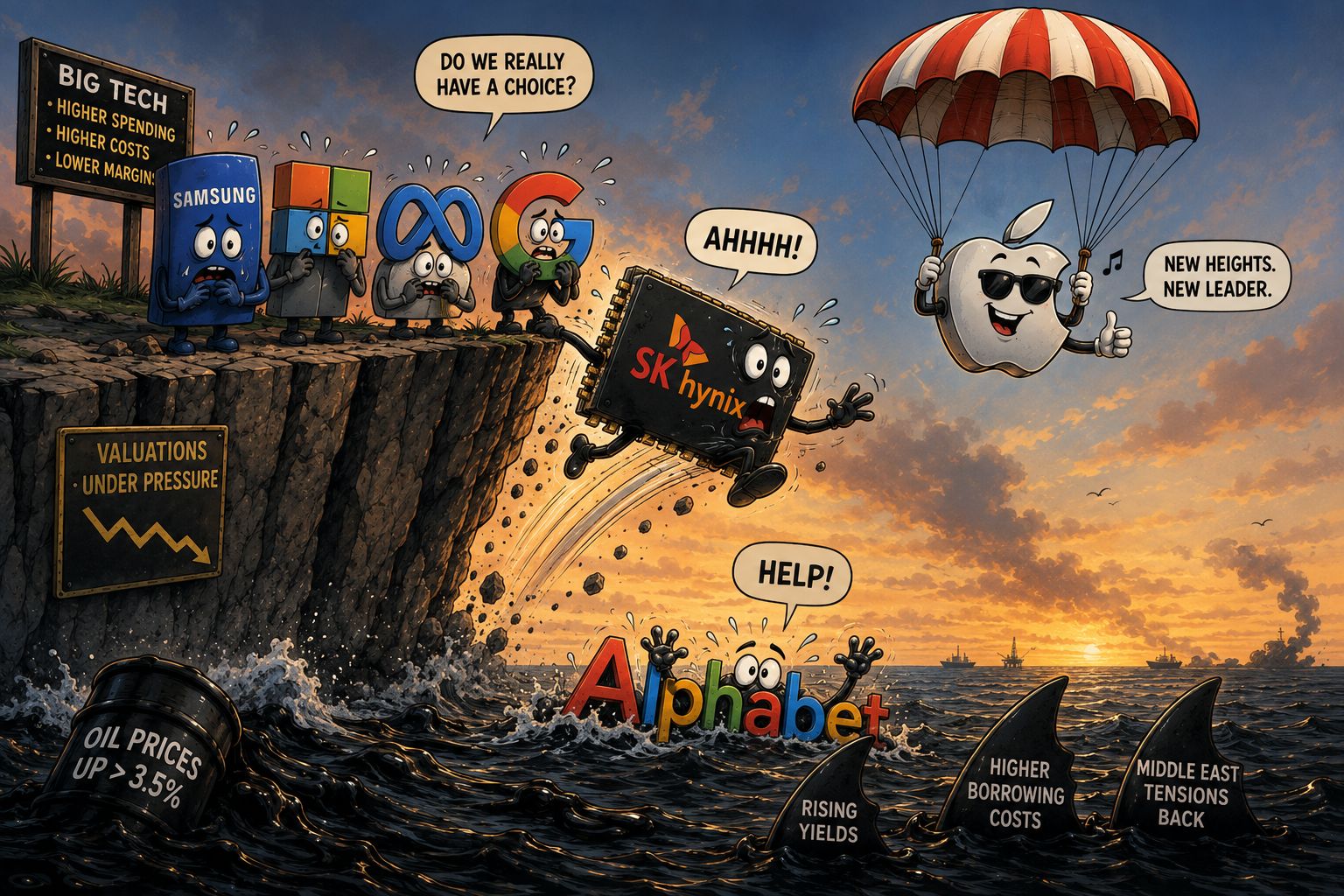
So the sour combination of softer-than-expected earnings and higher-than-expected spending plans pushed SK Hynix off a cliff today. The stock is down 16% at the time of writing. Samsung — which is due to report its own results tomorrow — is down 10% before saying a word about how it performed. The Korean Kospi index is down more than 7%. It has slipped below the past year's rising trendline, its 200-day moving average and the 50% Fibonacci retracement level. It is, however, approaching oversold territory, which suggests that the selloff could slow in the coming weeks. Yet this bubble is now over, and I don't see investors returning to memory chip stocks with the same appetite they had over the past year. It's time to catch a fresh wave.
Big Tech headed for the same destiny?
For Big Tech’s Big Spenders, the earnings season look to be shaky and heated. Alphabet opened the dance last week by announcing even more spending this year, giving the rest of the team little choice but to follow. Remember, I wrote last week that Big Tech is now trapped in a Spender's Dilemma, forcing companies to increase spending to stay in the race even if it means higher borrowing costs and lower margins. The AI spending aims to boost advertising revenue at Meta and cloud revenue at Microsoft and Amazon, but given the muted reaction to Alphabet's 82% cloud growth, I am afraid it will take a major earnings surprise to reverse the bearish tide across Big Tech.
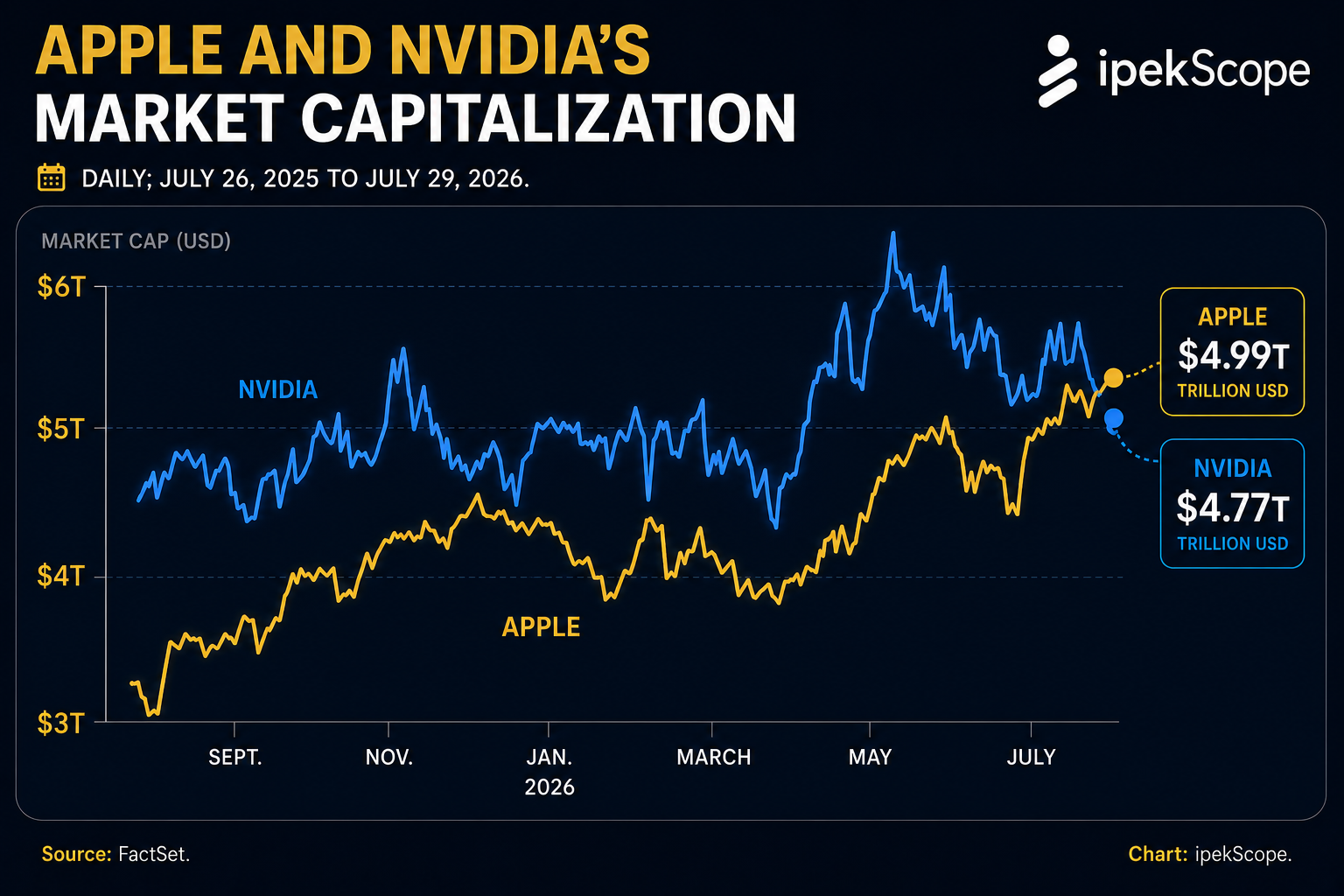
Fun fact: Apple — the only Big Tech company that missed the AI wave among the Magnificent Seven and was hammered for months because of its lack of AI innovation — saw its market capitalisation overtake Nvidia's this week. Apple's market cap now sits just below $5 trillion, while Nvidia's has fallen to $4.77 trillion.
This is perhaps the clearest example yet of capital flowing out of the biggest AI spenders. That rotation initially benefited companies in the AI supply chain, but now even that trade is fading.
With that said, I'm off for my summer break until August 10.
Thank you for reading, and goodbye until then!
The content of this website is for informational purposes only and does not constitute financial advice. All opinions expressed are solely my own and should not be considered as recommendations to buy, sell or hold any financial instruments. Readers should consult a qualified financial advisor before making any investment decisions.
With love,
Ipek Ozkardeskaya