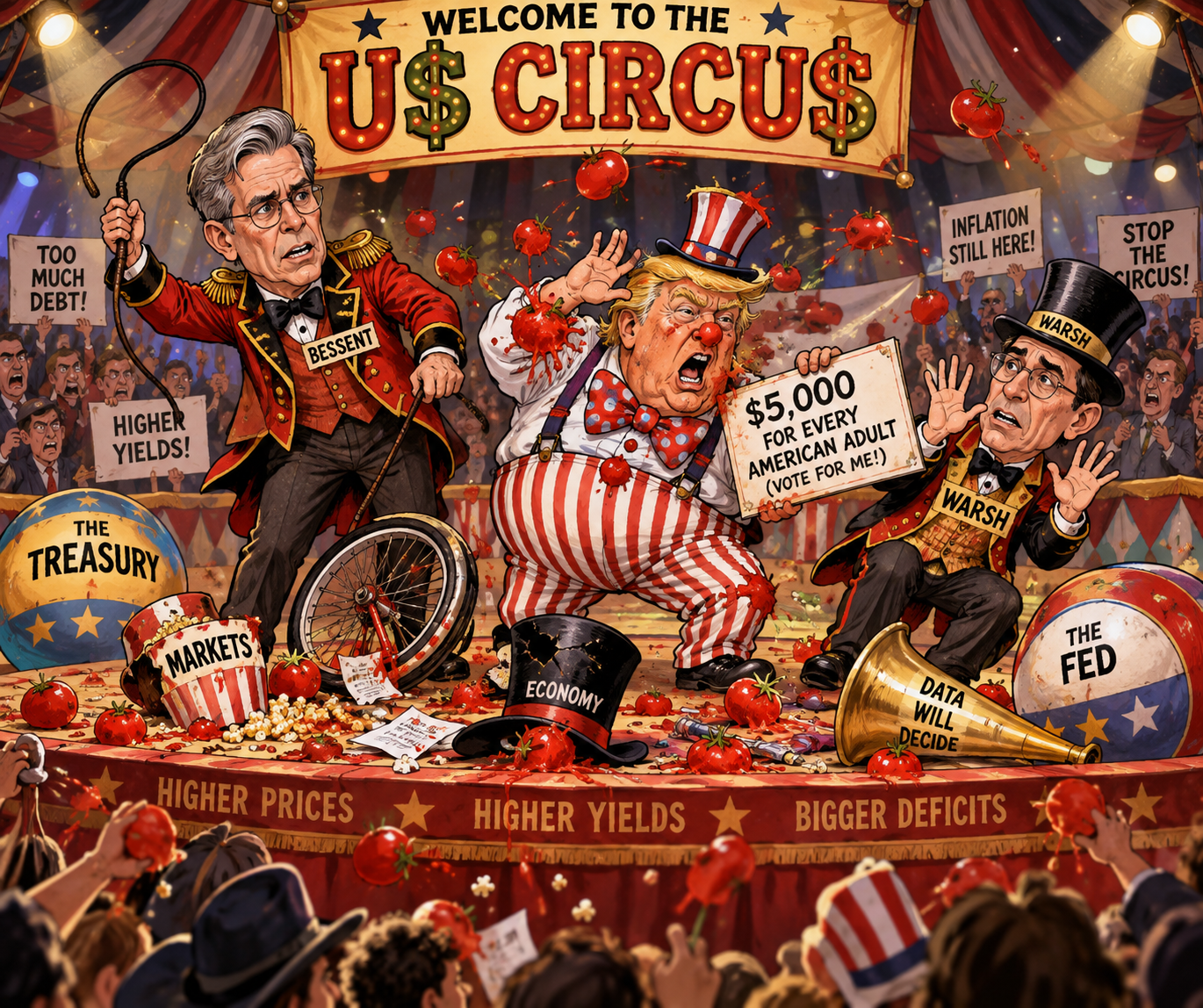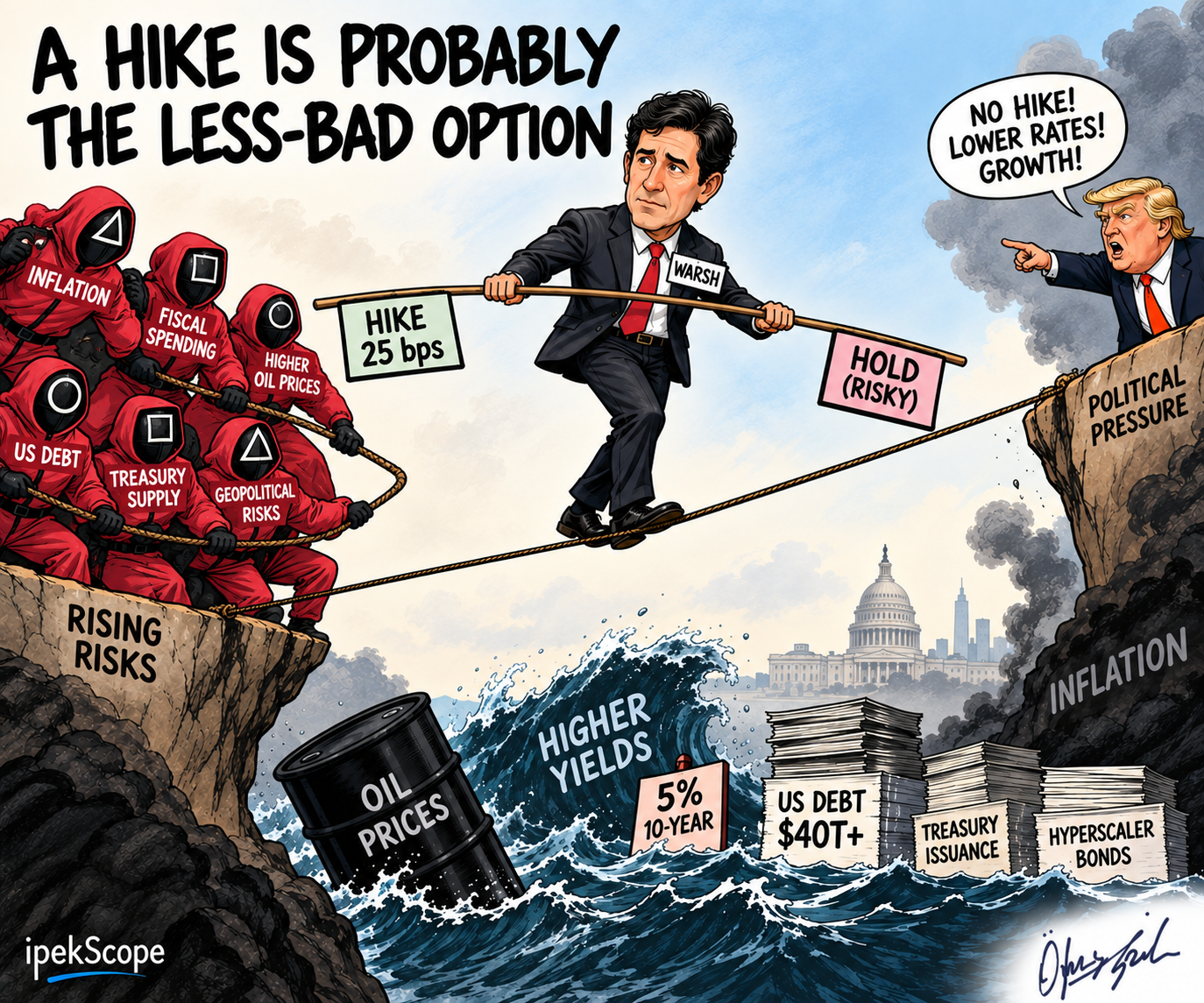

Wednesday morning, the market’s verdict is clear: the Fed should deliver a 25bp hike today. If that’s the case, it would be the first rate hike in three years, and the first hike under new Fed Chair Kevin Warsh – a decision we all know is diametrically opposed to what the current US administration would like to see.
Note that the Fed didn’t guide the market toward that decision. Investors guided themselves in light of the economic data and geopolitical factors. And a 25bp hike is what investors collectively think should happen, and they’re positioned for it. Fed funds futures price in a more than 90% chance of a 25bp hike.
It’s not Kevin Warsh. It’s us.
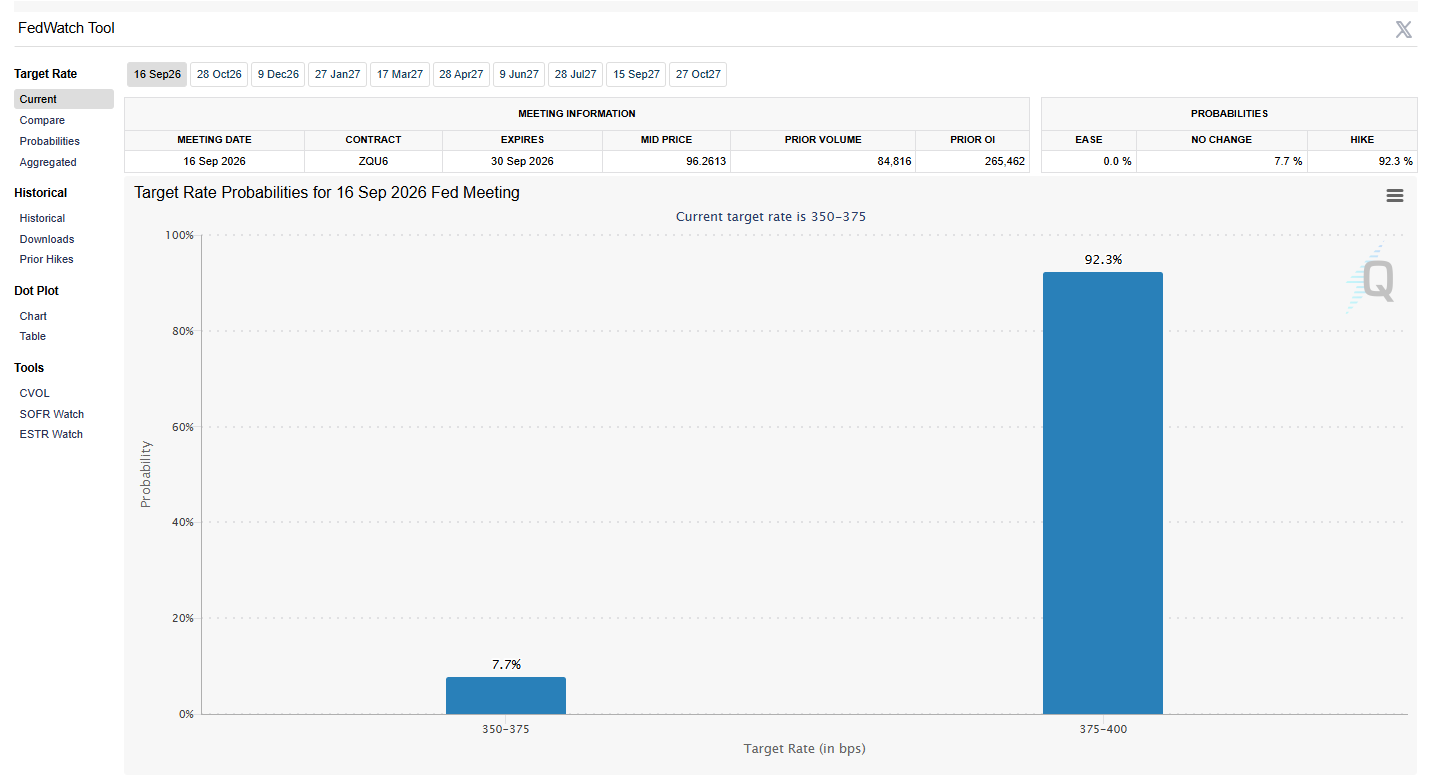
And well, it would be really odd – and potentially dramatic – if the Fed decided to go against that expectation. We would see a very sharp selloff in the US dollar, and potentially also in longer-term US Treasuries – and it would be quite terrible when you think that the US 10-year yield just spiked past 5% and reached levels last seen in 2007.
On the other hand, if the Fed hikes rates with no further guidance – which I think will happen – stock and bond markets could see it as the less-bad scenario and react positively: the yield curve could flatten and equities could react positively.
Nominal yields tell only PART of the story!
Many people argue that 5% is historically not a high level for the US 10-year paper. Yes, yields were at these levels – or higher – twenty years ago. But that was 20 years ago!
At that time, developed-market government debt was also significantly lower. The US total public debt, for example, was less than $10 trillion. Today, it is past $40 trillion and rising rapidly.
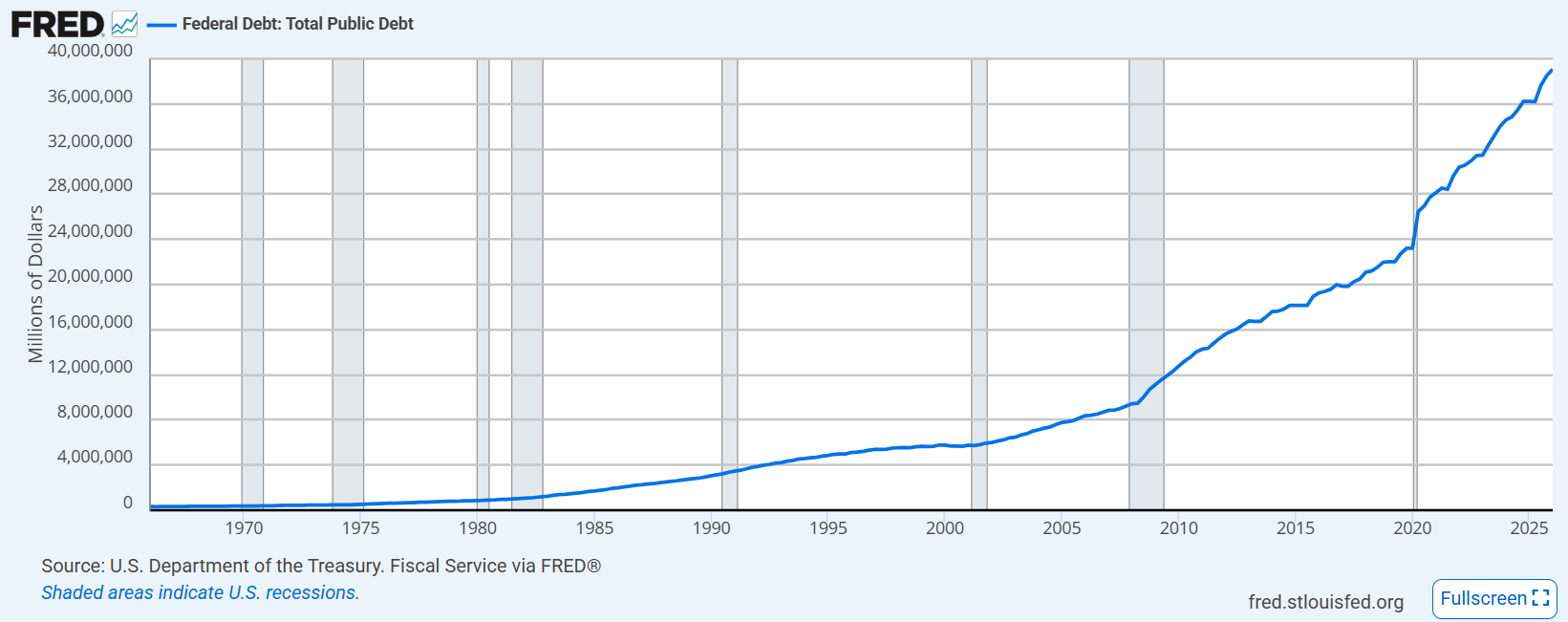
Servicing that debt, paying interest on that debt, is a different beast than 20 years ago. The so-called developed-market economies have become much more vulnerable to rising rates today than they were 20+ years ago.
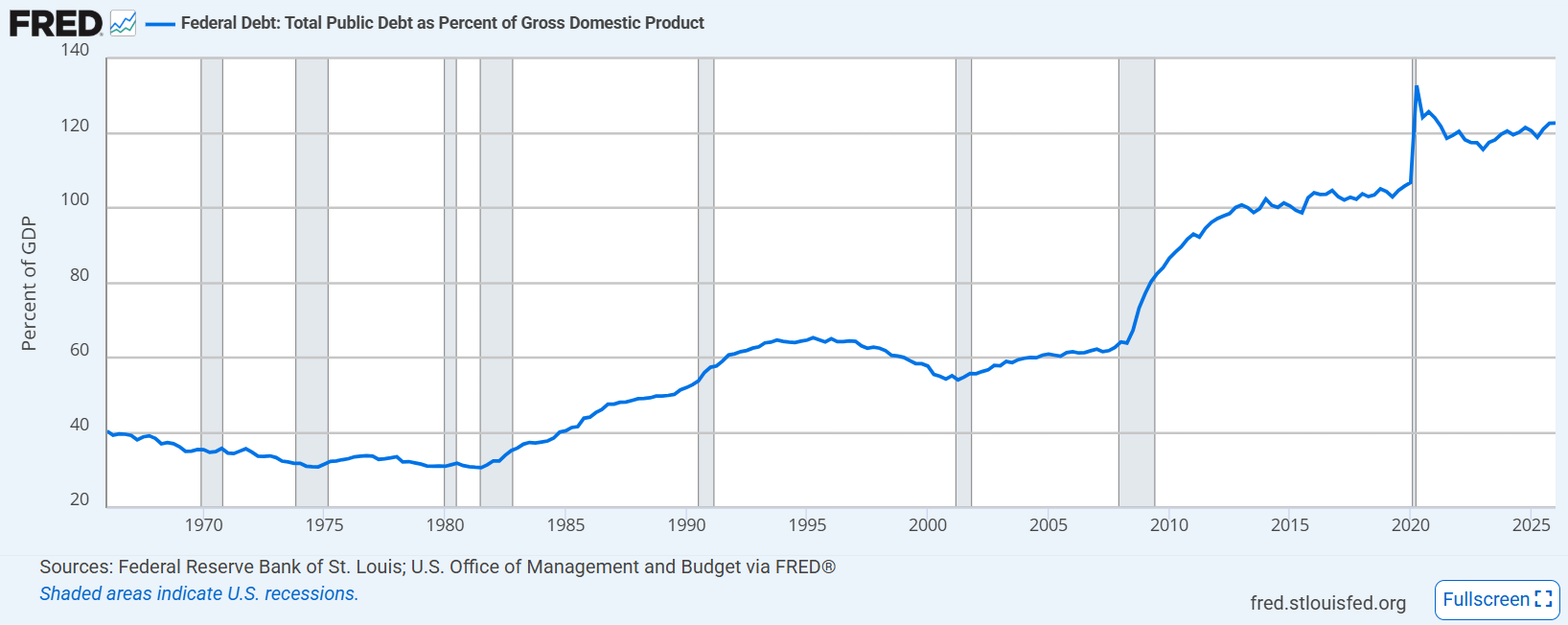
So no, I will insist that, given the current context (with debt growing faster than GDP), 5% on US 10-year paper is quite a high yield for America (no matter the fact that the yields have been there before). Pre-2007, the US debt-to-GDP ratio was near 60% at its maximum, it stands past 120% today.
The US must issue debt to pay interest, foreign and institutional demand for US Treasuries is weakening, and the US Treasury Department’s ridiculous efforts to counter the selling don’t amount to much more than a fly in a crowded trading room.
So the real question is not where yields stand compared to pre-2007; it is rather how high they will go, how agile central bank policies will need to be to keep inflation expectations and longer-term yields anchored, and how long equity markets can withstand yields near these levels.
Those are the real questions.
Yields and oil
The good news is that right now, and as we also see through the strong earnings growth of S&P 500 companies, the US economy remains robust (thank AI investment and government spending). Consumer spending has proved resilient to tariff and energy shocks, and this resilience masks weakening consumer confidence and growing pain in the housing market. With GDP growth near 2% annually, the US can withstand rate hikes.
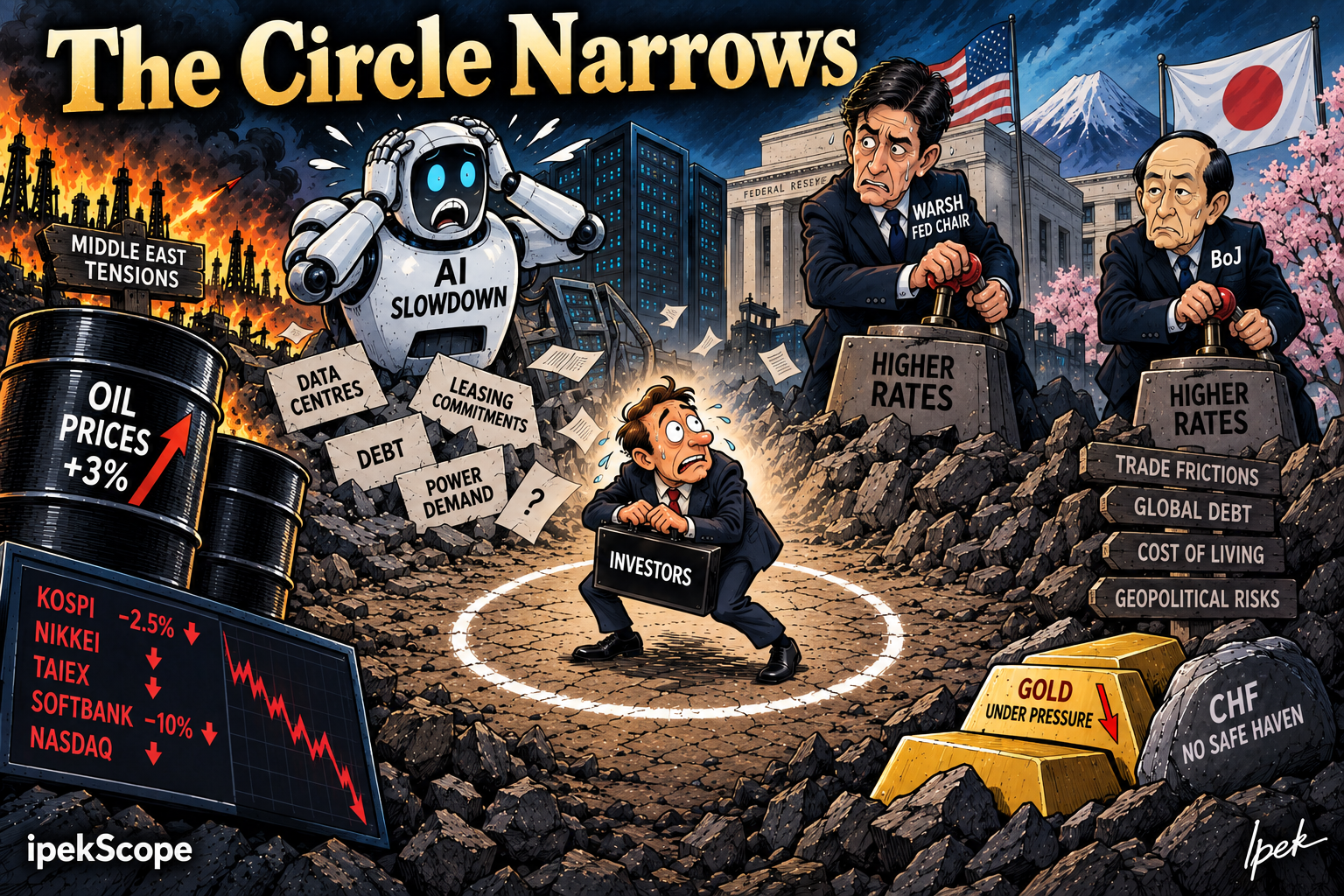
But the bad news is that the energy shock is now playing a nasty role. The correlation between oil and US Treasury yields is very tight today, near its highest level in seven years according to CNBC, showing that the bond market is reacting unusually strongly to moves in oil prices. That means that if oil prices stay high – or push higher – markets will be pricing not simply higher rates for longer, but higher inflation risk for longer. Combined with heavy Treasury issuance, fiscal concerns and competing hyperscaler bond supply, long-end yields could keep rising even without additional Fed hikes, and equities may feel the heat even with no rate hikes (I would say ‘especially’ with no rate hikes).
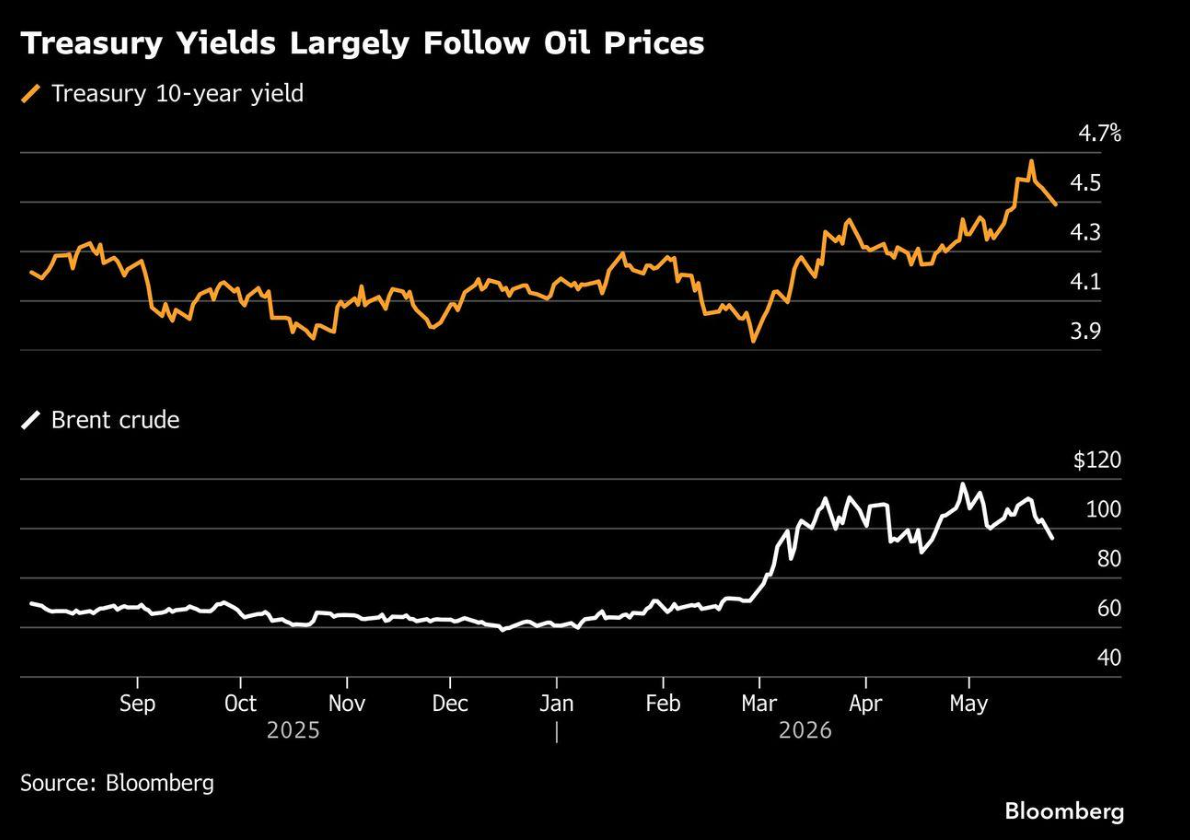
Hopefully, oil prices will not stay high for long (we will likely see them pull back rapidly if the wars in the Middle East and Ukraine end), but as long as oil producers can’t bring their barrels to market, the undesired pressure on yields will persist and remain a looming risk for equity bulls.
If we look at the numbers – because this is what we love to do – at a forward P/E of roughly 19×, the S&P 500 earnings yield is about 5.2% today. That’s roughly what you can get by buying US 10-year Treasuries and holding them to maturity.
Of course, stocks can potentially pass inflation through into revenues and earnings, whereas the nominal coupon on a conventional Treasury is fixed. But the higher US yields move, the less investors are being compensated for taking the additional risk of owning equities.
Since the Iran war started, the sharp rise in US yields hasn’t prevented the S&P 500 from climbing higher. The question is how high US yields can go before derailing US equity markets.
Well, it depends on whom. For the hyperscalers, for example, the gap between return on invested capital and the average cost of capital remains wide enough to absorb a further rise in financing costs. Alphabet’s latest ROIC stands above 40%, compared with a cost of capital of around 10%. Microsoft, Meta and Amazon also retain comfortable cushions. Oracle, on the other hand, is already much closer to the line.
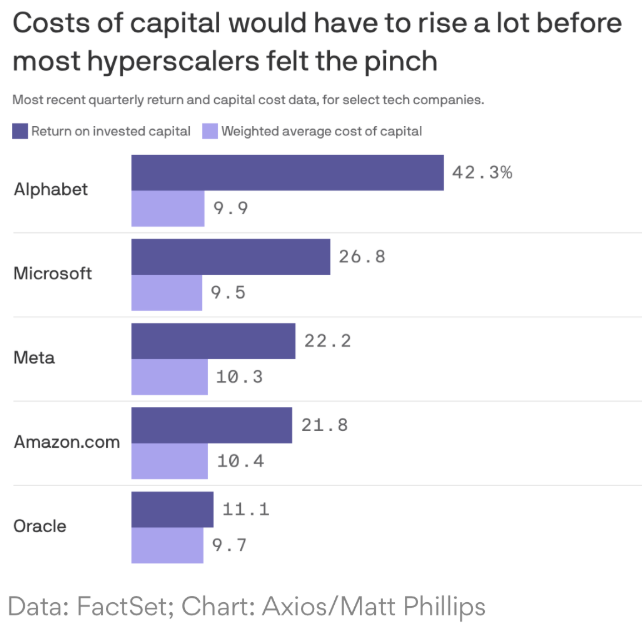
But beyond the hyperscalers, the picture is much less comfortable: highly leveraged, capital-intensive and low-return companies would feel the pinch from higher yields much sooner.
Last word
What’s funny is that the companies that helped push US yields higher through debt issuance to finance enormous AI investment may actually be among the companies best equipped to survive those higher yields. Those that generate revenue today, have low leverage and generate ample free cash flow are also in a better position to navigate potentially turbulent waters.
And as paradoxical as it may sound, a rate hike and a firm Fed stance are not as scary as letting monetary policy diverge from economic fundamentals. On the contrary, higher interest rates today are probably one of the few things that could help cool the pressure on the longer end of the yield curve – by anchoring longer-term inflation expectations.
This is why a rate hike today could be less harmful to equities than no action.
The content of this website is for informational purposes only and does not constitute financial advice. All opinions expressed are solely my own and should not be considered as recommendations to buy, sell or hold any financial instruments. Readers should consult a qualified financial advisor before making any investment decisions.
With love,
Ipek Ozkardeskaya