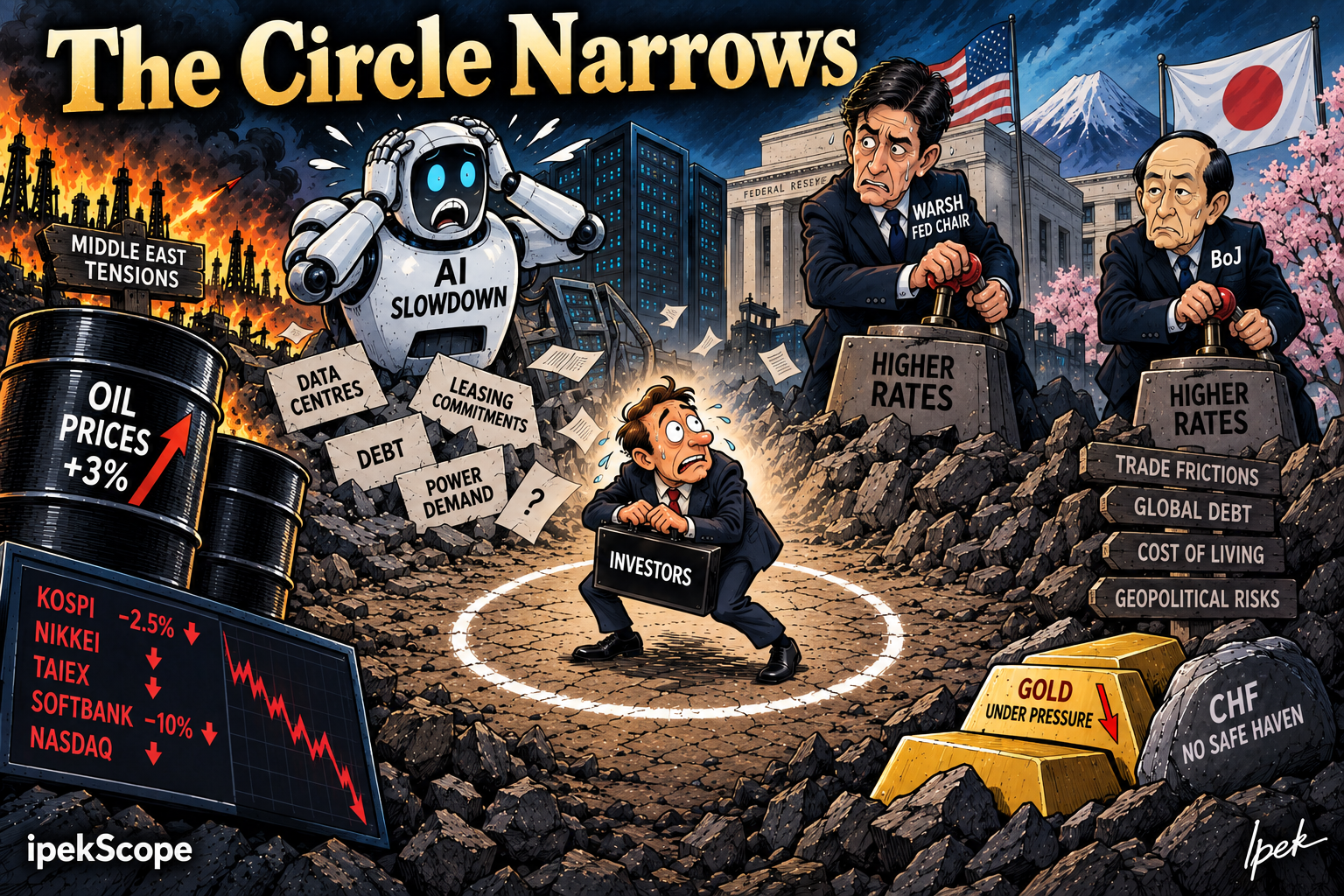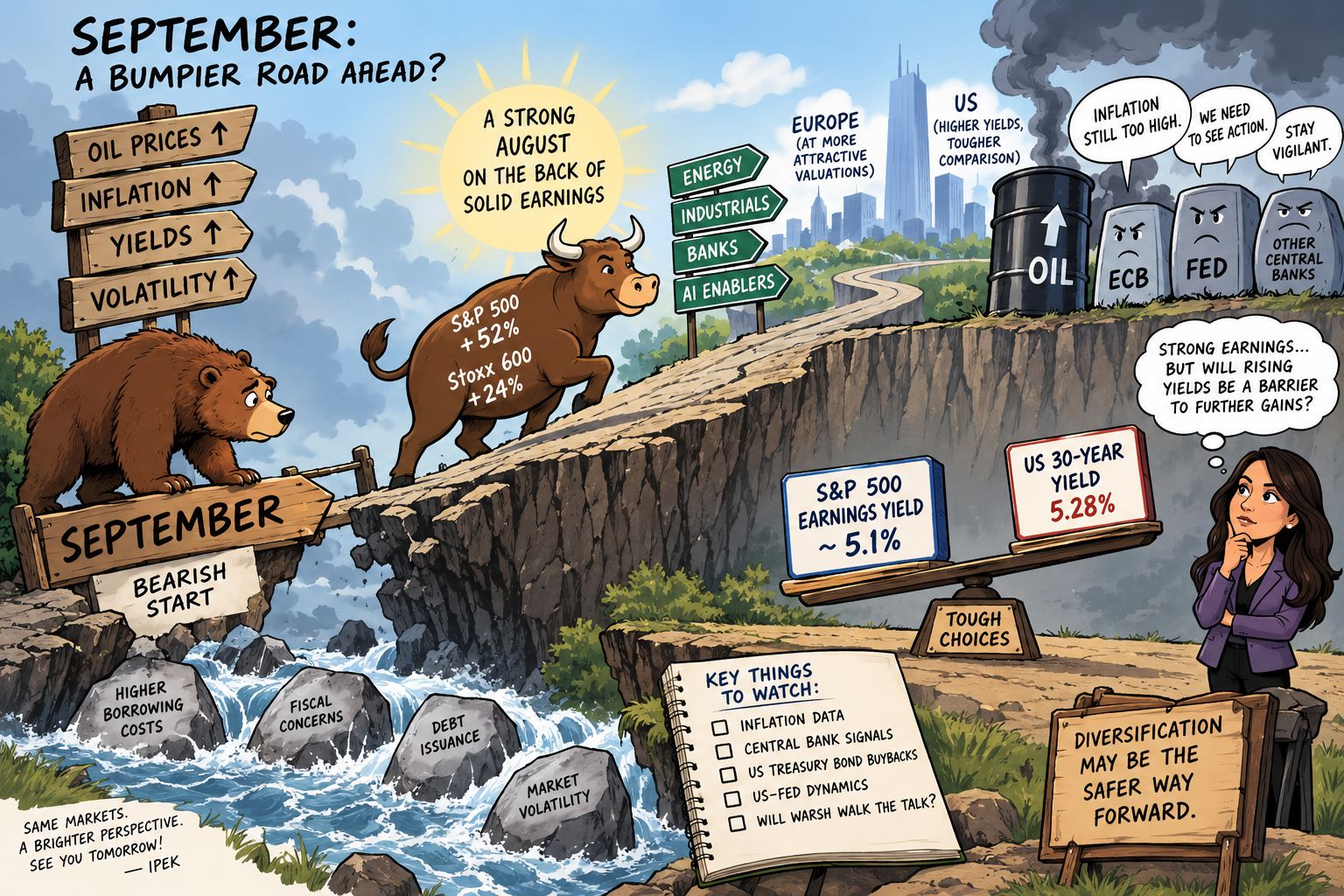

September kicks off on a bearish note, as a renewed rally in oil prices continues to fuel inflation expectations. The latter pressures yields higher and weighs on equity valuations, at a time when major central banks’ frustration regarding energy-led inflation is mounting, amid worries that a prolonged period of higher energy prices will echo through other goods/services prices and wages.
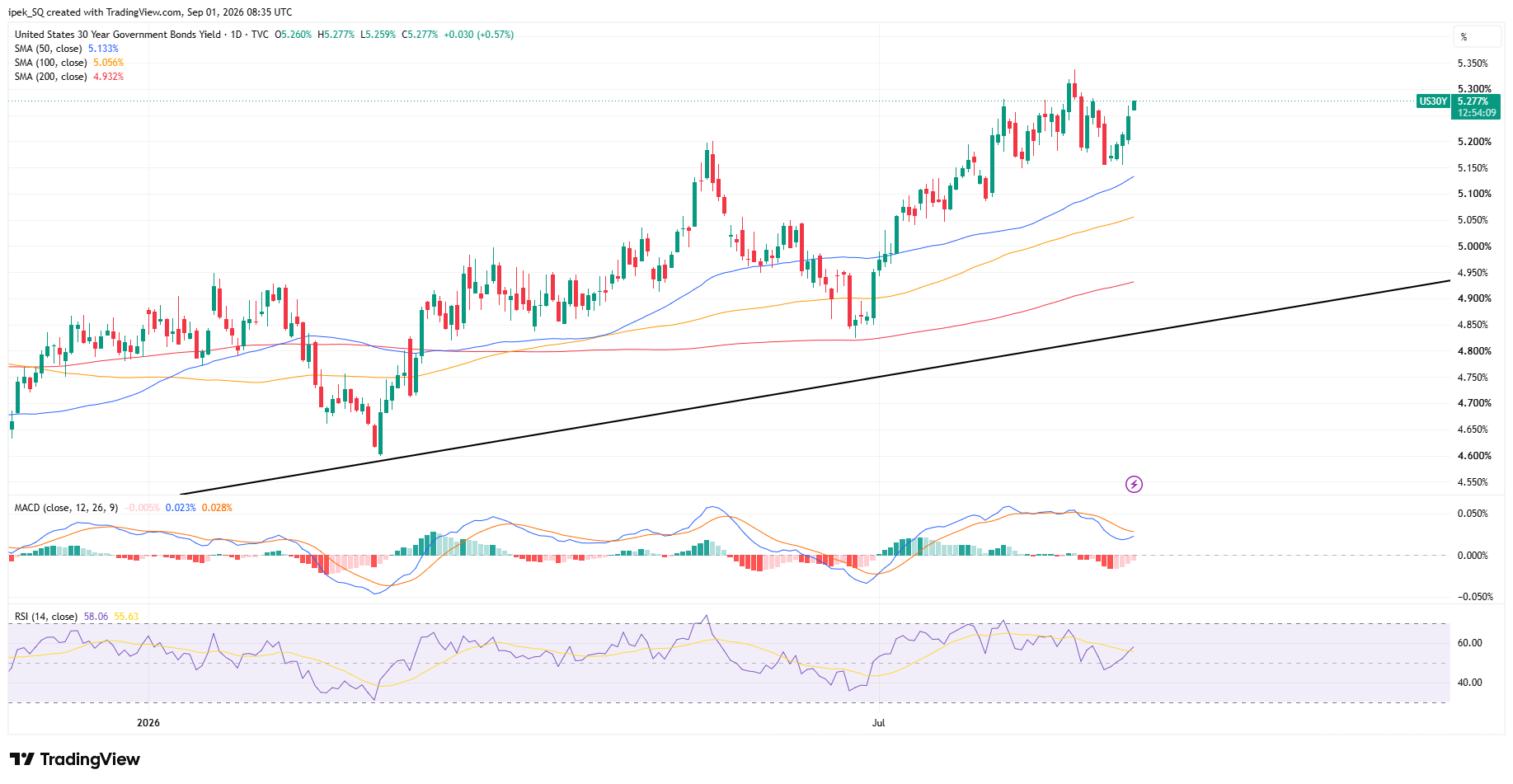
But looking back, August has been a good month, really. Strong earnings from both sides of the Atlantic Ocean counterweighed rising yields, even though the second part of the month was marked by an increased focus on the intense pressure on long-term yields, which – among other things – pushed the US 30-year yield to a 19-year high and encouraged the US Treasury to step in, announcing that it would increase its longer-term bond buybacks to keep longer-term borrowing costs in check. In vain, the 30-year yield is about to return to levels that triggered the bold US Treasury announcement. That’s the bad news.
The good news is that S&P 500 companies printed 52.0% earnings growth in Q2 – 52% – marking the highest earnings growth rate reported by the index since Q2 2021 (91.6%). The Stoxx 600 printed 24% earnings growth – the strongest growth since Q3 2022 – and, excluding the post-pandemic rebound, the strongest in more than a decade. Energy, mining, industrial stocks, AI enablers and banks contributed heavily, of course, on the back of high energy prices, heavy AI buildout and, for the banks, heightened market volatility and the financing of the AI buildout. Note that Big Tech – Amazon, Alphabet, Microsoft and Nvidia – also booked a more than $160bn windfall last quarter from investments in other AI companies, flattering their earnings (FT). The latter didn’t ease worries regarding the severe declines in their free cash flow levels, which pushed them to double the amount of debt they had to contract over the past nine months, nor concerns that paper gains are overstating the strength of the AI boom. But the Mag 7 managed to recover the May–June retreat almost entirely.
The question that everyone asks now is whether rising global yields will be a barrier to further gains in global indices when earnings are so strong?
Diving into the numbers, the Stoxx 600 is trading around 14.6x its forward earnings, and that gives the index an earnings yield of about 6.8% to 6.9%. In comparison, the German 10-year yield spiked past 3.35% this morning – the highest since 2011 – while the French 10-year paper pays around 4.20%, the highest since 2008. But even with the recent spikes, core European economies’ bond yields have not risen enough to compromise the Stoxx 600’s relative attractiveness.
For the S&P500, the numbers are closer. The index trades around 20x its forward earnings; the earnings yield is around 5.10%. That’s just a few points above the US 10-year yield – near 4.79% today – and below the 30-year paper at 5.28%. In other words, you can lock in a 5.28% yield by sitting on a boring 30-year US bond rather than losing sleep thinking about whether S&P500 companies are too expensive, whether this is a bubble, whether AI investments make sense, whether we will see a massive selloff, whether this is going to be another dot-com crisis, etc.
That’s exactly why Bessent is now trying to jump in: to prevent rising long-term yields from tightening financial conditions further and potentially triggering a market selloff with broader economic implications.
So we keep watching:
- The economic data, especially inflation metrics that significantly influence central bank rate expectations. Yesterday, the German CPI update came in softer than expected, but inflation near 3% in Germany is NEVER soothing. Today, the euro area aggregate CPI estimate for August confirmed a spike in the headline figure past 3% y-o-y. Core inflation eased slightly to 2.4% y-o-y from 2.5% y-o-y – if that’s any comfort. But European Central Bank (ECB) officials are not comfortable with the current levels, and the prospect of a prolonged period of heated inflation could get them to fight more aggressively. The same applies to other central banks, even to the Federal Reserve (Fed) – though many don’t see Warsh raising rates before the midterms.
- How the saga between the US Treasury and the Fed will impact US yields.
It’s funny because the more I read, the more I realize that I was not the only one half-convinced by Kevin Warsh’s Jackson Hole speech, where he emphasized the importance of bringing US inflation back to 2%. Many of us won’t clap until the Fed actually walks that talk – meaning: raises rates. Until then, hawkish expectations remain fragile.
Overall, though, the hawkish bets – fragile or no - will continue to pressure the short end of the US yield curve higher, but should have a softer impact on longer-term yields, hence potentially encouraging a flattening of the yield curve on the idea that the Fed is taking care of inflation, limiting potential selling across stock markets.
So September could be a pivotal month, as the Fed’s next meeting will clarify whether Warsh’s words turn into action.
And the latter will land just after the US Treasury starts the bigger bond buybacks in September, providing an interesting test of whether Treasury intervention can meaningfully ease pressure at the long end of the curve, or whether investors will simply use the resulting relief to sell into strength as fiscal concerns, heavy debt issuance and inflation risks continue to dominate the longer-term outlook.
Again, despite strong earnings and earnings expectations, the S&P500 offers a lower earnings yield today than the US 30-year paper, and that, per se, is a reason to navigate cautiously and perhaps look for regional and cross-asset diversification.
The content of this website is for informational purposes only and does not constitute financial advice. All opinions expressed are solely my own and should not be considered as recommendations to buy, sell or hold any financial instruments. Readers should consult a qualified financial advisor before making any investment decisions.
With love,
Ipek Ozkardeskaya