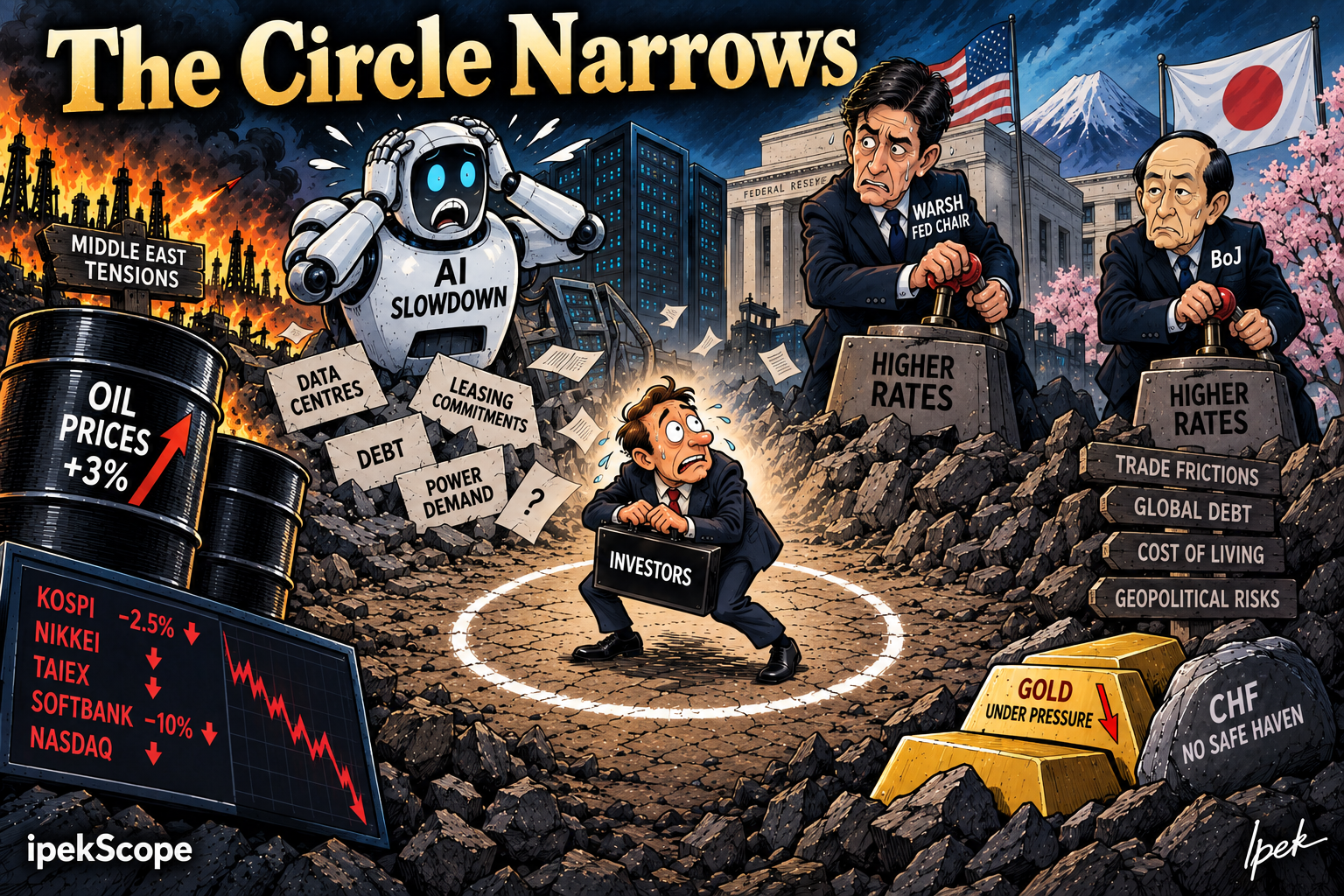

Oops, it happened again. US crude tanked more than 11% yesterday after the US suddenly stopped its attacks on Iran, and US President Donald Trump said there was "a good chance" of reaching a deal with Iran. Oil extends losses this morning, with US crude trading near $82.5pb and Brent crude near $85pb following a more than 13% pullback yesterday. Fun fact: Iran denies that talks are taking place. So there is an even better chance that Trump's statement is just another empty promise, much like the umpteenth previous pledges to end the war and reopen the Strait of Hormuz.
Whatever it is, the retreat in oil prices is pulling global yields lower – making me think that this is just another verbal intervention from Trump to stop the spike in US yields. Indeed, the US 10-year yield is down from its previous 4.70% peak, while the US 2-year yield – which best captures Federal Reserve (Fed) rate expectations – has pulled back to 4.30% as the Fed starts its two-day policy meeting today.
A partially priced Fed hike?
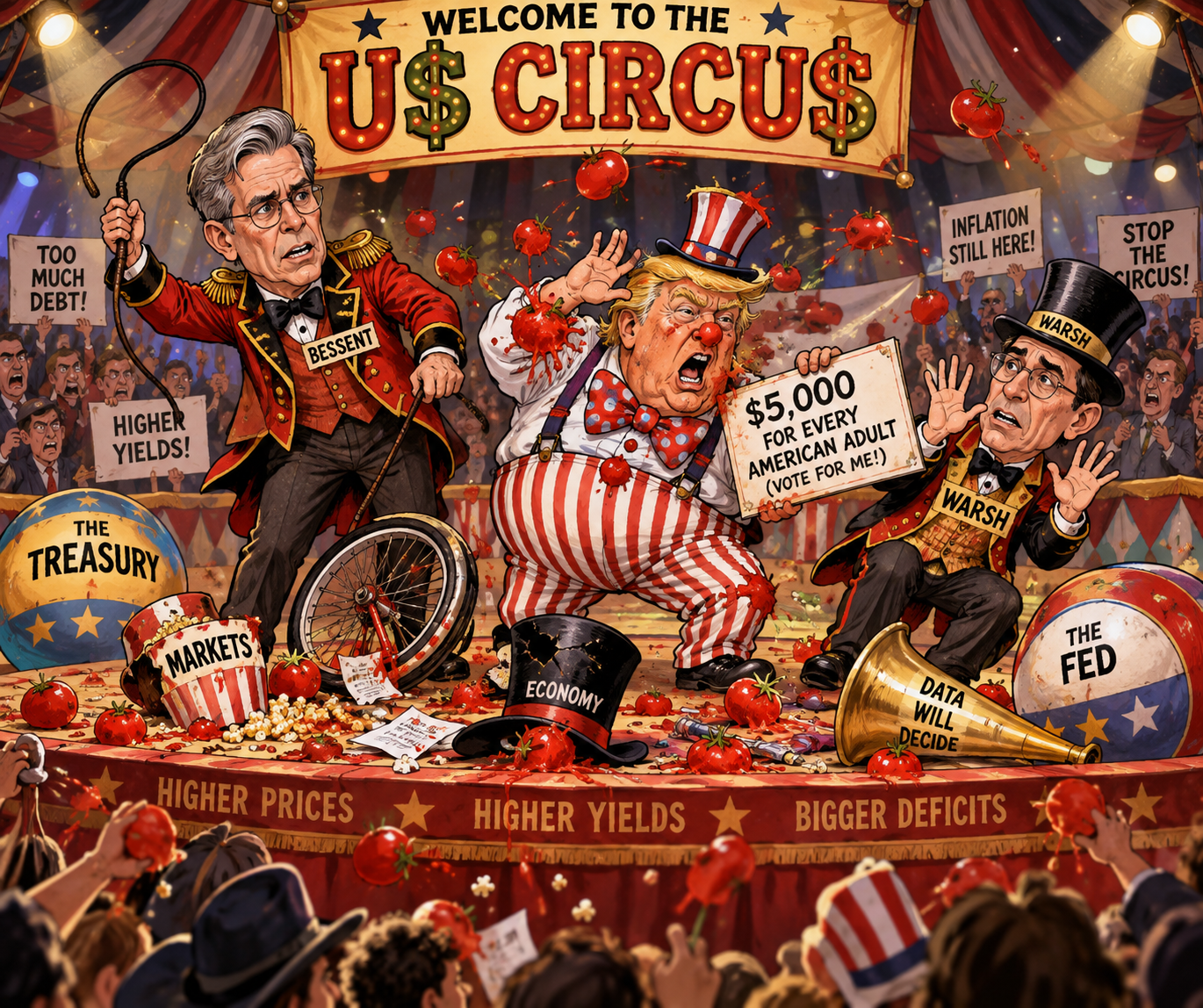
This is the second FOMC meeting under the new Chair, Kevin Warsh. In his first meeting, Warsh refused to add a dot to the dot plot and refused to make predictions. This time, some expect him to deliver a partially priced rate hike to reinforce the idea that the Fed will no longer rely on forward guidance but instead strengthen its credibility. Given the extreme uncertainty in the geopolitical landscape, which has major implications for the macroeconomic outlook, Warsh's strategy of "stopping trying to guess" sounds about right.
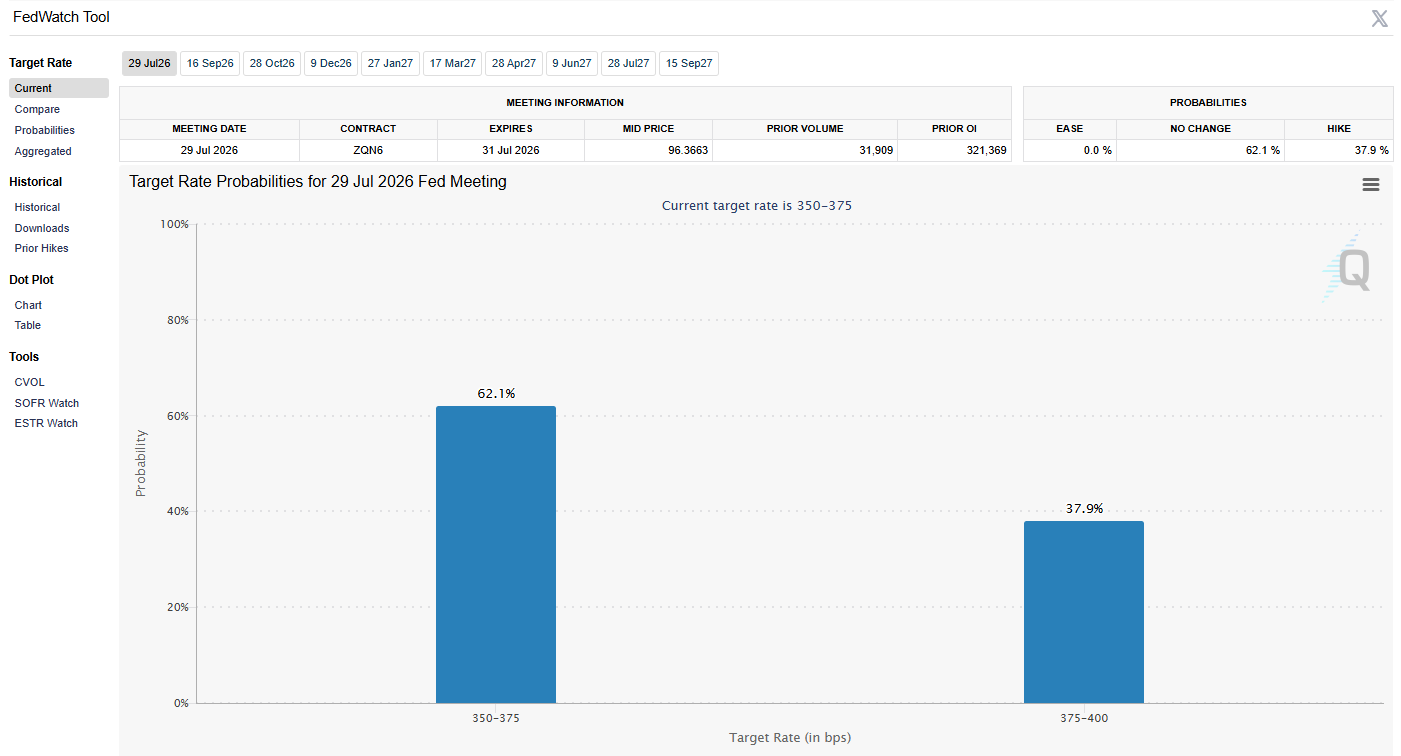
So it is possible that the Fed delivers a partially priced rate hike this Wednesday. And the partially priced nature of such a move could unsettle markets as liquidity thins during the summer months. Activity in Fed funds futures currently implies only a 38% probability of a hike. I still believe that we will see the first Warsh hike in September, when market liquidity should be better.
Chip wreck
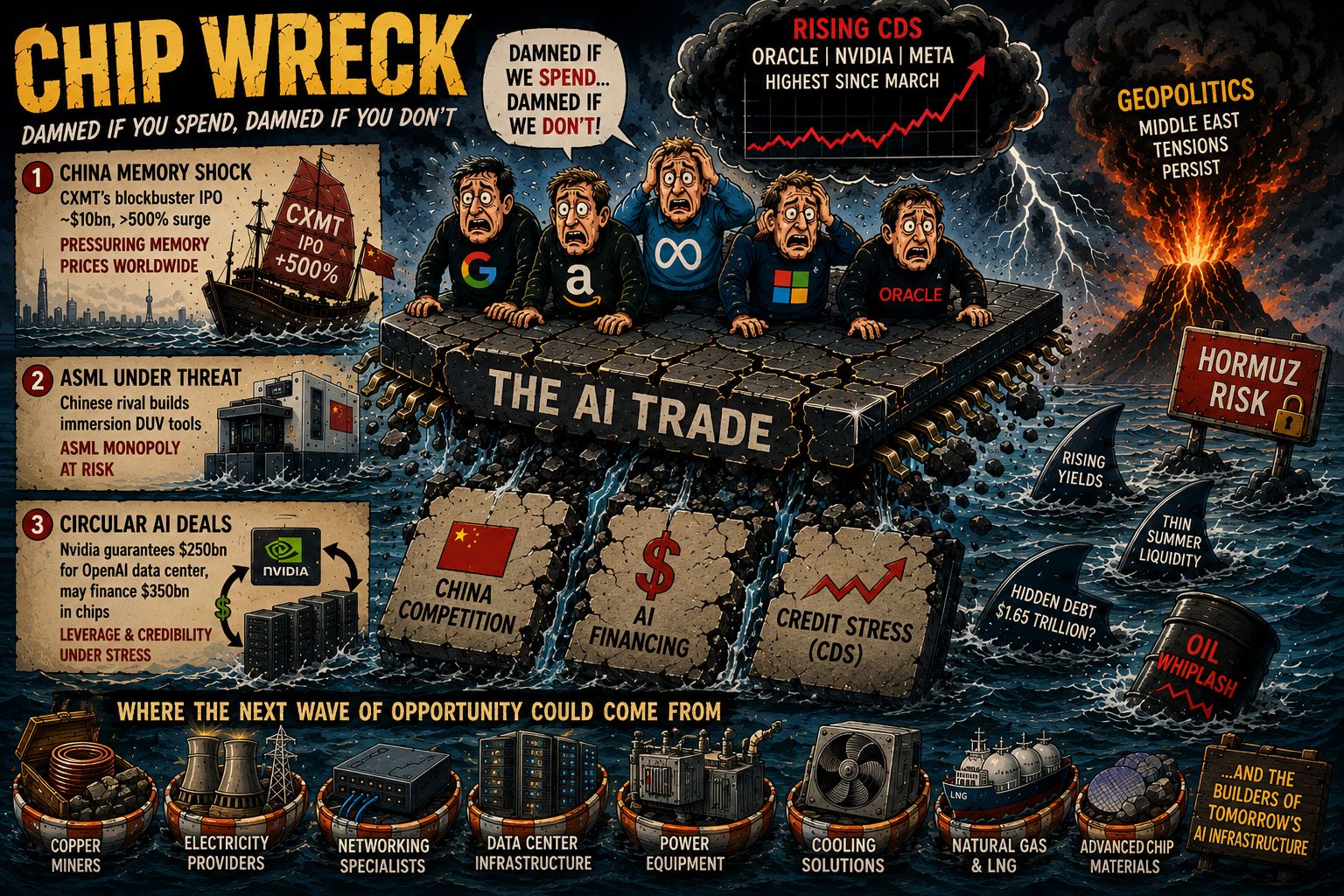
Anyway, softer yields on Monday could hardly improve the mood among technology investors. The mood there was rattled by three distinct developments:
- The Chinese memory chip maker made a massive market debut in Shanghai (a nearly $10bn IPO with a more than 500% jump on its first trading day). Even though it will take time for foreign investors to gain access to the stock, which is listed on a mainland exchange, the prospect of CXMT putting downward pressure on memory chip prices is already sending shivers through some of the market's hottest chip stocks. The Kospi – which has effectively become a proxy for the two Korean memory chip makers, Samsung and SK Hynix – tanked 10% today. Ten percent. The Korean index has entered a medium-term bearish consolidation, shed a third of its value in about six weeks, and last year's bubble appears to have burst. I think we can officially call it a bubble now. The chances are that this pullback will continue.
- ASML – the world's only producer of the most advanced chip-making machines – tanked more than 8% in a single session in Amsterdam after The Information reported that a Shanghai-based company (unnamed for now) has started making immersion deep ultraviolet lithography tools. That would be a nightmare for ASML. It would mean that the company no longer holds a monopoly and, worse, would face Chinese competition. God help them.
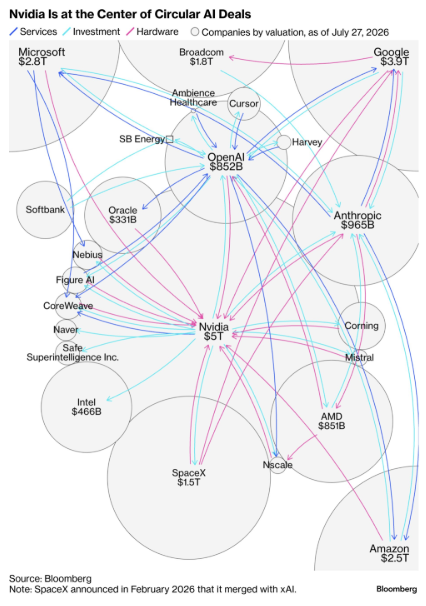
- (This one has nothing to do with the Chinese) Circular AI deal fears are forcefully back after Nvidia said it would guarantee up to $250bn to help OpenAI lease a data-centre project in Ohio. It is also reportedly considering financing the purchase of $350bn worth of Nvidia chips. OpenAI, meanwhile, will likely postpone its IPO plans amid mounting market stress over these circular AI deals, excessive CAPEX poured into AI infrastructure, shrinking hyperscalers' free cash flow and forcing them to issue equity and debt to finance additional spending, all in an environment of rising interest-rate expectations driven by Middle East tensions and the Ukraine-led energy crisis.
The market reaction to the Nvidia news was swift. Nvidia fell 5% and closed the session below the $200-per-share mark. More importantly, Nvidia's 5-year CDS spiked, suggesting that it may not yet be the right time to buy the dip.
Round and round, turn around
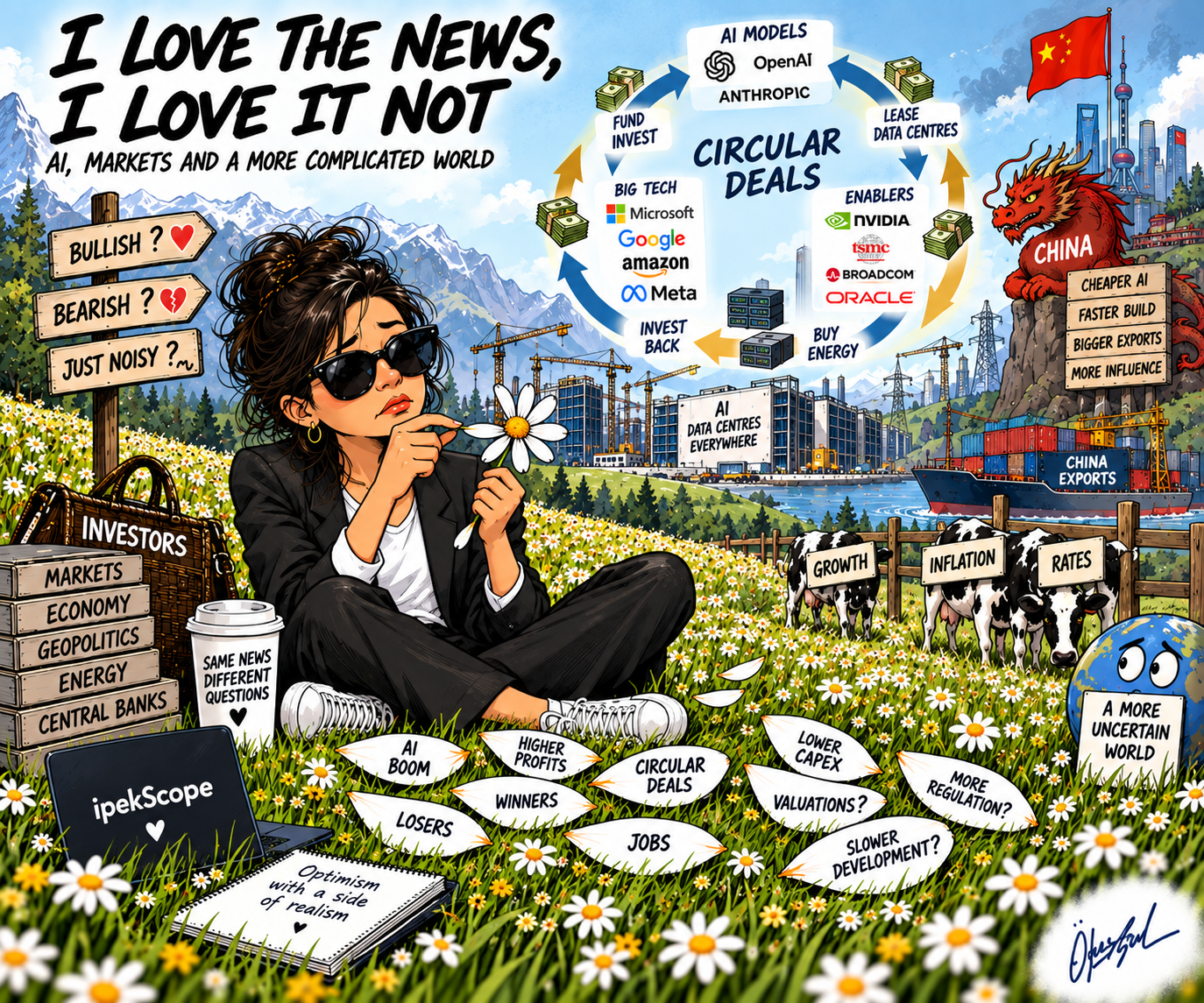
Elsewhere, worries about circular deals and rising leverage are creeping back in. And Bloomberg updated its circular AI deals chart!
Big Tech's 5-year CDS spreads are rising as well, with Meta leading concerns among the biggest AI spenders, as the company continues to spend without a clearly defined strategy beyond trying not to fall behind in the AI race. Oracle's 5-year CDS – which has become something of a barometer for AI-related credit stress – is now trading above its March highs.
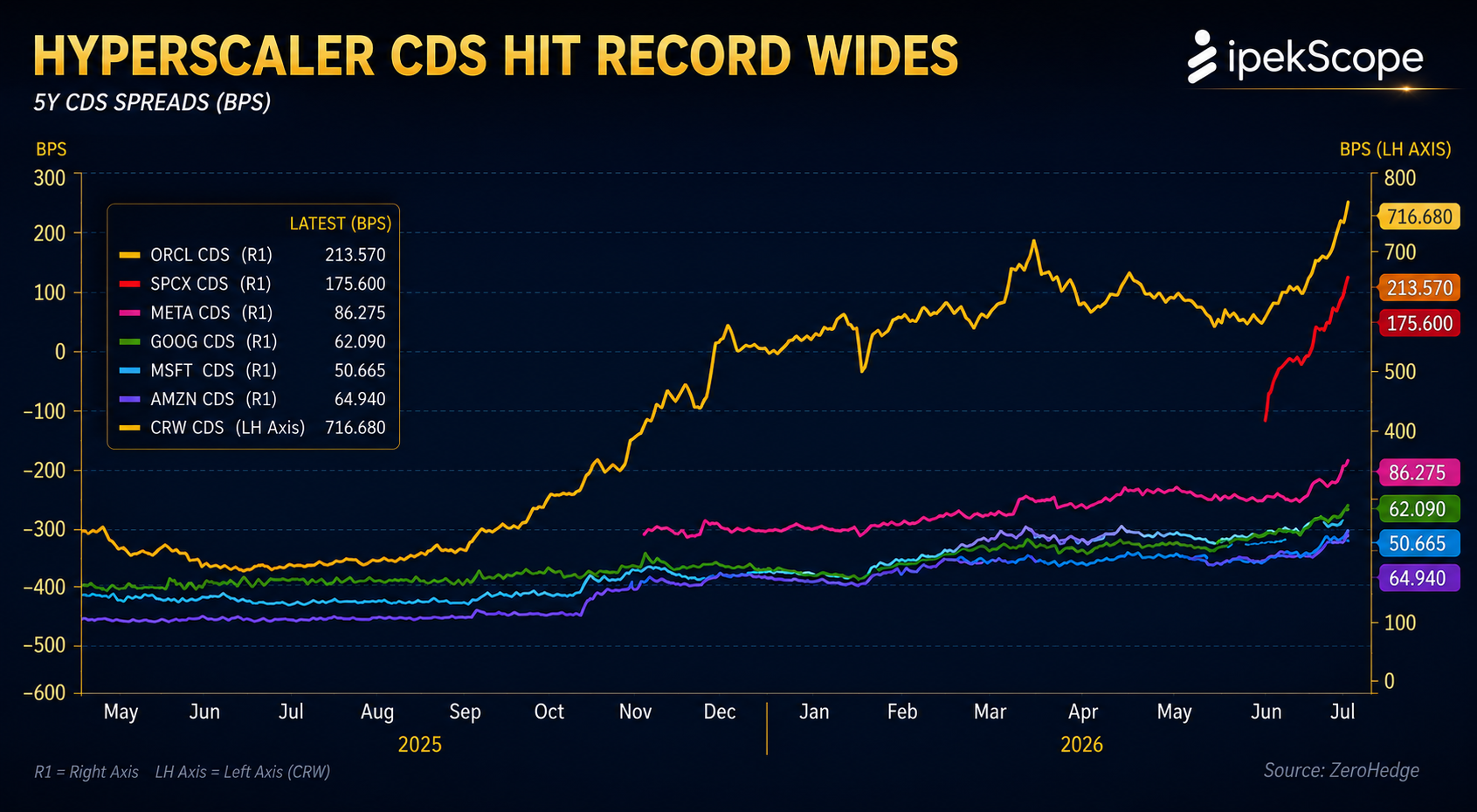
That gives you a clear idea of how difficult it could be for Big Tech to prevent further selling this week, as Microsoft, Amazon and Meta head into the earnings confessional and will likely announce even more AI spending, financed through additional equity and debt issuance.
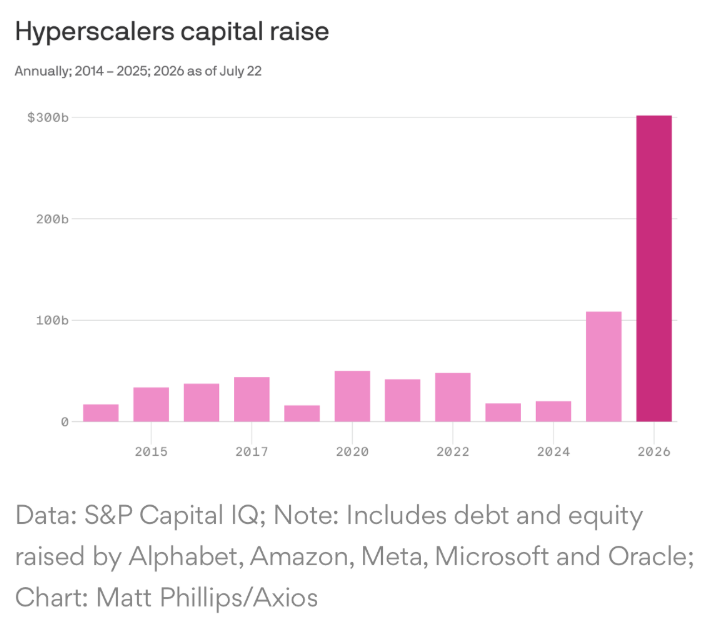
And the numbers are worrying. Together, Alphabet, Amazon, Meta, Microsoft and Oracle have already raised more than $300bn through equity and bond sales, according to S&P Global Market Intelligence – roughly three times their entire 2025 issuance.
Alphabet last week printed investor’s biggest scare: a negative free cash flow in Q2. We will see how the cash situation evolved at Microsoft, Amazon and Meta this week.
Digging deeper, Nikkei warned last week that the hyperscalers may have some $1.65 trillion in hidden debt – off-balance-sheet obligations such as lease commitments that do not appear on standard balance sheets.
That's a lot of cockroaches for investors to deal with. It feels as though, whatever Big Tech announces this week, investors will be difficult to cheer up.
As I wrote last week: damned if you spend – and risk destroying free cash flow and balance sheets – and damned if you don't – because softer spending growth would send a twister through the entire AI supply chain.
The good news is that periods of price pullbacks always create opportunities. The challenge is identifying where the next AI dollar will flow: copper miners, electricity providers, networking specialists, or the companies building tomorrow's AI infrastructure?
The content of this website is for informational purposes only and does not constitute financial advice. All opinions expressed are solely my own and should not be considered as recommendations to buy, sell or hold any financial instruments. Readers should consult a qualified financial advisor before making any investment decisions.
With love,
Ipek Ozkardeskaya