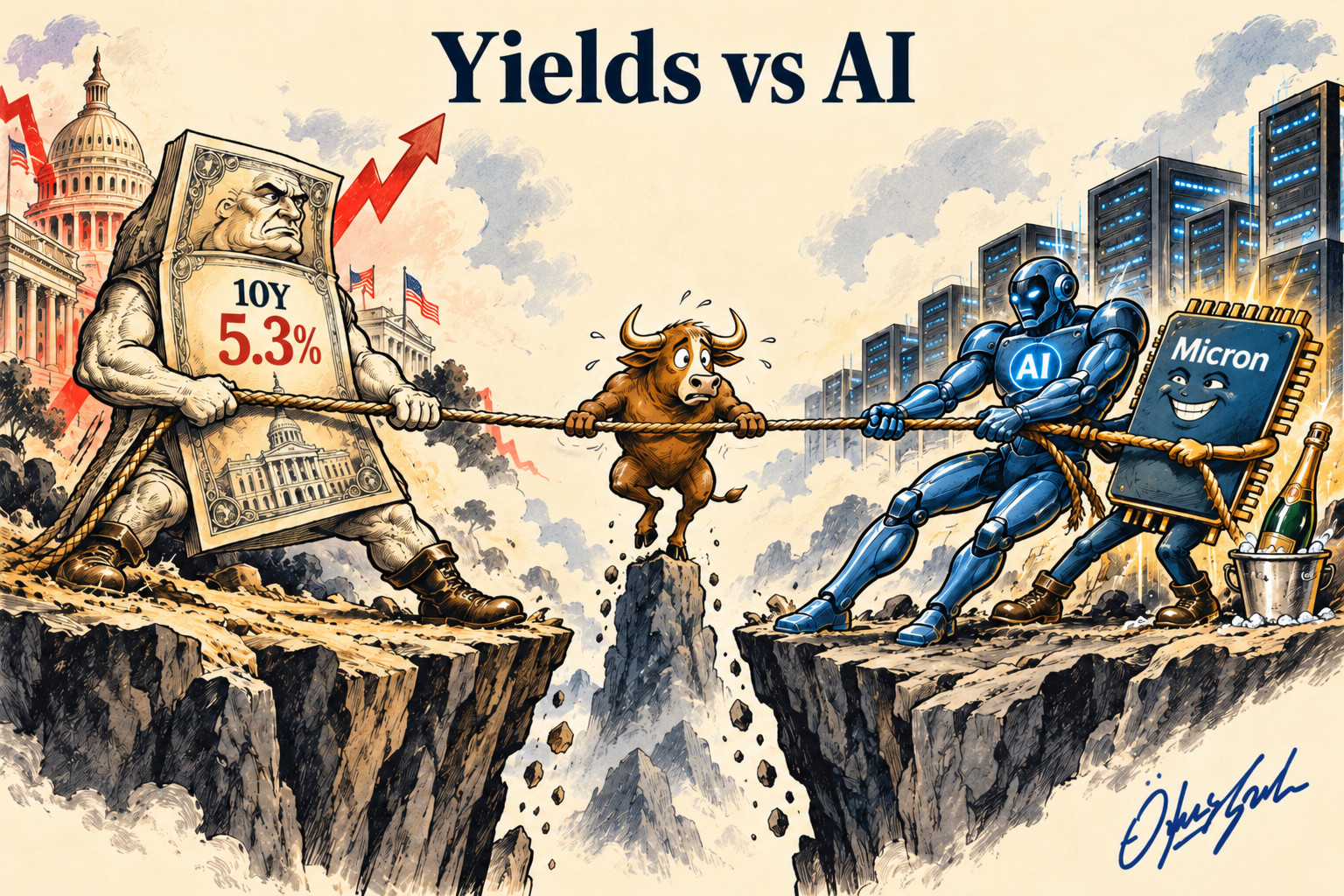

US yields finally eased yesterday, partly as the sharp selloff and now-attractive yields tempted buyers back into Treasuries, and partly as mounting concerns about European debt — especially France — encouraged a flight to safety.
And the US dollar gained sharply at the same time. That may sound contradictory, but both moves tell the same story: investors were looking for shelter. Buying Treasuries pushes their prices higher and their yields lower, while demand for dollar assets supports the greenback. And higher European yields hardly make the euro more attractive when they reflect growing doubts about governments’ ability to manage their debt. You get a higher yield, yes, but you also get a bigger headache.
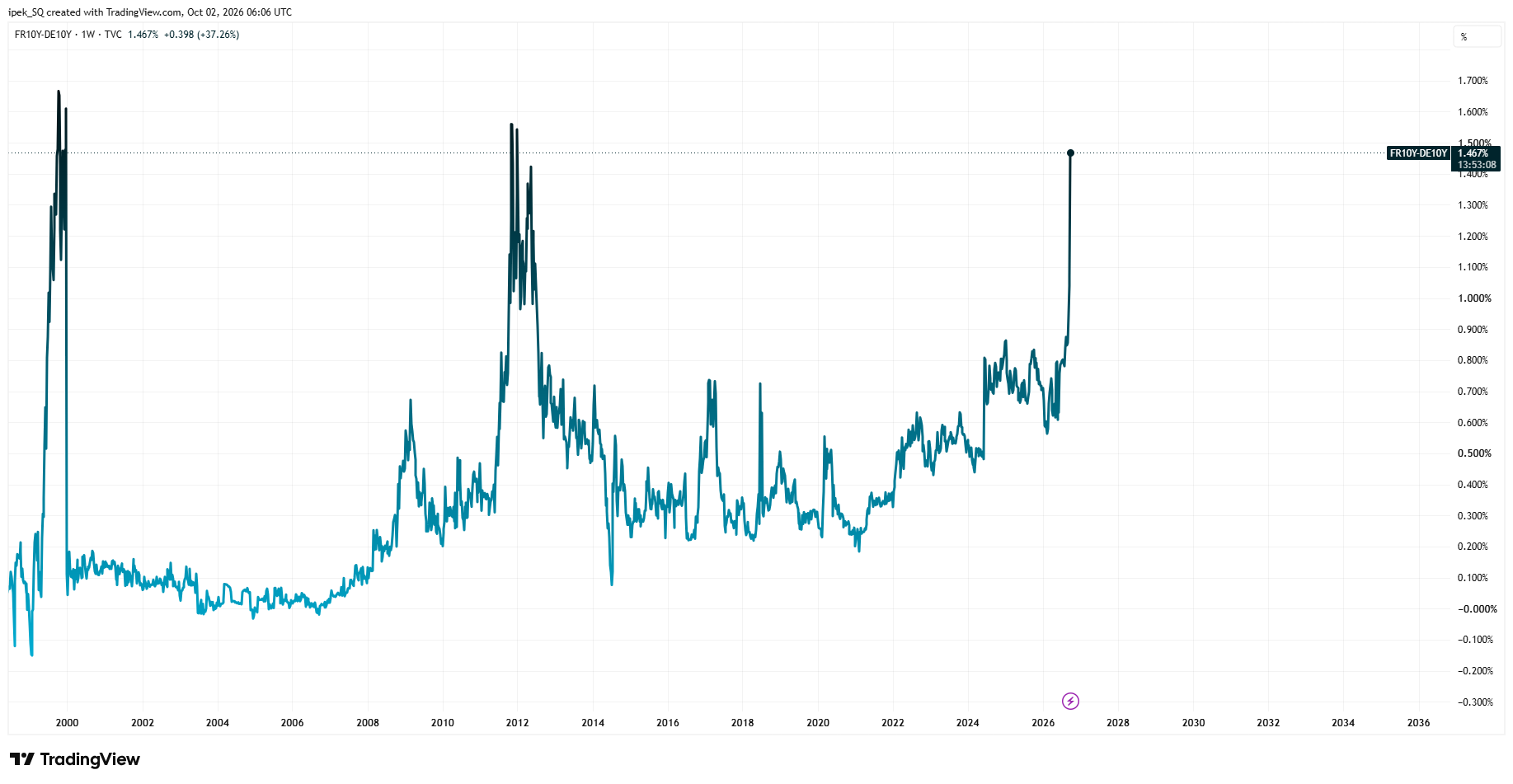
We could debate whether US debt is safer than that of other so-called developed markets, but the jaw-dropping spike in the French-German 10-year yield spread to above 140bp — the highest since 2012, during the euro area sovereign debt crisis — got investors scratching their heads.
Why is this so bad?
Because it raises the uncomfortable question of how much France must pay to convince investors to finance its debt. Higher borrowing costs make an already difficult budget equation harder to solve, while political uncertainty makes the spending cuts and reforms needed to restore confidence harder to deliver. If you don’t follow French politics, the far-right National Rally, formerly the Front National, has been gaining ground. Some people don’t like the ‘far-right’ description as the party has become more mainstream, but it remains in the far right of the French political spectrum— that’s not my personal label. And its fiscal programme is very far from anything I would call ‘discipline’.
How French jitters impact euro, European bonds and stocks?
The sharp weakening of appetite for French debt is a big issue for the broader euro area and the euro itself. France is the euro area’s second-largest economy — we used to call it the ‘core’, along with Germany, back during the 2012 sovereign debt crisis! So, if concerns spread, other heavily indebted members could also face higher borrowing costs, tightening financial conditions across the region. For the euro, that means weaker growth prospects and a growing risk premium. The EURUSD tanked to 1.1215 yesterday, as the market’s focus shifted from the central-bank convergence/divergence story towards the euro area sovereign debt story.
For bonds, it means investors demand more compensation to hold the vulnerable countries’ debt — although German Bunds could benefit from the same flight to safety. These tensions come at the worst possible time, as the euro area grapples with an energy crisis, rising inflation and a hawkish European Central Bank (ECB) outlook. An excessively rapid depreciation of the euro could make matters worse for the European economy by increasing price pressures through imported inflation.
For stocks, it means choppy waters. Sovereign debt concerns can do much more than shake the bond market — they can seriously damage appetite for equities, too. During the 2011 sovereign debt crisis, the Stoxx 600 lost roughly a quarter of its value between its February high and late September, before recovering some ground. Yesterday, the Stoxx 600 tanked 1.30%, as oil and gas prices rose while the euro weakened, making energy even more expensive for Europeans.
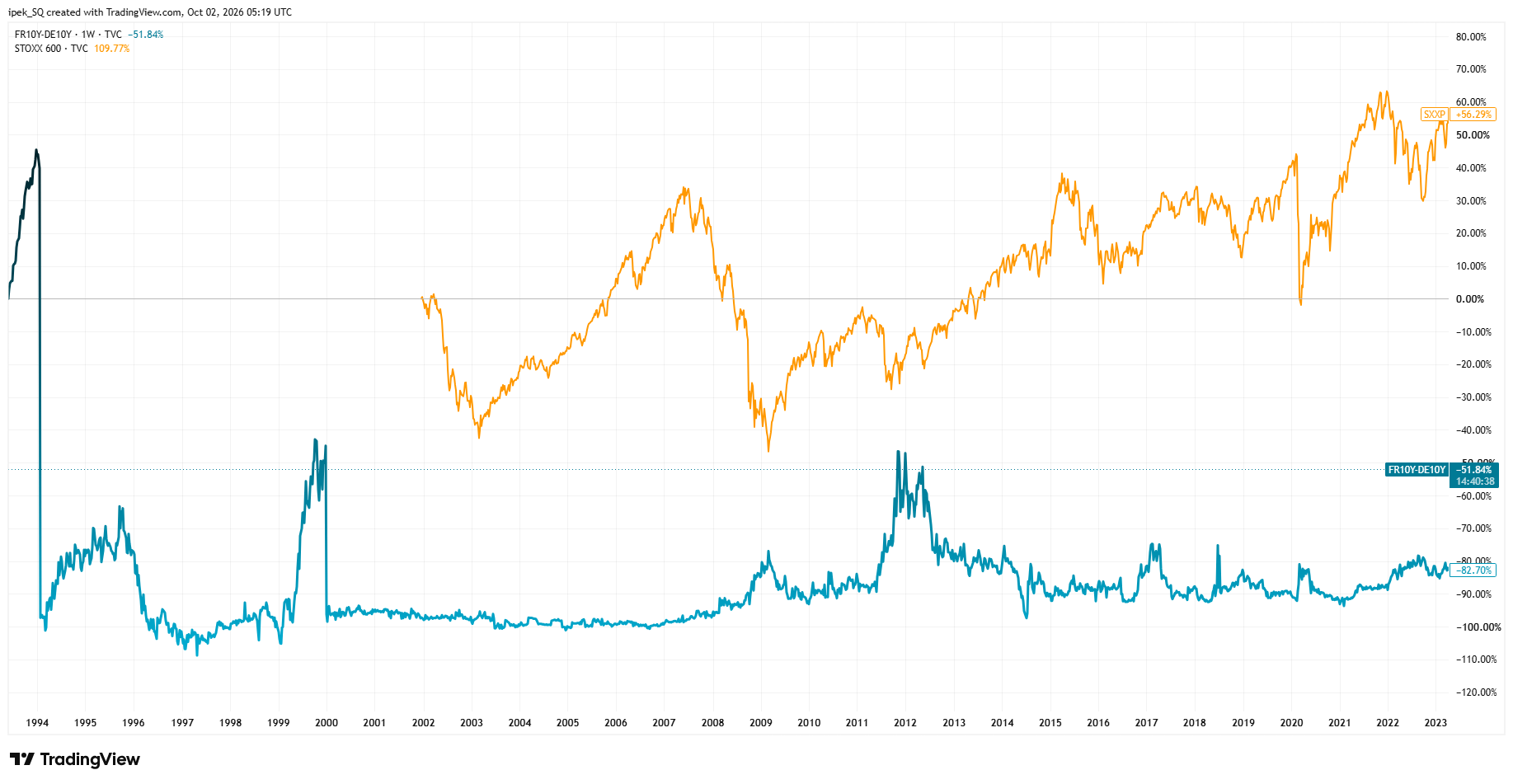
And finally (because people are asking): is France the new Greece? Well, I would be careful with that comparison. France’s economy and bond market are much larger than Greece’s, and the euro area has stronger crisis-management tools today than it did back in 2012. Yet the mechanism is familiar: doubts about debt sustainability push yields higher, and higher yields make the debt harder to manage. And funds and hedge funds trading the turmoil could amplify the moves without providing stable, long-term demand. So we can say that France is hardly Greece, but the confidence problem is real, and the risks should be considered for the broader currency, bond and stock markets.
Europe’s pain, US’ gain?
Positive winds blowing towards US Treasuries could help slow the selloff, after the US 10-year yield posted its biggest quarterly rise since 1994, and help improve appetite for equities.
In these conditions, and given how attention and the dominant market driver are shifting towards euro area sovereign debt issues, the US jobs data may have less market-moving force. But it will, of course, be closely watched by investors before the weekly closing bell. Earlier this week, ADP reported a higher-than-expected figure. Yesterday, additional data showed that hiring intentions were muted, but announced job cuts also fell nearly 20% compared with a year ago. The weekly data also showed that initial jobless claims fell to their lowest level since July and continuing claims fell to a three-year low.
In summary, the US labour market appears to be showing some signs of improvement, although hiring remains subdued, while short-term inflation risks remain tilted to the upside due to persistently elevated energy prices. The Federal Reserve (Fed) is likely to deliver another rate hike before this year ends, and robust jobs and economic data would increase the likelihood of that action.
Looking at today, the US economy is expected to have added 89K nonfarm jobs in September, according to the consensus in a Bloomberg survey. Average hourly earnings are expected to have grown at an unchanged pace of 0.3% month-on-month, and the unemployment rate is seen unchanged at 4.1%. Strong payrolls and wage data could boost hawkish Fed expectations and put upward pressure on yields at the shorter end of the US yield curve, while softer numbers could have the opposite impact.
But unless we see a big surprise in the numbers — say an NFP print below zero or above 200K — the longer end of the US yield curve could continue to ease as safe-haven demand comes to the fore and the correction gains momentum. In the absence of other major news, we could see US equity markets catch a bit of a tailwind from lower yields, while appetite for European equities could be harder to restore.
The content of this website is for informational purposes only and does not constitute financial advice. All opinions expressed are solely my own and should not be considered as recommendations to buy, sell or hold any financial instruments. Readers should consult a qualified financial advisor before making any investment decisions.
With love,
Ipek Ozkardeskaya