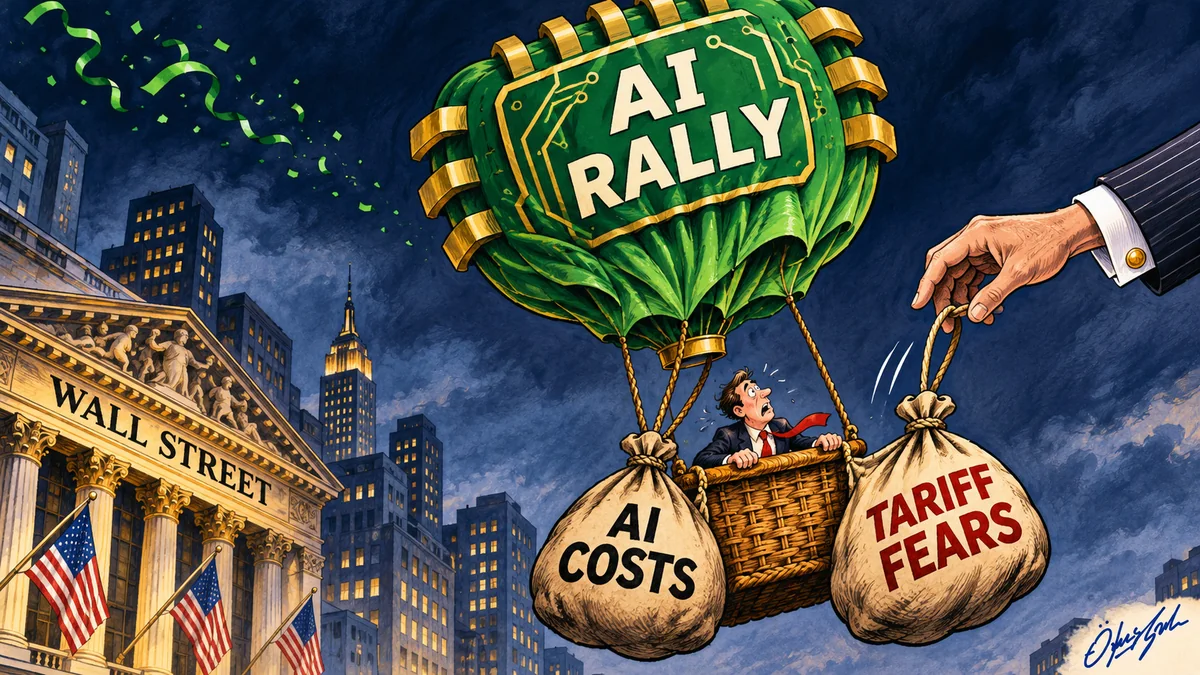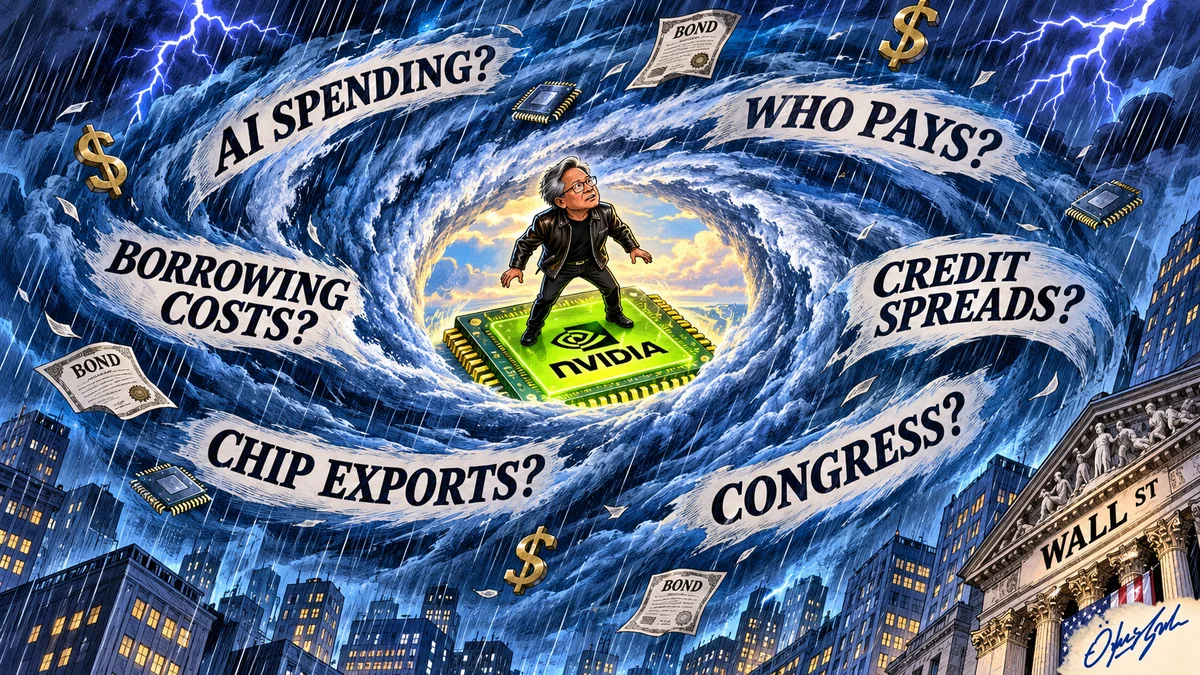

US markets were closed yesterday, and it felt good – didn’t it? We could just breathe, look at the rain outside the window and reflect on the roller-coaster ride since the beginning of November, when things started to get really murky. First came the midterm elections and a historic sweep for Democrats. Then Jensen Huang took over the headlines (Jensen was thrown to the lions at a very interesting time indeed). Then came Anthropic’s IPO, which fizzled after a strong debut, and finally, the new tariffs hit the headlines.
In just a few weeks, markets went from expecting strong global growth powered by AI and government spending to worrying about AI slowdown and firmer grip on US spending and trade.
Mind the gap
The macroeconomic setup perhaps shifted too quickly, leaving earnings expectations hanging in the air. In fact, by 20 November, FactSet’s estimate for S&P 500 earnings over the next 12 months was up 4.4% from the end of September, even as the index had fallen 6.2%.
That divergence is a red flag.
On the one hand, the latest sell-off may have pushed valuations low enough to bring some dip-buyers back. The S&P 500 is trading at around 17 times forward earnings, below its five-year average of nearly 20, and Nasdaq 100 near 19 times its forward earnings. But if analysts start cutting their forecasts, some of that apparent cheapness could disappear even if share prices go nowhere. A 5% cut to expected earnings would take the S&P 500’s forward P/E from 17.3 to 18.2 at the same index level.
And because the AI sell-off is likely to hit technology-heavy indices’ earnings expectations harder, the case for further rotation remains intact. Even after the recent sell-off, both the S&P500 and Nasdaq trade well above their forward earnings compared with around 14 for the STOXX 600 and just 11.5 for the FTSE 100.
Quite a discount!
Habemus ECB Chief
Yesterday, as Americans ate their turkey dinner, Europeans bought the dip. The STOXX 600 was up 1.75% despite higher oil prices and yields, as fears of tougher US tariffs eased and banks and tech led the rebound. Washington signalled that it intends to honour lower tariff rates agreed under existing trade deals, which would keep the EU rate at 15%. But hey, it all depends on the president’s mood of the day. My sense is that tariffs will keep making headlines whenever Washington wants to shift attention away from the last bad news. In the meantime, they’ll keep chipping away at global growth.
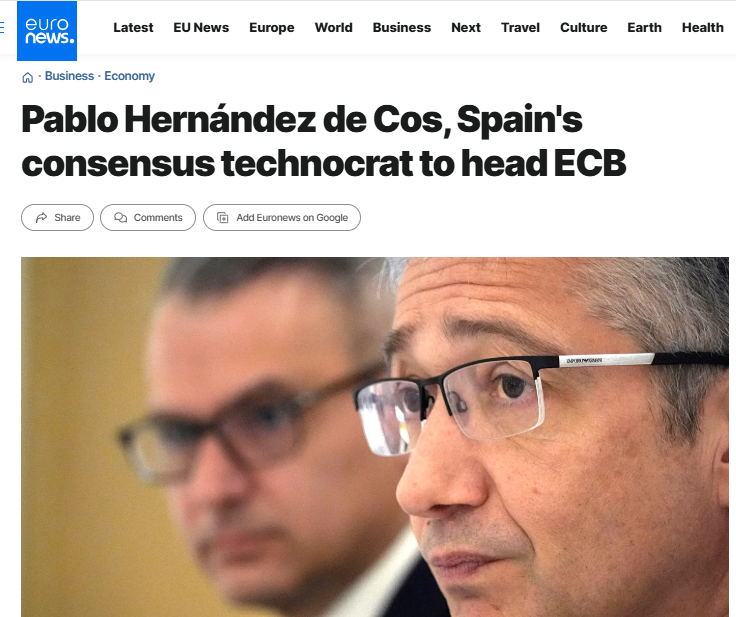
The other news in Europe is Pablo Hernández de Cos’ appointment as the new president of the European Central Bank (ECB) from February onwards. The former Bank of Spain governor is seen as a consensus-builder with a dovish tilt. Of course, he inherits a tightening cycle, with eurozone inflation running at 4% in October, twice the ECB’s policy target. And yesterday’s ECB minutes showed that many policymakers were already open to a third rate hike in October, though the Council decided to wait for more evidence on inflation. Right now, markets broadly expect the ECB to announce a 25bp hike on 17 December.
The ECB will update its forecasts at that same meeting. Back in September, its staff projected 2.5% inflation and 1.4% growth for 2027. The minutes suggest the inflation outlook has become less comfortable since then. Policymakers expect higher energy costs to feed through more strongly to consumer prices next year, and some worried inflation might only return to target after 2028.
That’s where de Cos’s dovish tilt could matter. If growth weakens while energy costs are still keeping inflation high, how much further will the ECB under de Cos want to raise rates?
The euro barely moved in yesterday’s quiet session, trading around $1.0960/85 against the dollar. With a December hike already widely expected, what matters more for the euro is how much further markets think the ECB and the Fed will go after the December hike.
How thankful?
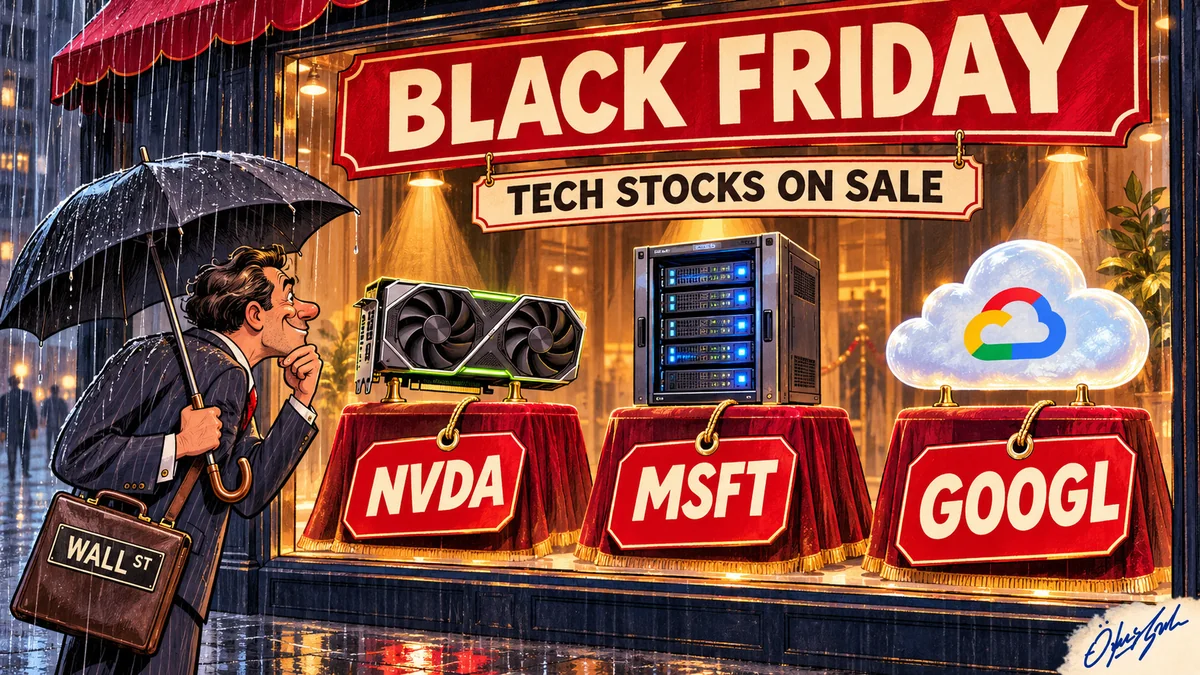
Today, Wall Street is back from Thanksgiving for a shortened session, and Black Friday raises a slightly awkward question.
How strong do investors actually want the American consumer to be? Adobe expects US online sales to hit $12.9 billion today, up 9.2% from last year, and $15.1 billion on Cyber Monday, up 6.2%. A record is already expected. What’s more interesting is whether households are buying more or simply spending more in dollar terms, and whether the discounts are generating extra demand or pulling December purchases forward.
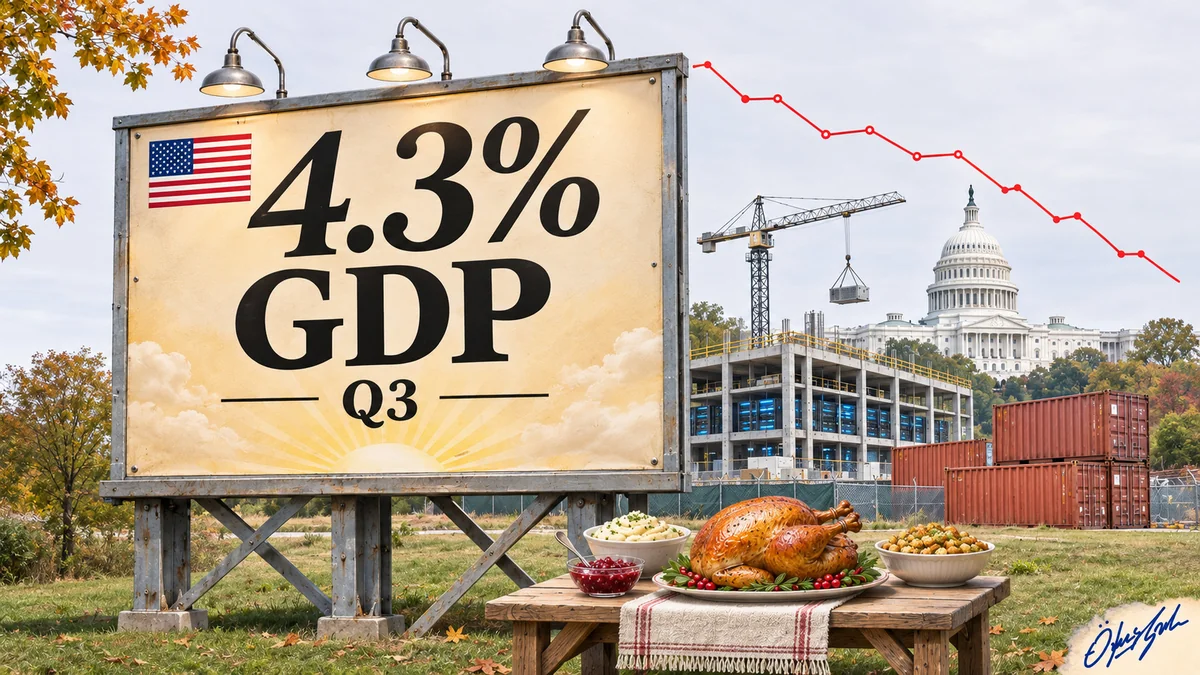
After that 4.3% Q3 GDP print due to high AI investment and strong consumer spending, another sign of resilient demand could be good news for earnings and awkward news for anyone hoping the Fed will ease up.
If shoppers buy more across the board, consumer cyclicals could catch a bid, while short-term Treasury yields and the dollar could rise. The latter could put further pressure on already-troubled technology stocks.
If, on the other hand, American shoppers hold back despite the discounts, yields and the dollar could ease. But the relief might be short-lived for equities if investors start asking whether the earnings forecasts that made the current dip look ‘cheap’ are still too high.
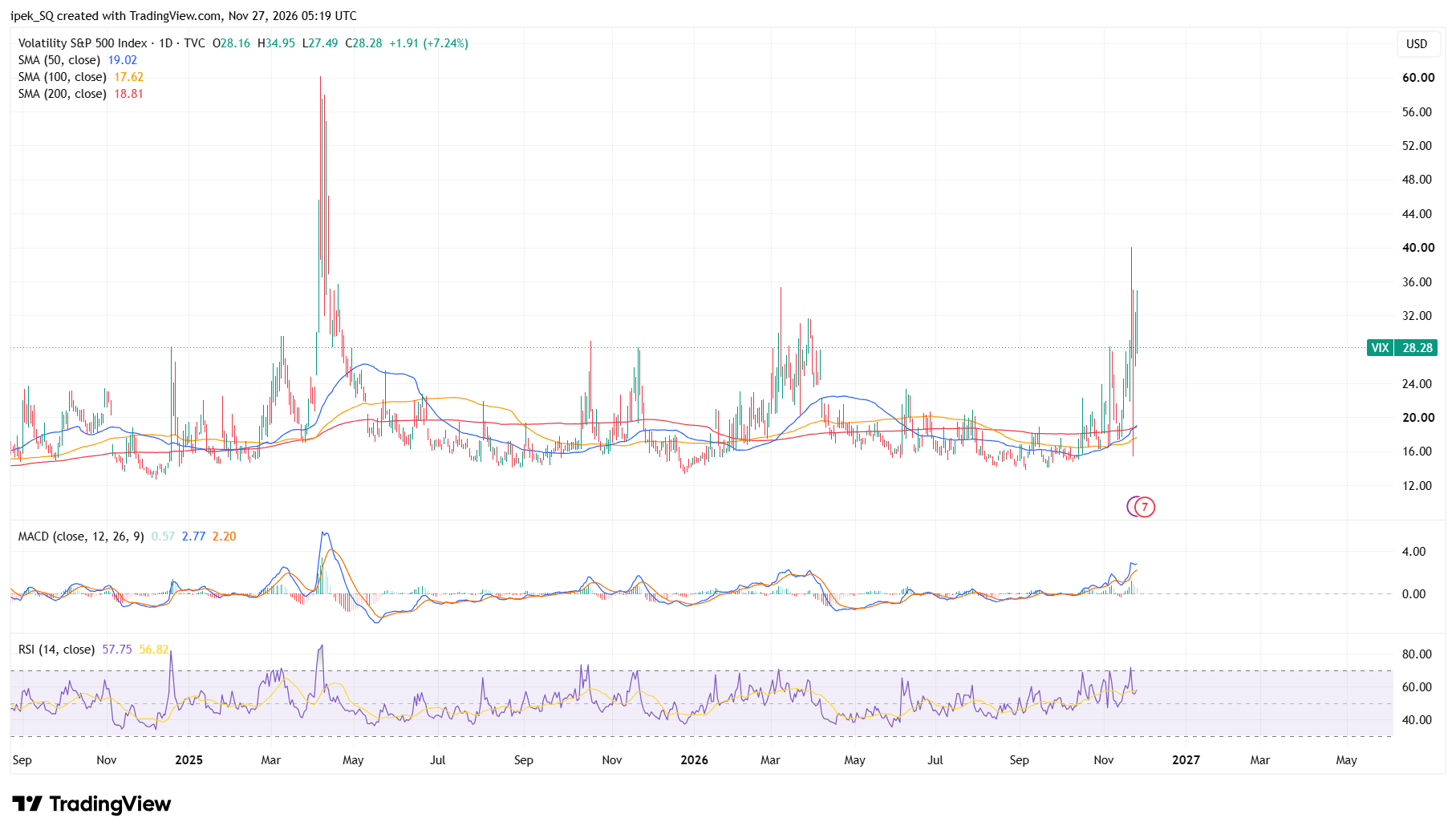
Either way, caution. Volatility is still too high to call an end to the equity sell-off. In fact, Michael Burry says he’s become ‘more long than short’ after closing his Nasdaq put positions. But he is not turning into a bull – no - he’s simply looking for cheaper ways to short the market. As he puts it, ‘most puts on even staid companies nominally adjacent to the AI buildout are very expensive.’
The content of this website is for informational purposes only and does not constitute financial advice. All opinions expressed are solely my own and should not be considered as recommendations to buy, sell or hold any financial instruments. Readers should consult a qualified financial advisor before making any investment decisions.
With love,
Ipek Ozkardeskaya