
In an incredible turn of events, Jensen Huang was brought back to Nvidia. Less than two weeks after he stepped down, the board voted unanimously to reinstate him as CEO, president and a board member. Wow.
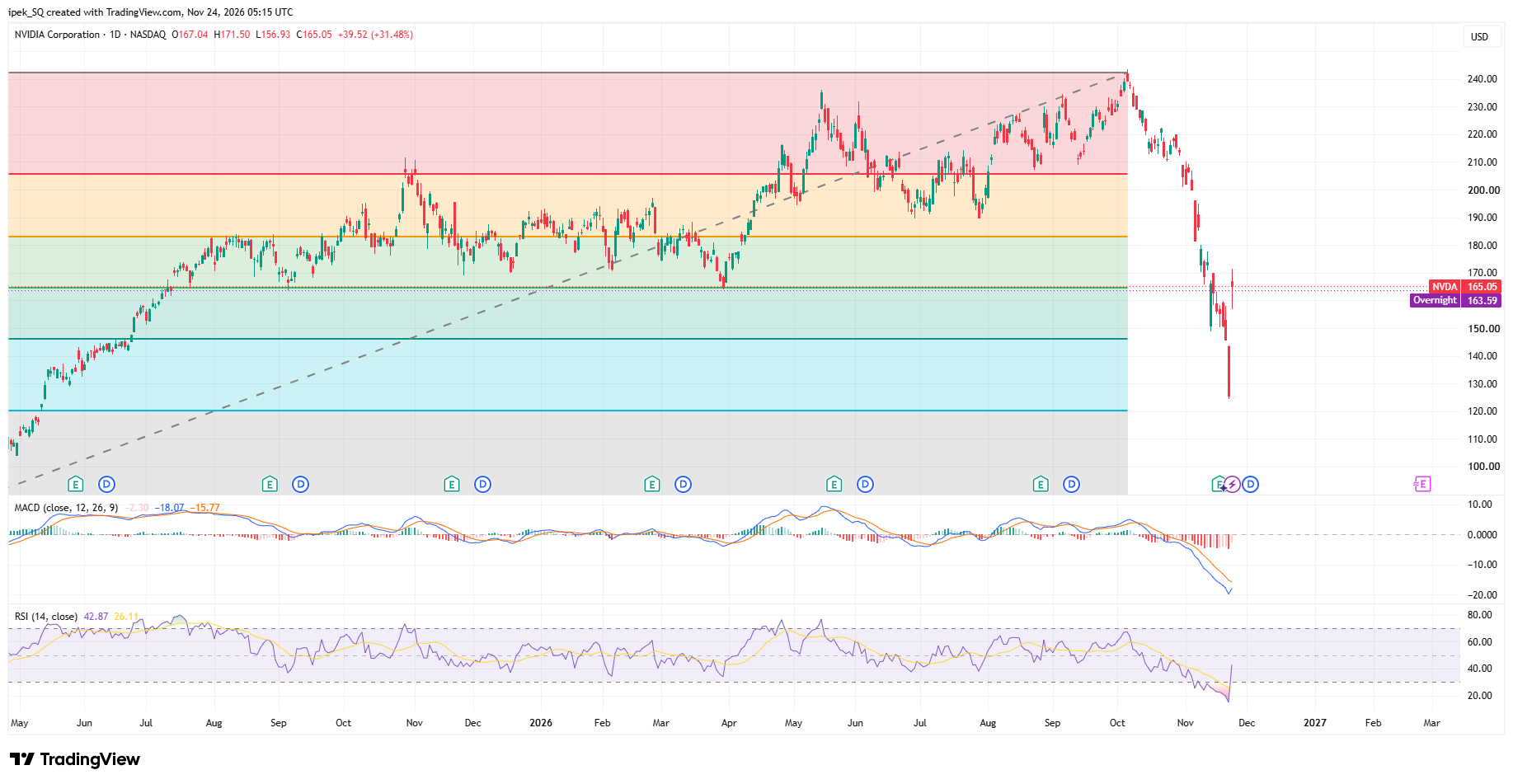
Wall Street wasted no time reacting. Nvidia jumped more than 30% to close near $165 per share, adding almost $1 trillion in market value! The Nasdaq 100 rallied 6.5%. We see similar rallies across Asian indices: Taiex +9%, Kospi 6.70%.
Just when we were expecting the dust to settle, there’s more dust in the arena and one major question on everybody’s mind. With Jensen’s incredible return, can Nvidia and the broader AI market get back to where they were before the sell-off?
I’ll make this short and sweet. Jensen Huang’s return eases uncertainty around Nvidia’s leadership and worries about innovation, technology and the company’s strategic partnerships. Some of those partnerships help fund AI expansion at companies that would otherwise find it too expensive to move at Jensen-backed speed.
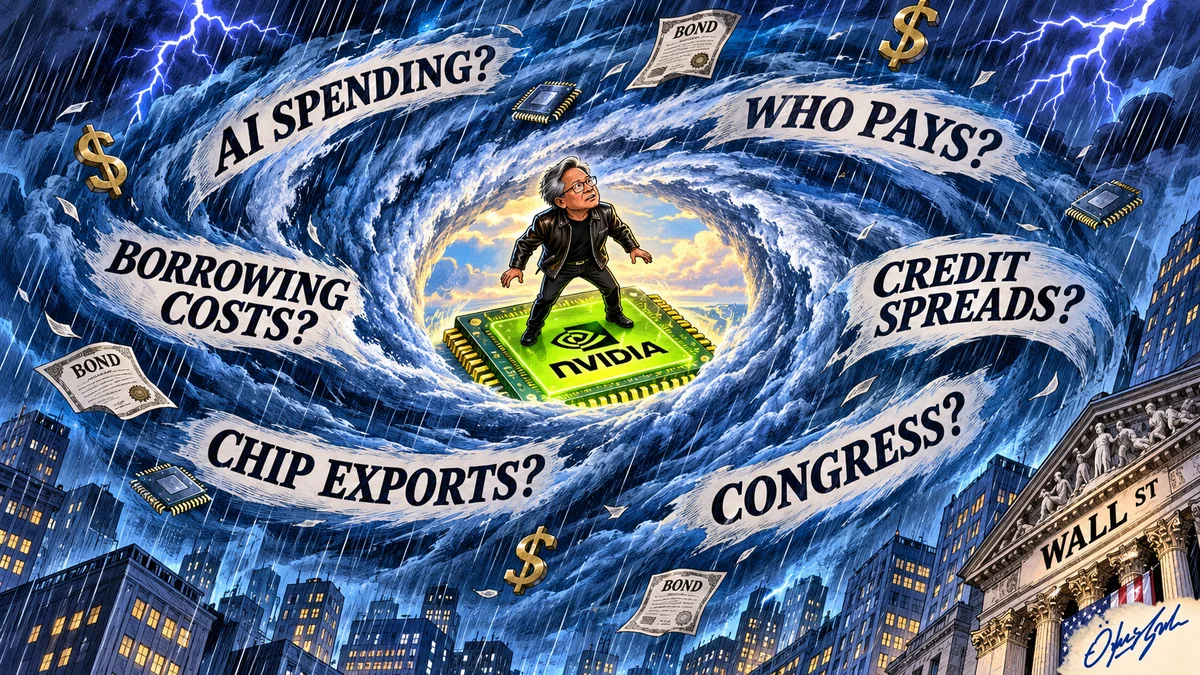
But his return won’t ease the broader risks facing AI. There’s the massive spending needed to build AI infrastructure, the pressure on free cash flow at hyperscalers — Nvidia’s biggest clients — and the need for these companies to raise money through equity or bond issuance. Then there are rising borrowing costs as inflation stays elevated and credit spreads widen, and of course the political hurdles with Democrats set to take control of Congress.
Importantly, analysts have stopped raising their capex forecasts for Nvidia’s biggest clients, according to a recent Axios chart.
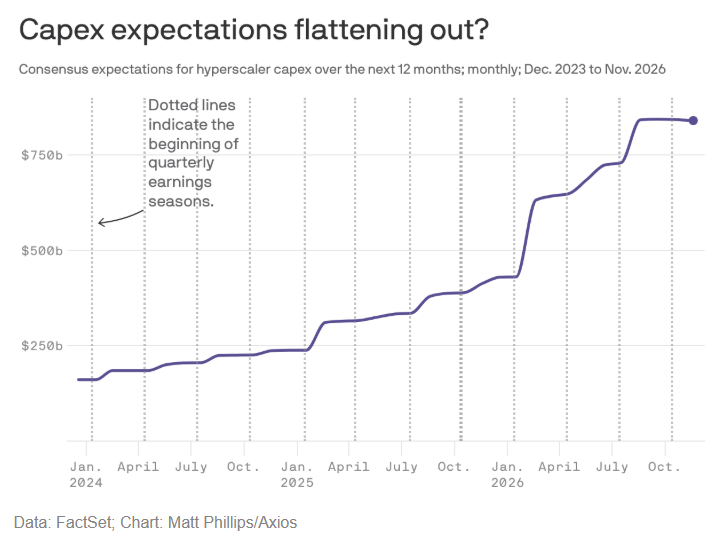
Hyperscalers accounted for about 52% of Nvidia’s total revenue in its latest quarter (Q3 FY2027), so any slowdown in their spending would be a major issue for Nvidia with or without Jensen Huang at the helm of Nvidia. Add to that the rising competition for Nvidia’s market share and the new US export controls on advanced chips shipped to four Southeast Asian countries and Brazil, aimed at preventing chips from being diverted to China, we still have a few questions that remain unanswered. This said, as I said before, the latter won’t take the shine off Nvidia immediately. The company has a powerful product, and a strong earnings outlook despite the turmoil.
This said, Jensen’s return also raises some big questions about corporate ethics and governance. If a CEO is reinstated after all this, what’s the message?
And this saga has shown how far one-man risk can travel. You might hold Nvidia through an index fund, own shares in a cloud company that buys its chips and invest in a utility supplying a data centre. On paper, those are three different investments. Next week, they could all react to the same news about one person.
So, looking past yesterday’s near-trillion-dollar welcome-back party, I’d be careful about reading too much into the rebound. Huang’s return eases some of the risks at Nvidia, while the risk of slower AI expansion for the broader AI complex remains.
Diving into the numbers, I’d break Nvidia’s pullback from its October high into three big chunks. The initial slide came as strong hyperscaler earnings failed to revive enthusiasm, with investors focusing on the rising cost of delivering that growth. The second leg down followed the US midterms, which put Democrats on course to take control of Congress. And the third started with reports of Jensen Huang’s affair with a suspected Chinese spy.
So for Nvidia, the first level I’d watch is $186.64, its last close before the board’s initial statement on Huang. Even after Monday’s jump, it would take another 13% to get there from $165.05. And the October record is further away. Remember the arithmetic here. A stock that loses 40% has to rise almost 67% to get back to where it started. A spectacular day can still leave a long way to go, and Nvidia comes out of this bruised.
For the broader AI rally to recover, we need to see better cost control, clearer returns on investment and, ideally, lower borrowing costs. Investors also need to feel confident that the returns justify the valuations.
The last word
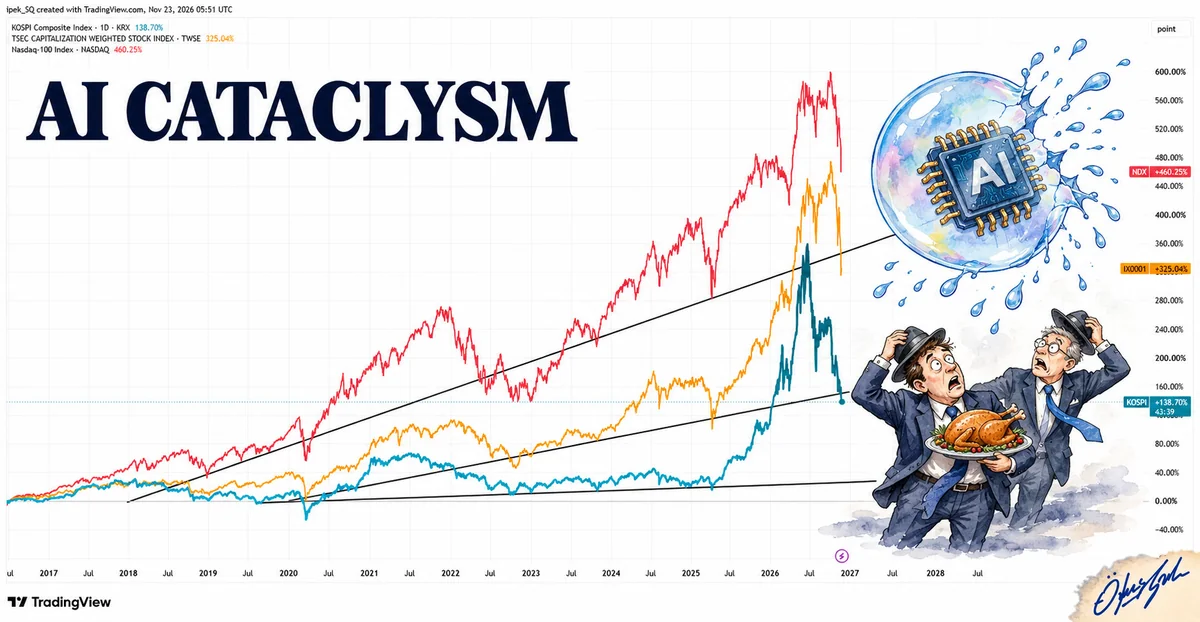
The latest tech sell-off has certainly reshuffled the cards and pulled valuations lower just in time for Black Friday!
But I’m not sure Huang’s return will be enough to put a floor under the broader AI sell-off. The repricing will likely continue until investors have answers to two questions: how much will it cost to build all this, and who will earn enough to pay for it?
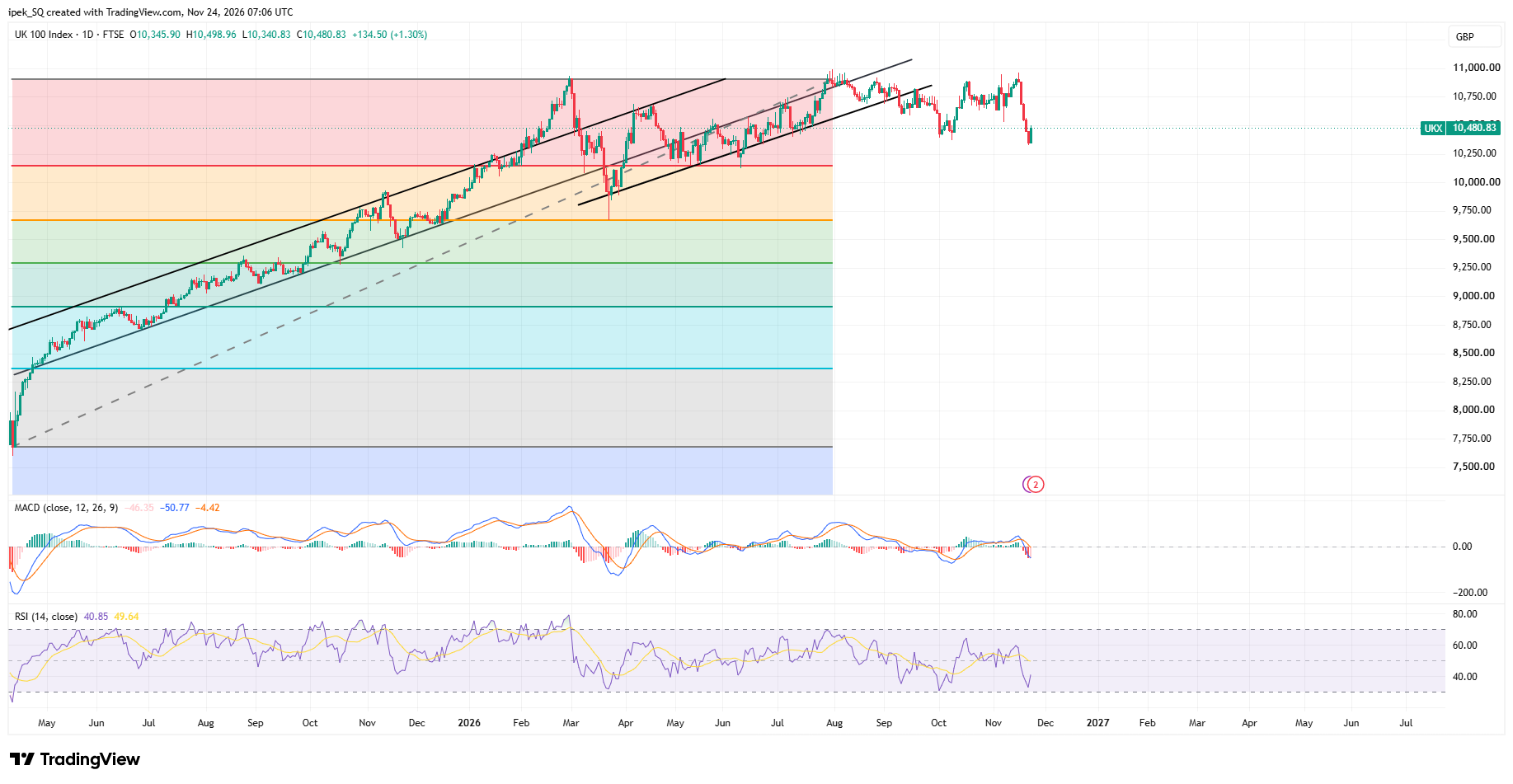
Last week also showed how far a tech sell-off can reach. The rotation trade lost momentum as the sharp sell-off in tech weighed on growth expectations and spilled over into markets with less direct tech exposure. Take the FTSE 100. Falling copper prices weighed on its miners, showing how an index with relatively little tech exposure can still get caught up in a tech sell-off.
In summary, I don’t think the Jensen chapter is closed and that markets will now live happily ever after. The tech sell-off may eventually bring some interesting entry opportunities. But right now, I have the feeling we may have entered the eye of the storm. The storm itself may not be over just yet.
The content of this website is for informational purposes only and does not constitute financial advice. All opinions expressed are solely my own and should not be considered as recommendations to buy, sell or hold any financial instruments. Readers should consult a qualified financial advisor before making any investment decisions.
With love,
Ipek Ozkardeskaya