
We had a busy after-hours news flow, with Meta Platforms, Microsoft, Amazon and Alphabet reporting their Q1 earnings after the bell. The results were overall solid—except for Meta where strong results were overshadowed by stronger spending.
Microsoft, Amazon and Google posted strong growth in their cloud divisions as they continue to back multiple AI models, effectively diversifying individual risks. Amazon, for example, delivered its fastest cloud growth in more than three years, with spending rising above analyst expectations. The share price fluctuated between gains and losses before bulls took control, driving a nearly 3% jump.
Google shares surged around 7% in after-hours trading after beating expectations. Microsoft’s Azure posted 39% growth, reinforcing the idea that massive AI spending is now translating into revenue. Its after-hours price action remained mixed, leaving the stock roughly flat.
Meta, however, slumped sharply after announcing higher spending, now projecting between $135–145bn! Shares slumped more than 7% in the afterhours.
The issue is positioning: Meta is essentially a single bet, investing heavily in its own ecosystem, whereas the other three are supplying infrastructure—offering computing power and chips to benefit from the broader expansion of AI. At this stage, Meta looks like a more concentrated and riskier play, especially as competition intensifies.
Overall, the trend remains positive for AI-exposed stocks. Strong cloud revenue growth continues to validate the AI adoption story, which in turn supports demand for chipmakers.
In Asia, the Kospi rose to a fresh all-time high before giving back gains, even as Samsung Electronics reported striking results. Fasten your belt: revenue rose 69.2% year-on-year, net profit jumped 474%, and operating profit surged 756%. All of this was driven by the rebound in memory chip prices amid ongoing supply constraints.
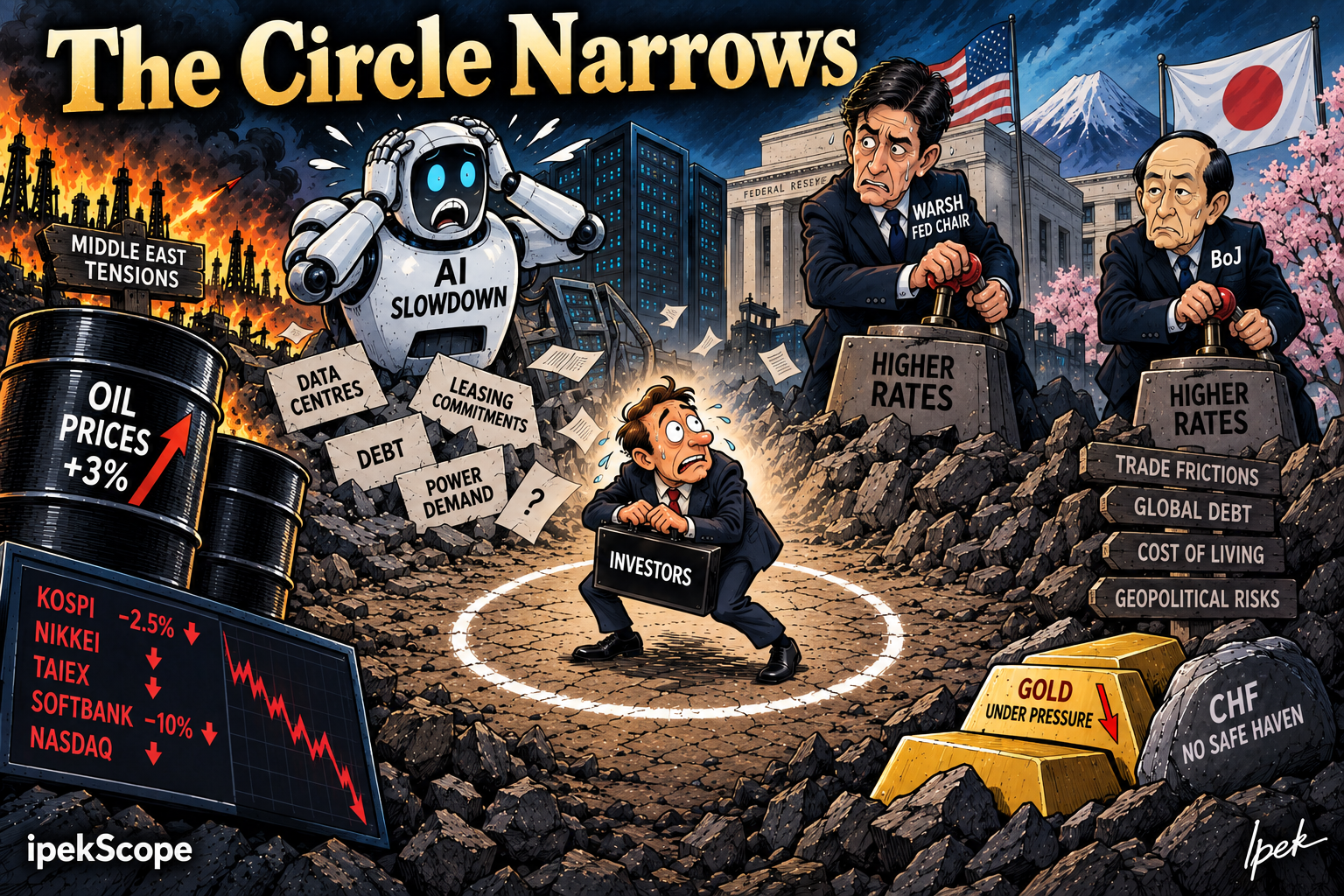
Alas, despite encouraging tech news, Nasdaq futures are down around 0.22% this morning, overshadowed by a fresh rally in oil prices.
WTI crude oil is being aggressively bought since yesterday after the US insisted to maintain the naval blockade in place preventing Iran from coming to the negotiation table. Prices surged nearly 9% and continue to extend gains above $113 per barrel, while Brent crude is also pushing above $113 this morning.
High and rising energy prices are pushing inflation expectations higher and making central banks increasingly uncomfortable. The Federal Reserve (Fed) left rates unchanged, as widely expected, but noted that developments in the Middle East are ‘contributing to elevated uncertainty around the economic outlook’. Nothing surprising.
What was unusual, however, is that three Fed members opposed the post-meeting language suggesting the central bank would eventually resume cutting interest rates. They argued that it was too early to signal easing while the inflation outlook remains uncertain. This divergence could complicate the Fed’s communication under the new Chair, particularly as policy expectations evolve.
Following the Fed decision and the spike in oil prices, Fed funds futures have stopped pricing in any rate cuts this year. The probability of a December cut is now around 4%. The US 2-year yield has risen to 3.94%, pushing the 10-year yield to 4.43%.
Today, the European Central Bank (ECB) and the Bank of England (BoE) are expected to leave policy unchanged. However, rising inflation risks could keep the possibility of rate hikes on the table, unless growth slows sufficiently to offset the pressure from higher energy prices—the so-called ‘demand destruction’ as oil becomes too expensive for consumers and businesses.
Meanwhile, the US dollar is strengthening alongside oil prices, as more dollars are needed to purchase increasingly expensive energy.
Over the longer term, however, the dollar’s outlook is weakening. The broader issue is fiscal: the Iran war has already cost $25bn to the US government and, given the current trajectory, that figure is likely to rise. At the same time, US debt is increasing alongside expansive fiscal policies. Total US debt is approaching the $40 trillion mark.
More importantly, interest costs are now rivaling defense as one of the largest spending categories, behind only Social Security and Medicare. This dynamic increasingly weighs on growth outlook.
It’s a serious issue. Debt held by the public (tradable debt) is now close to 100% of GDP, and projections from the Congressional Budget Office suggest it could rise to 120% within a decade—and potentially 131% if tax cuts are extended.
As a result, global investors are gradually shifting away from US Treasuries, potentially in favour of alternatives such as gold. In that context, dips in gold remain attractive buying opportunities. According to the World Gold Council, central banks purchased a net 244 tonnes of gold in Q1 2026—the fastest pace in over a year.
The content of this website is for informational purposes only and does not constitute financial advice. All opinions expressed are solely my own and should not be considered as recommendations to buy, sell or hold any financial instruments. Readers should consult a qualified financial advisor before making any investment decisions.
With love,
Ipek Ozkardeskaya