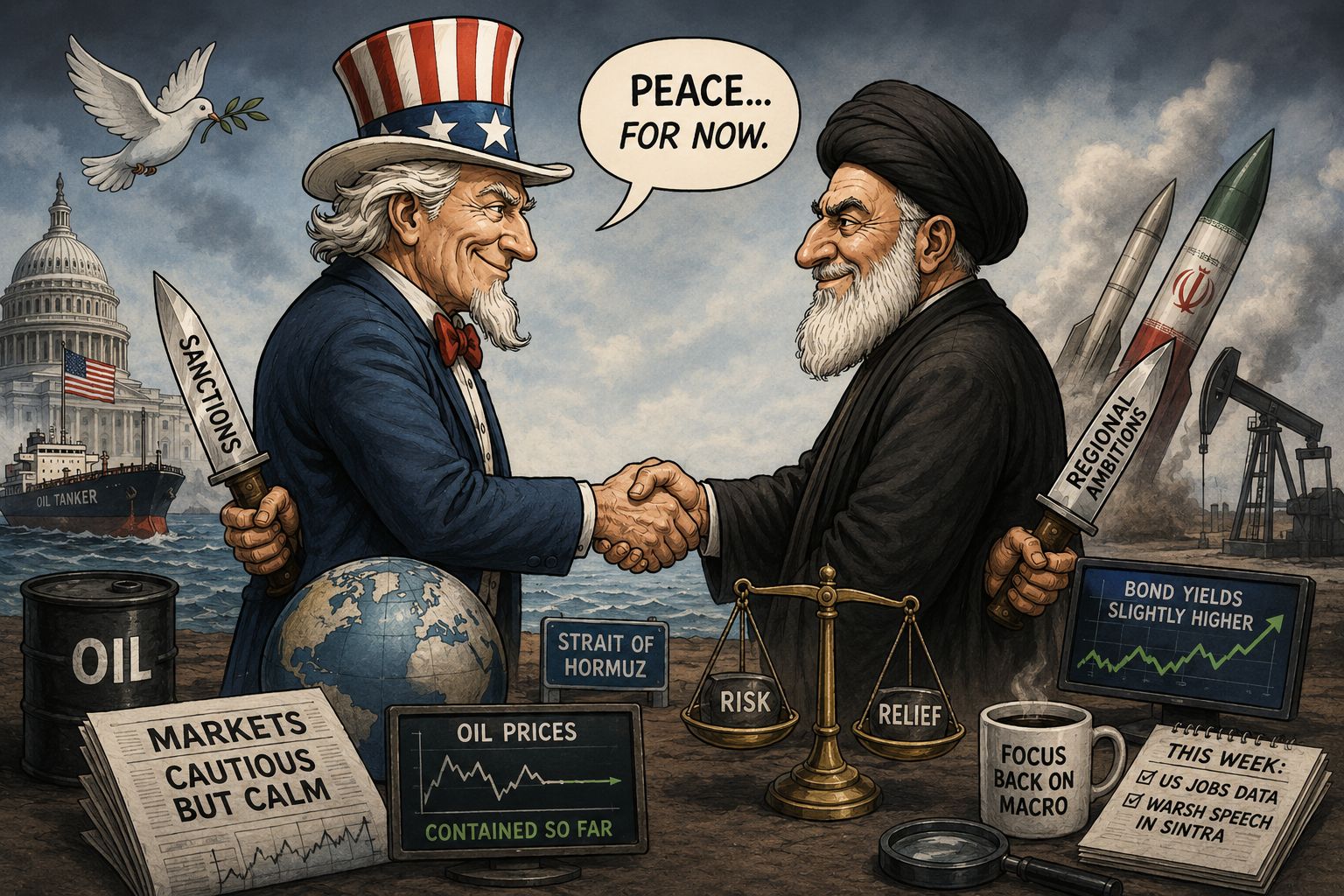

Given the ugly weekend news regarding the US and Iran's mutual attacks, I was expecting the week to start on a sour note. But not at all. The two countries announced that they would stop fighting, and the sun is shining again.
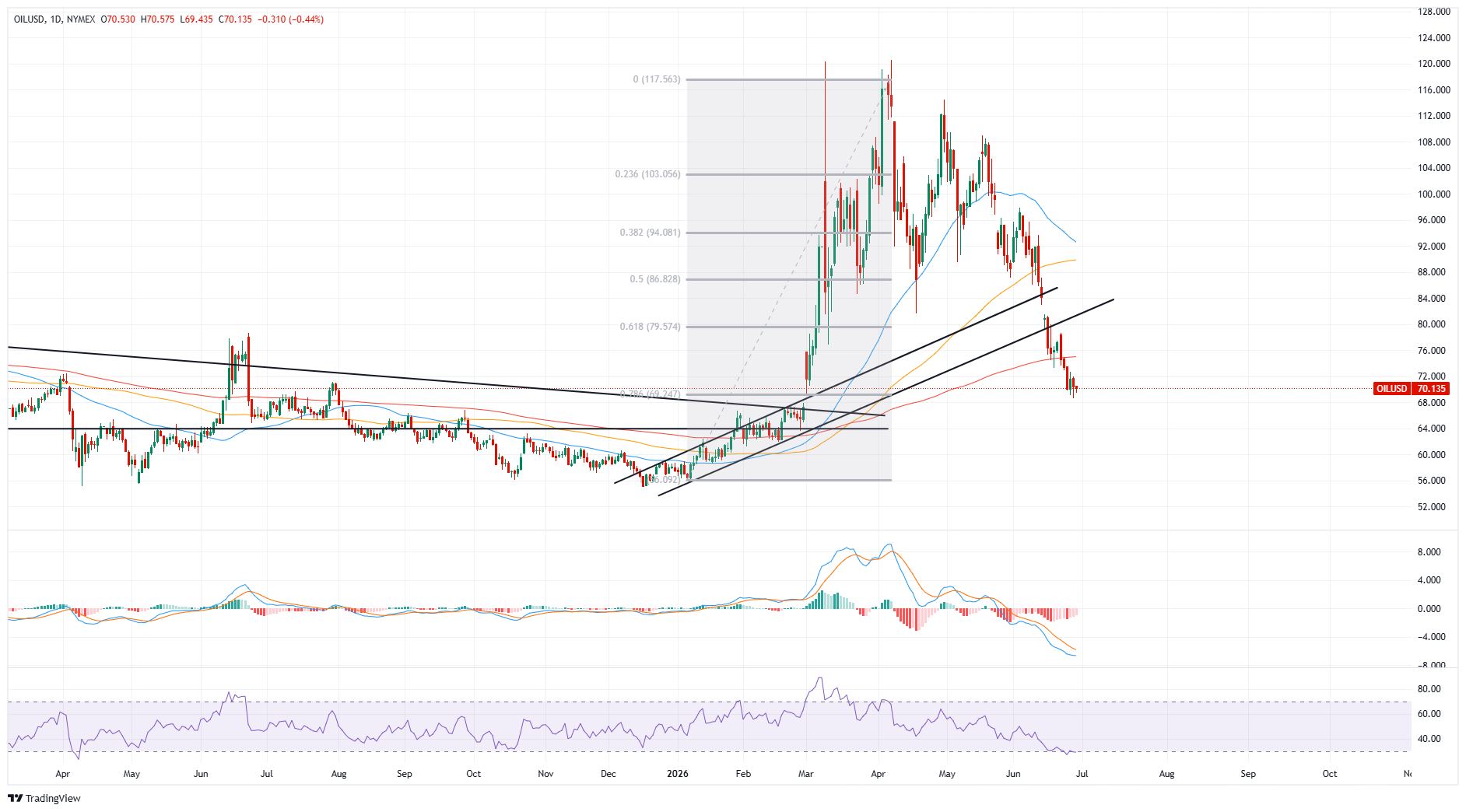
Although traffic through the Strait of Hormuz has been affected since the attacks began last week, the impact on oil prices remains relatively contained. Last week's news that some key markets have even turned oversupplied thanks to the release of strategic reserves and oil tankers quietly making their way out of Hormuz has certainly helped investors react more moderately to the latest escalation than they would have just a few weeks ago. As such, US crude didn’t surpass $70.60pb during the initial bout of unease in Asia and is consolidating around the $70pb mark at the time of writing. Brent crude is also trading in a tight range around $73pb.
Bond yields are slightly higher on Middle East uncertainty, while the Japanese 10-year yield is pushing toward the 2.65% mark as stronger-than-expected retail sales data fuel expectations of a more hawkish Bank of Japan (BoJ). The strong data is partly the result of fiscal stimulus, which the BoJ must balance against the need to tame inflationary pressures. Alas, yen traders are not convinced that the BoJ will normalize policy quickly enough to relieve pressure on the Japanese currency. The USDJPY is gently pushing above 161.80 this morning. If it isn't rising faster, it's because yen shorts expect the Japanese authorities to step in at some point. But they have been much more patient this time than in previous months.
Anyway, appetite for Asian equities is fairly subdued this morning. The technology-heavy indices are under pressure. The Nikkei is down by more than 1%, while SoftBank has taken another dive (around 6% at the time of writing) amid rising questions about AI valuations and weakening investor appetite. The Kospi was down when I first sat down his morning, but turned positive on news that the Korean chipmakers will be building two more fabs to meet rising demand – with authorities also insisting on needs to boost energy through renewables to feed the energy hungry facilities.
Last week, the hottest trades—especially memory chip makers—took a hit despite blockbuster results from Micron. The company closed more than 6% lower on Friday, while other hot names such as Sandisk and Western Digital posted double-digit losses. According to the latest data, hedge funds dumped their technology holdings at the fastest pace on record. Rotation out of tech continues.
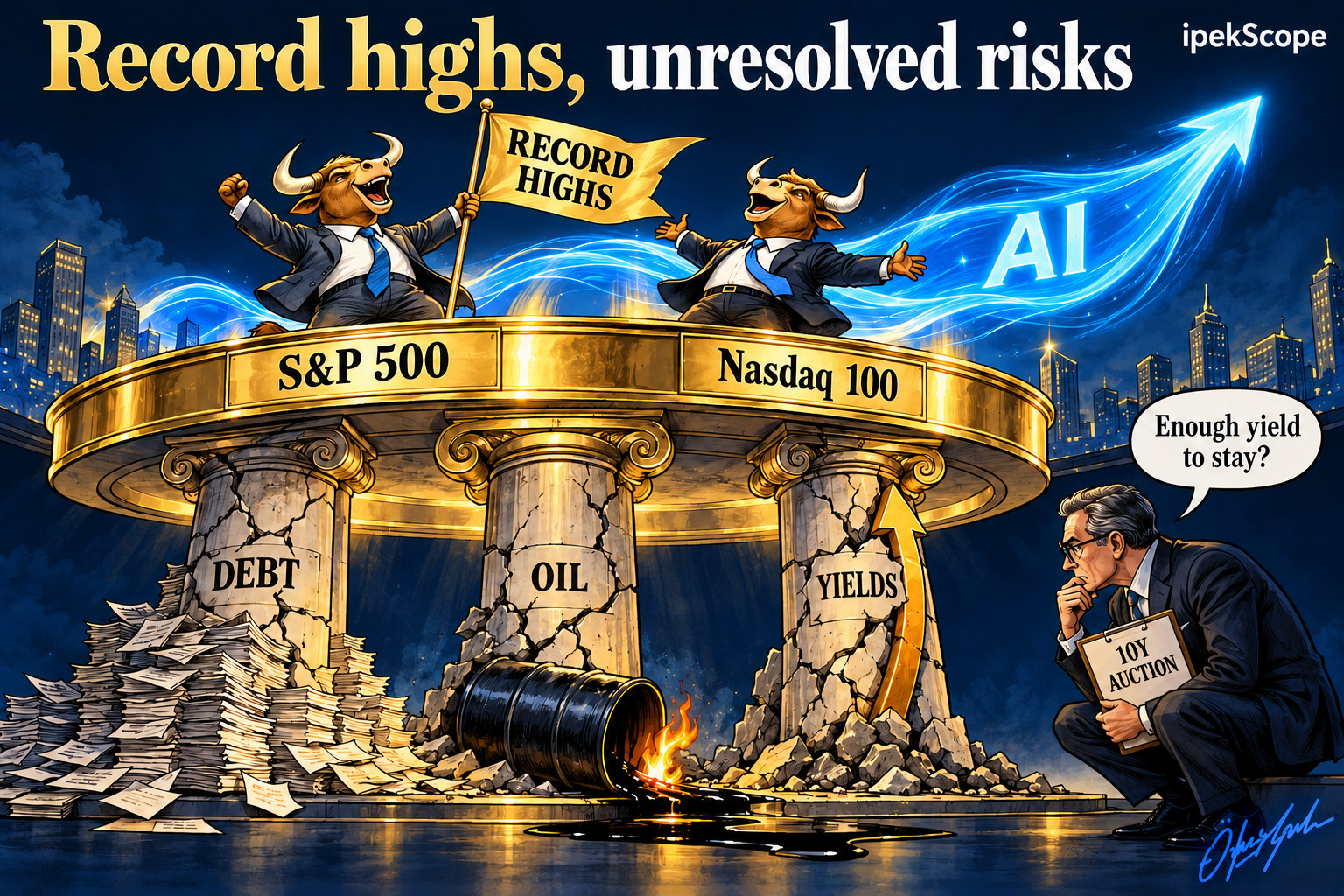
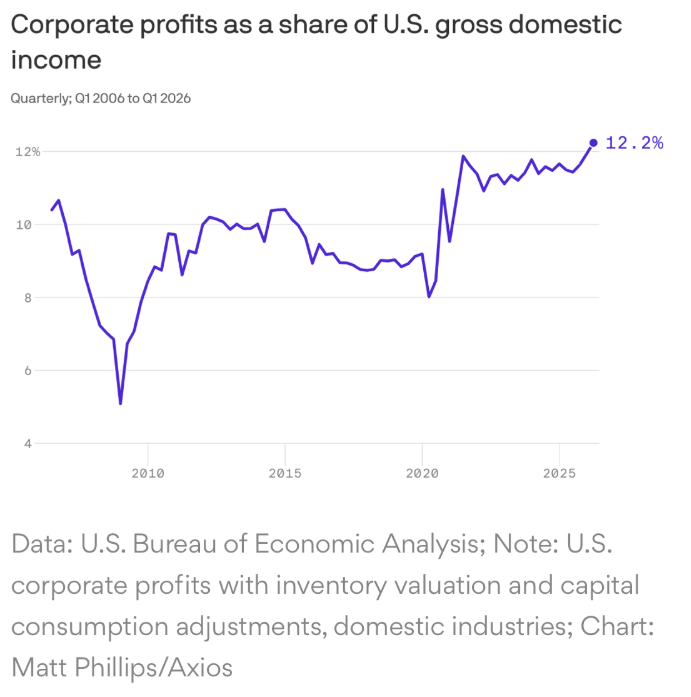
The pressure on technology stocks is expected to continue, but earnings strength will likely continue to put a floor under periodic selloffs and bring dip buyers back into the market because AI investment continues to grow at a parabolic pace—with Big Tech expected to spend between $800bn and $1tn on AI infrastructure this year—and those investments continue to boost corporate profits. In the US, corporate profits now account for more than 12% of GDP, while analysts expect S&P 500 earnings to grow by more than 21% in Q2. More than 21%—all thanks to AI investment.
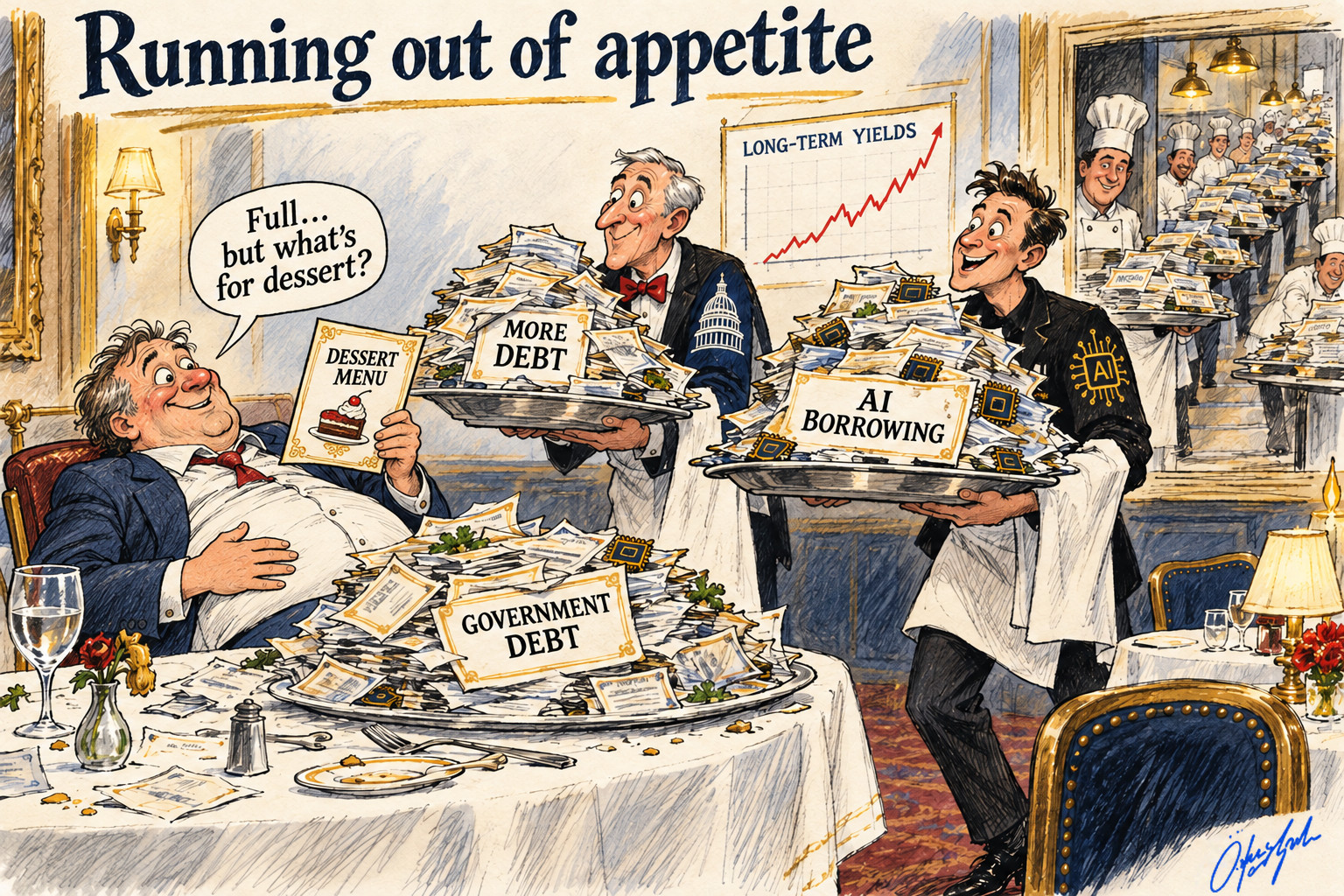
But here is the problem: these huge investments are also draining Big Tech's free cash flow, obliging companies to take on more debt and putting their valuations under pressure.
In summary, Big Tech—the early winners of the AI rally—is beginning to stagnate, while the AI enablers remain attractive as they continue to attract enormous investment, and chipmakers have enjoyed enough pricing power to deliver stellar results. But as their prices begin squeezing profits further down the line—I am referring to Apple's announcement last week to increase product prices by as much as 25% due to soaring memory chip costs—investors will eventually realize that revenues cannot continue growing at the current pace forever.
As a result, the hottest AI trades will continue to change hands, rather like hot potatoes, as investors search for the next major beneficiaries of the AI boom. But some investors believe that, ultimately, it won't be technology alone that benefits from AI, but the economy as a whole through higher productivity gains. Even so, rotation from tech into non-tech sectors is likely to encourage a broader downside correction.
The Week Ahead
Will the correction continue this week? Possibly. The major catalysts will likely come from the macroeconomic front. The US will release its latest labour market data this week, with the official payrolls report due on Thursday, as US markets will be closed on Friday for the holiday. The US economy is expected to have added around 120K nonfarm jobs in June, with wage growth remaining steady at around 0.3% month-on-month. The latter is arguably more important than the headline payroll figure, as the Fed's focus has shifted back to inflation following Kevin Warsh's first FOMC meeting as Chair.
In addition, Kevin Warsh will speak at the central bankers' meeting in Sintra this week. His speech will be followed very closely by Federal Reserve (Fed) watchers. Every sentence, every word, every mimic will be scrutinized for clues about where the Fed is headed next.
So far, the Fed's hawkish shift has given a fresh boost to the US dollar against most major currencies, and that renewed appetite for the greenback could continue if the Fed remains focused on bringing inflation down while inflationary pressures continue to ease elsewhere thanks to lower energy prices.
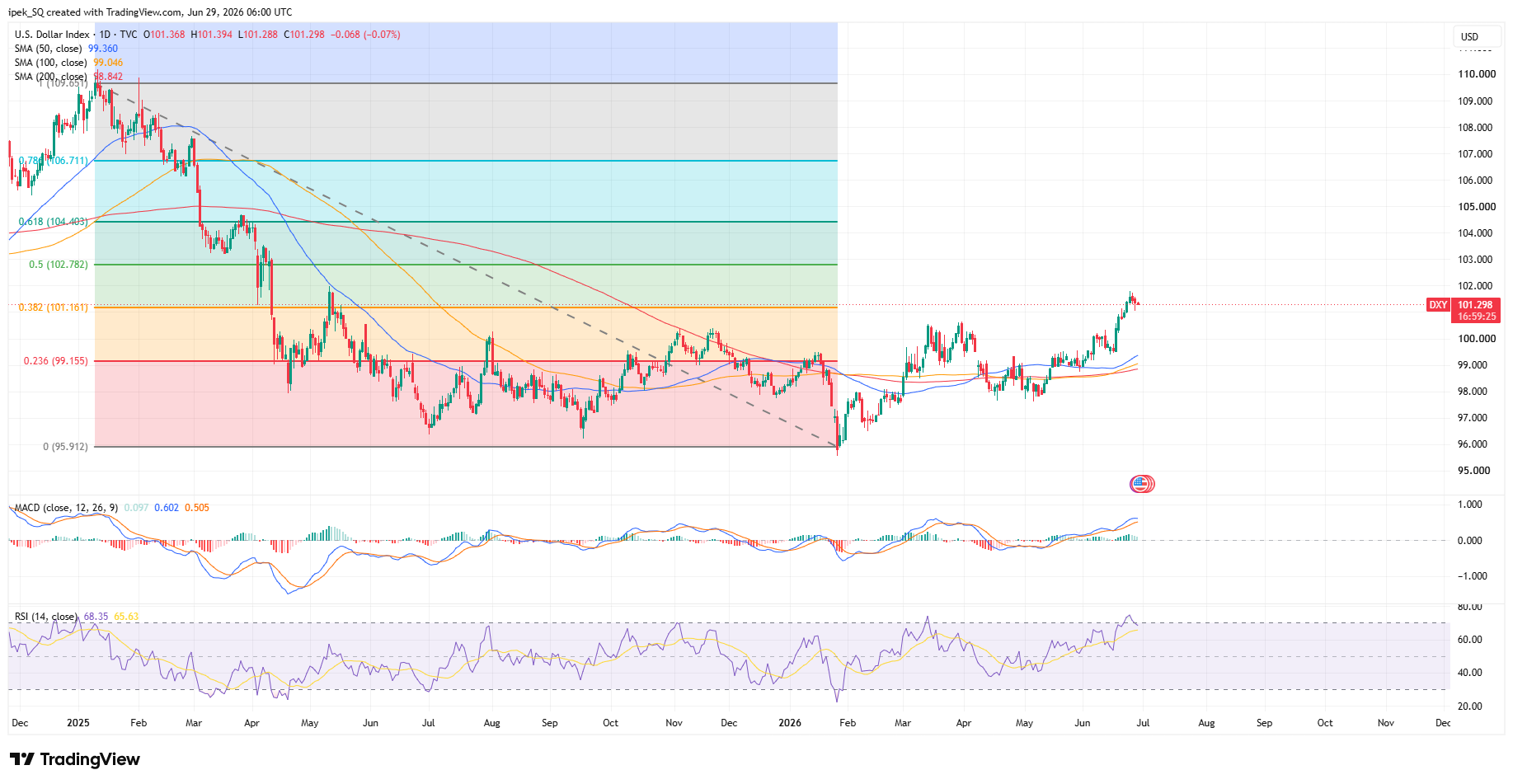
That said, Fed expectations have already moved a long way, with markets pricing in roughly a 62% probability of a September rate hike. Therefore, the US dollar is likely to continue appreciating, but probably at a gradual pace unless we see a major surprise in the economic data.
The EURUSD tested—but held above—a critical Fibonacci retracement last week, namely the 38.2% retracement of its 2025 year-to-date rally near 1.1350. I expect the pair to continue holding around that level unless economic data deliver a major surprise, though upside potential should remain limited as we enter a period of gradual US dollar appreciation.
The content of this website is for informational purposes only and does not constitute financial advice. All opinions expressed are solely my own and should not be considered as recommendations to buy, sell or hold any financial instruments. Readers should consult a qualified financial advisor before making any investment decisions.
With love,
Ipek Ozkardeskaya