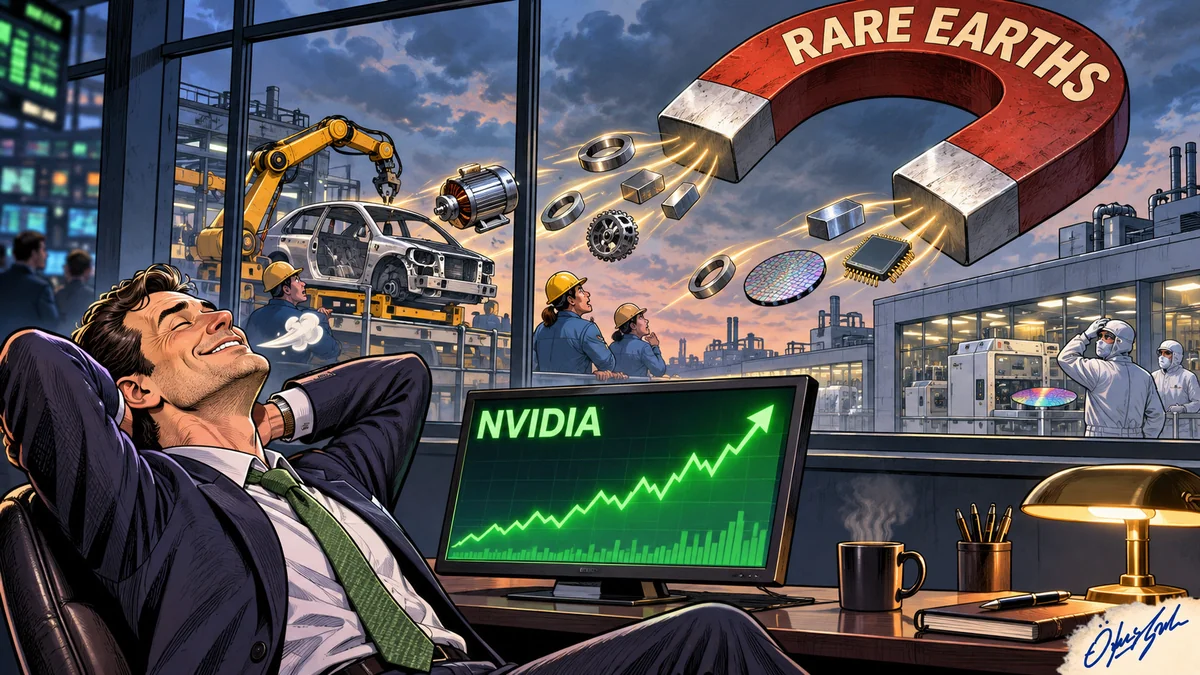

Nvidia smashed it again. The company’s earnings and revenue forecast blew past expectations. Expected revenue was around $109bn. Nvidia posted nearly $116bn, and data centre revenue rose 110% compared with the same time last year. The GAAP gross margin stood at a whopping 74.8%. And more importantly, the company gave a higher-than-expected forecast that somehow calmed the nerves of the past few weeks. Nvidia expects revenue of $130bn in the current quarter, plus or minus 3% (vs. $125bn expected), and expects revenue to grow 75% in the next fiscal year, up from its previous forecast of about 70%.
Regarding investments, the company CFO Colette Kress, who is also serving as interim CEO, described their investment strategy to be ‘disciplined’ and ‘rigorous’, suggesting a possible shift in how aggressively Nvidia finances its customers. That, however, doesn’t seem to be weighing on the outlook either.
Kress said that the advanced Vera Rubin chips are ‘off to an explosive start’. They certainly are.
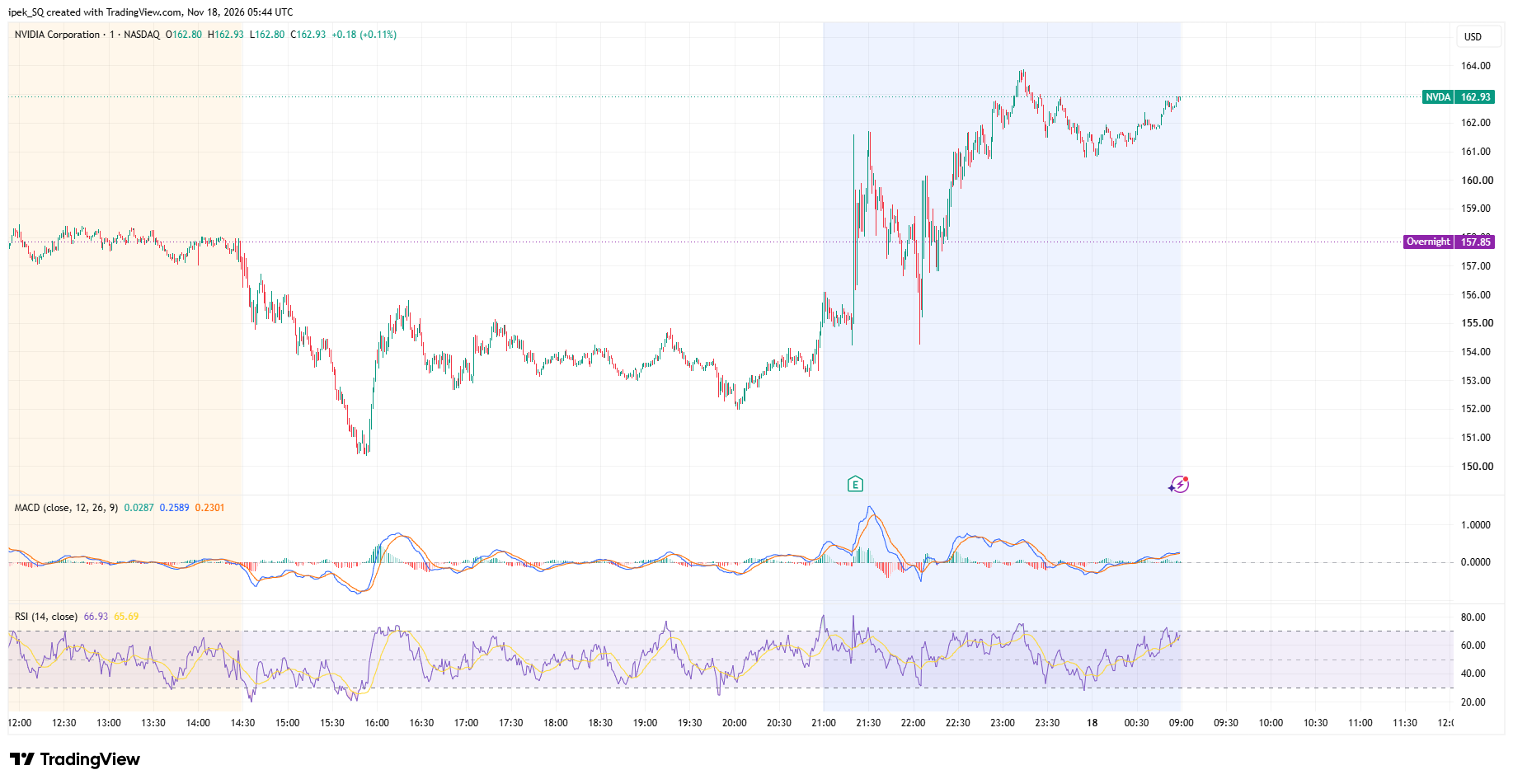
The numbers were so great – and the stock had become so much cheaper – that investors rushed back into Nvidia after the results landed. The share price rose about 5% to nearly $163 in after-hours trading. At $163, Nvidia is trading at roughly 17 times this year’s expected earnings and 10 times next year’s, based on the latest adjusted earnings forecasts.
But it’s worth noting that, with its latest forecasts, Nvidia is telling investors without telling them that the investments will continue though with care, and that the Chinese drama and the resulting fresh chip restriction will have no impact whatsoever.
Fresh chip restrictions are, however, about to complicate US relations abroad.
The fallout from the Jensen Huang scandal has put suspected chip diversion through Singapore-based Megaspeed back in the spotlight, alongside Chinese companies’ access to advanced processors through overseas data centres. Washington is now tightening controls on remote access and requiring licences for advanced chip exports to Singapore, Thailand, Malaysia, Indonesia and even Brazil, in an attempt to cut China’s access to the chips its developers need to train their AI models.
China, for its part, needs technological progress to offset slowing growth and an ageing population, so access to advanced chips is a big deal. Beijing has warned of retaliation just as Xi and Trump are preparing to meet, and tighter restrictions on rare-earth exports are one way it could push back.
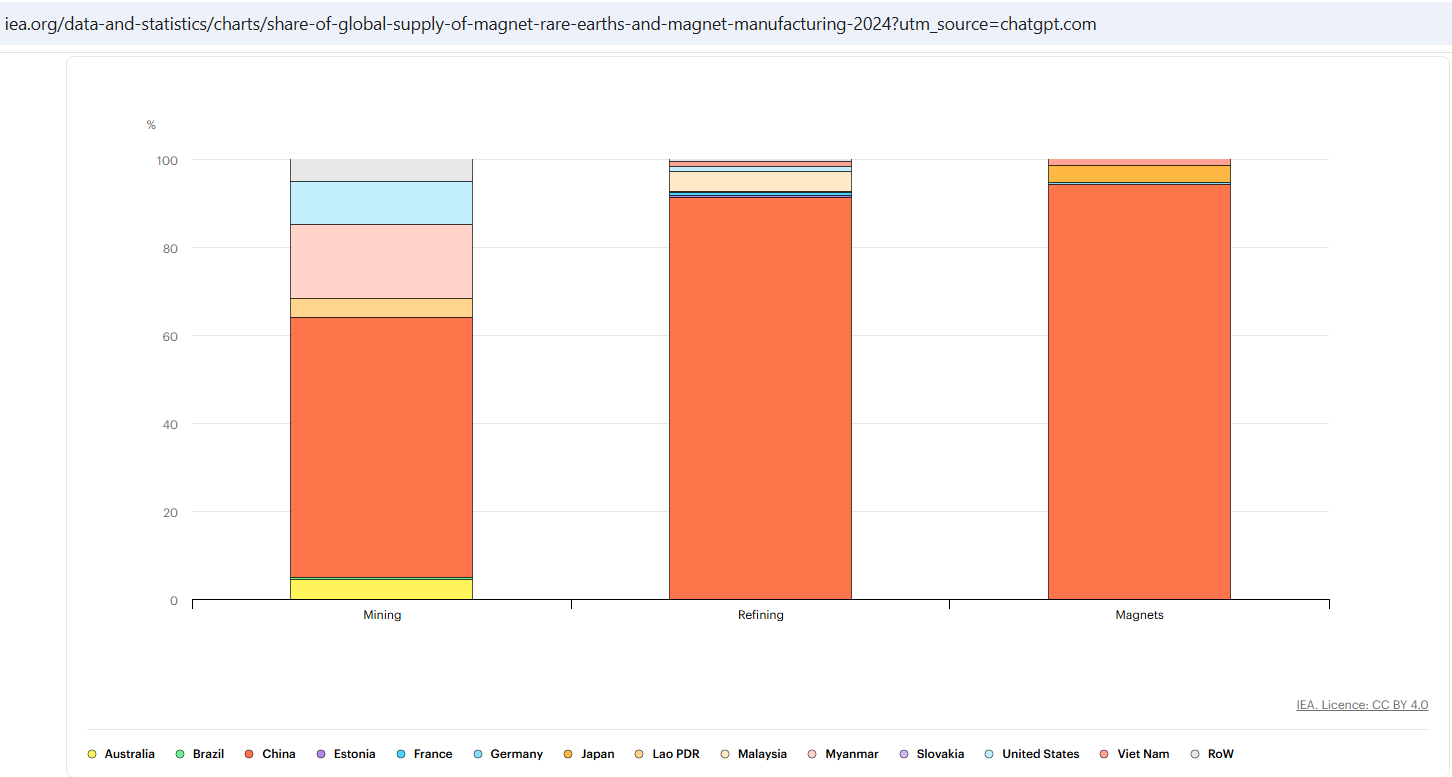
To give some context, China accounted for around 69% of global rare-earth mine production in 2025, according to the US Geological Survey. Its dominance is even greater in processing and magnet manufacturing. For 2024, the IEA puts China’s shares at 91% for refining rare earths used in magnets and 94% for manufacturing sintered permanent magnets. Its strongest leverage is therefore in processing and manufacturing.
If China stops supplying these materials and magnets, manufacturers elsewhere could face shortages that are difficult to make up quickly, forcing them to pay more, cut production or temporarily shut factories.
Beijing, for example, introduced export licensing requirements for seven rare-earth elements and related products in April 2025. Chinese rare-earth magnet exports plunged around 74% year on year in May, and a shortage forced Ford to halt Explorer production for a week. The consequences are material.
The IEA estimates that fully implementing China’s expanded restrictions could put $6.5 trillion of annual downstream production outside China at risk, giving Beijing considerable bargaining power.
Now, the April 2025 export controls remain in force, but a broader package announced in October 2025 is suspended until 10 January 2027. This is where China could act by tightening licensing or reviving the suspended measures to put pressure on Washington. Let’s see if the Xi–Trump bromance can survive the Huang drama.
Moving forward, this Thursday, Donald Trump and Xi Jinping are due to meet on the sidelines of the APEC summit in Shenzhen, ironically one of China’s most technologically developed cities.
If China pulls the rare-earth lever, the consequences will spread well beyond technology. Carmakers including Ford, GM, BMW and Mercedes-Benz, alongside suppliers such as Bosch, could face shortages, higher costs and production delays. Chip manufacturing is also exposed. TSMC has reportedly been exploring alternatives to rare-earth components in its factory equipment. So the chip dispute that intensified after Jensen Huang’s resignation could end up squeezing both Western carmakers and the factories that manufacture those very chips. Holy Jensen Huang.
Zooming out
Happily, we have strong Nvidia earnings and strong demand for the upcoming Anthropic IPO to dilute the unideal US–China setup into something sweeter.
Anthropic’s official IPO range is $70–$78 per share, with The Wall Street Journal reporting that it could price above $80 after strong demand.
Another thing that catches my attention is how little the markets are reacting to intensifying attacks in the Middle East and rising tensions. US crude is down this morning, trading near $85 a barrel, with Brent near $93. European natural gas futures are showing some reaction.
Broadly, easing energy prices help ease upward pressure on yields, although that hasn’t translated into notable gains for the broader indices so far this week. Energy and mining stocks have come under pressure amid talk of a return to an oil surplus despite the ongoing tensions, and after weak Chinese data at the start of the week. Yesterday’s US retail sales were in line with expectations, but the stronger-than-expected control group gave Federal Reserve (Fed) hawks something to point to.
This morning, Nasdaq futures are leading gains. Let’s see if Nvidia and Anthropic can make the market forget its troubles.
The content of this website is for informational purposes only and does not constitute financial advice. All opinions expressed are solely my own and should not be considered as recommendations to buy, sell or hold any financial instruments. Readers should consult a qualified financial advisor before making any investment decisions.
With love,
Ipek Ozkardeskaya