
A quick glance at the oil chart tells you almost everything about what's going on across the global financial markets today.
US crude jumped 9% yesterday, breaking above its 200-day moving average—the level I was watching to distinguish between "this is just another blip" and "we're back to stress levels"—and is up another 2.3% at the time of recording this morning. Overall, oil has gained as much as 20% since its July 2 dip below the $70-per-barrel level. It is flirting with $80pb this morning. Spot prices are also rising faster than futures—a sign of growing concerns about near-term supply.
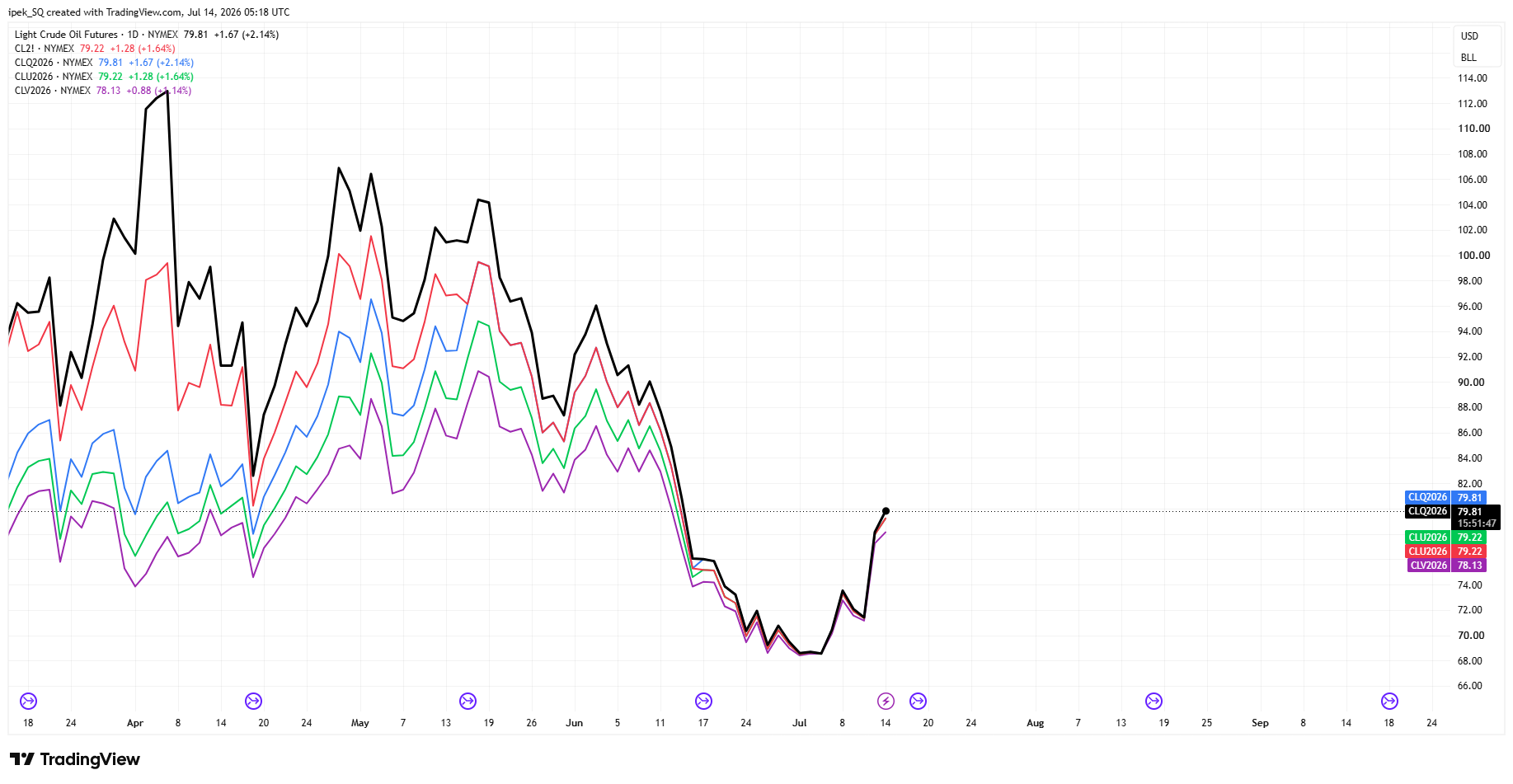
So, as I said, we're now back in the stress zone.
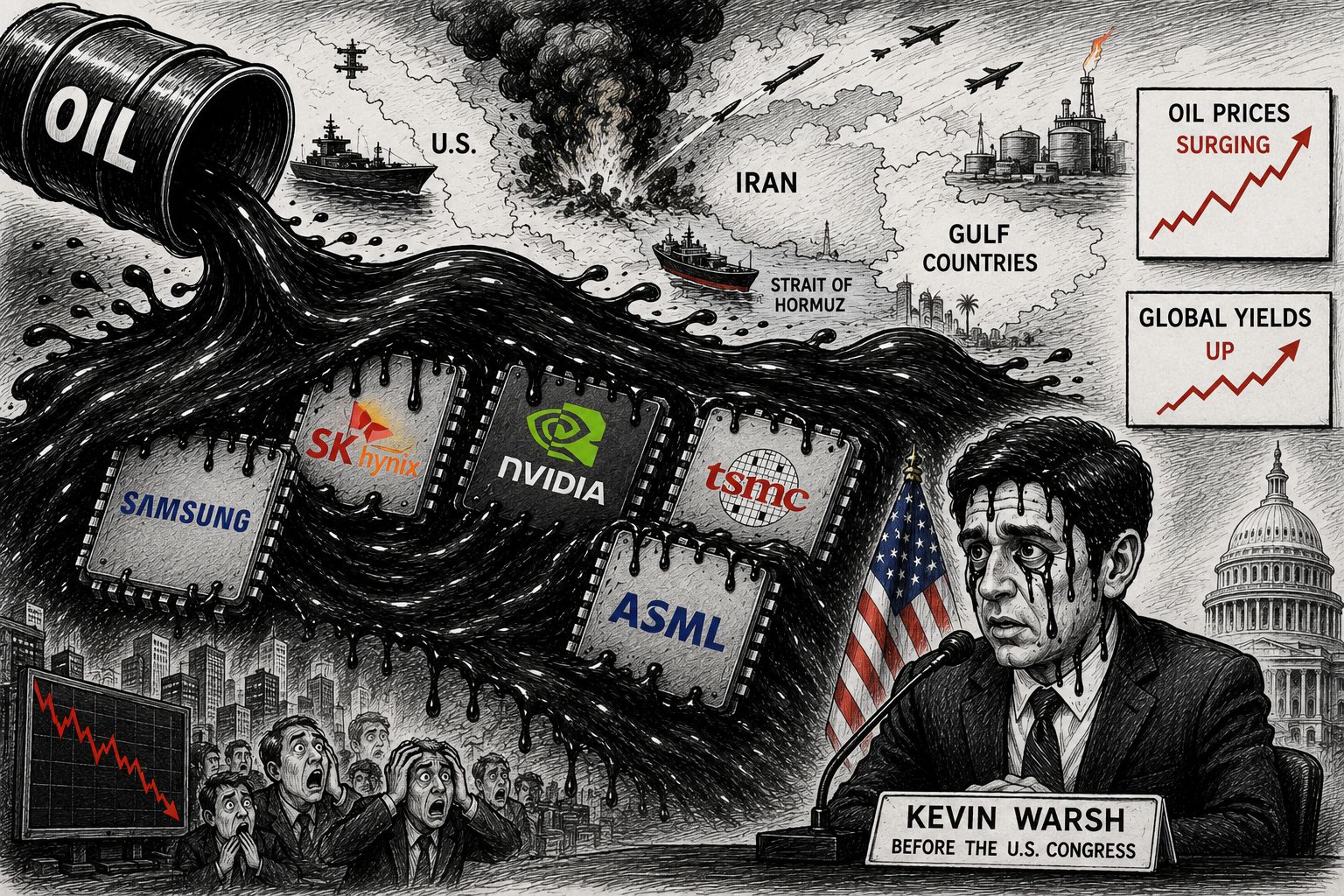
Middle East tensions are re-escalating: the US has attacked Iran, Iran has attacked neighbouring Gulf countries, the US blockade on Iranian ships has returned to the Strait of Hormuz, and this time Washington is also demanding a 20% fee on all cargoes passing through the Strait. That's bad news, as such a fee would push transit costs far beyond the roughly $2 million per ship that Iran had proposed charging. If you do the maths, a fully loaded oil tanker is worth around $150-170 million, meaning a 20% fee would amount to roughly $30-34 million per cargo. Bloomberg reports that such a measure would likely be illegal under international law. I would simply say that some people at the helm of the US appear to be losing their minds.
And that is echoing very negatively across financial markets, starting with sovereign bonds. The US two-year Treasury yield—which best captures Fed rate expectations—spiked to nearly 4.30%, its highest level since February 2025. A benchmark for European sovereign debt climbed back to almost 3.10%, while Japan's 10-year government bond yield eased despite rising oil prices this Tuesday, as the finance minister Katayama said that the JGBs could be added to the tax-free program.
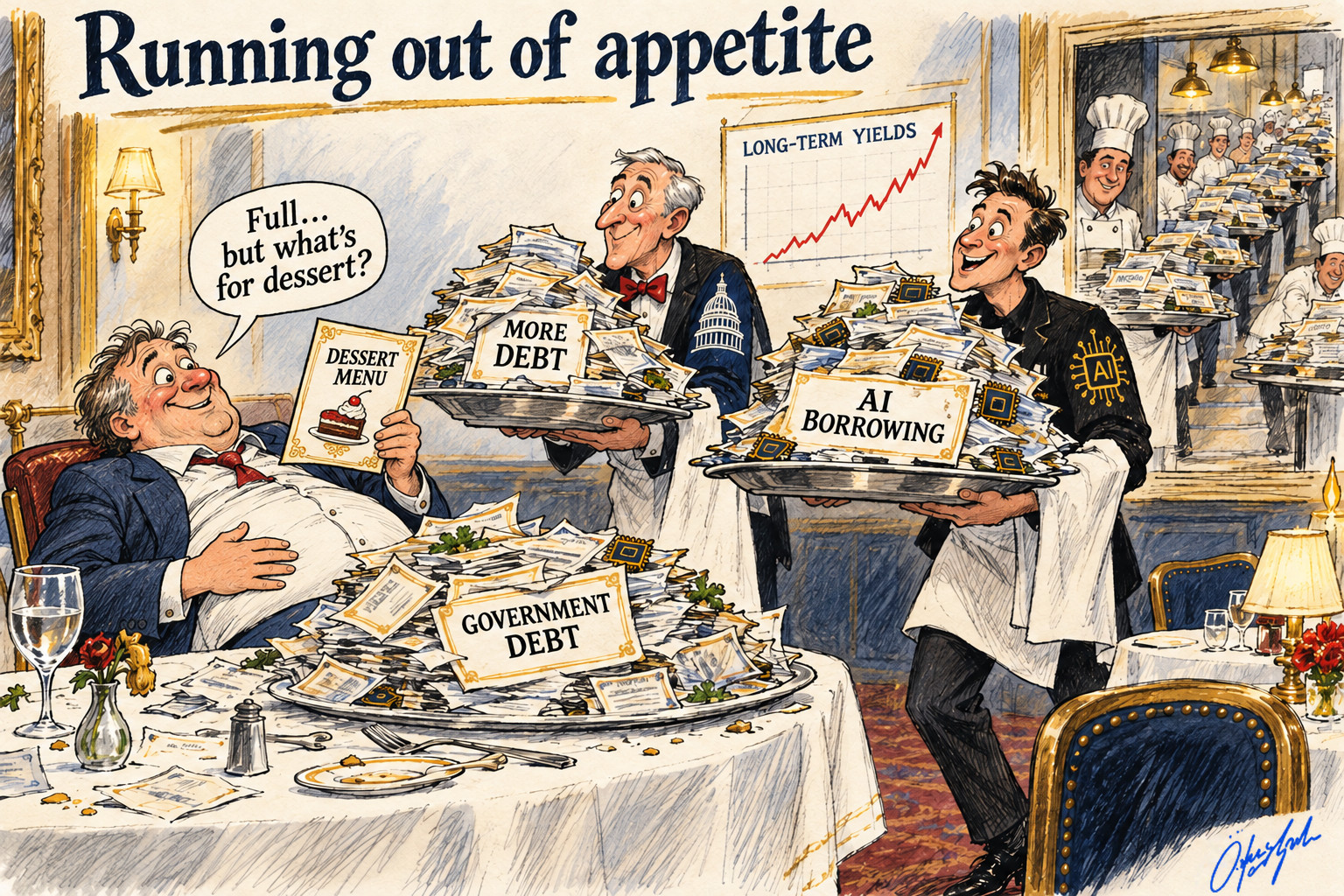
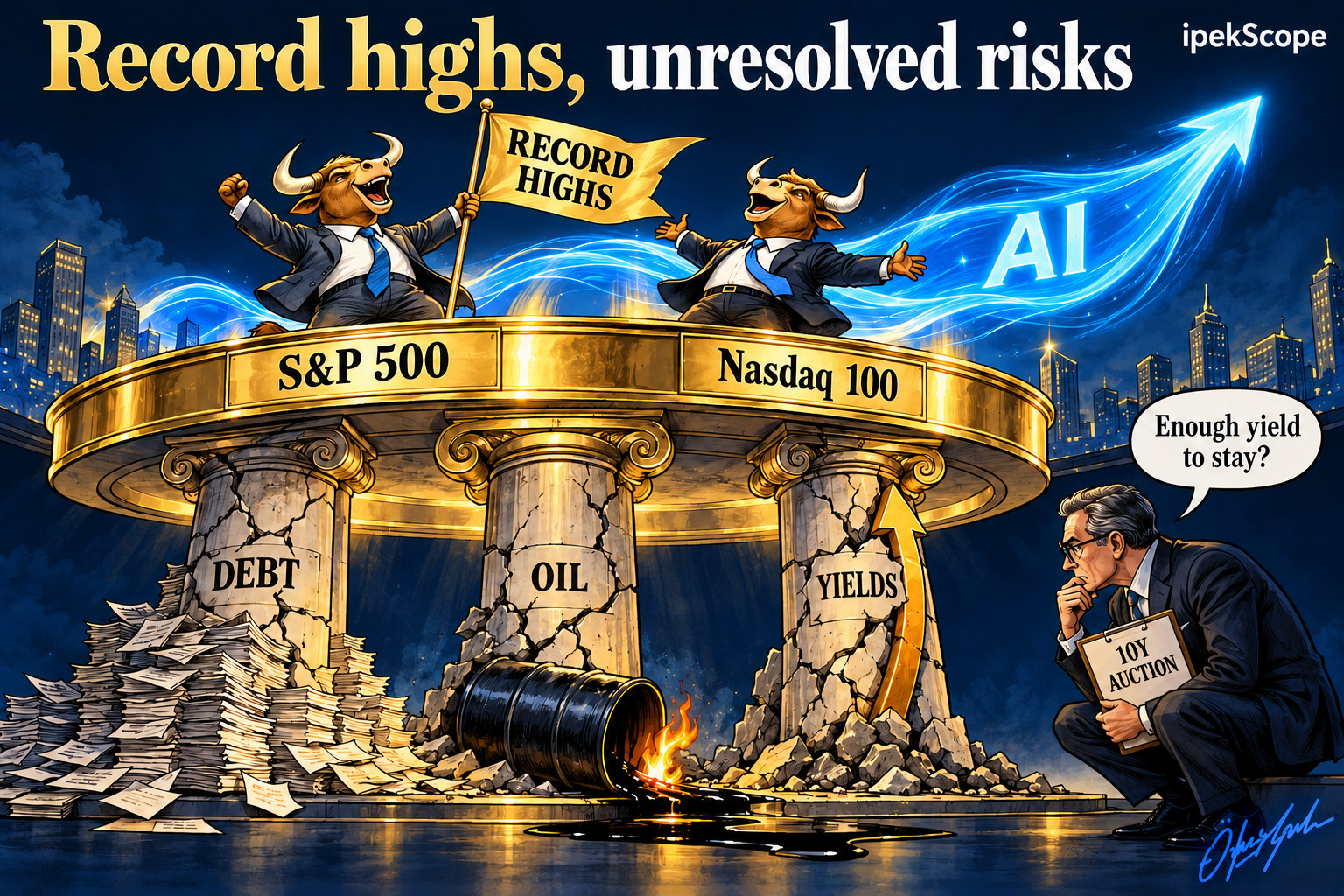
Overall, rising oil prices are fuelling global inflation expectations once again. Higher inflation expectations are pushing yields higher, and higher yields are weighing on equity appetite.
Tech down
As in the early days of the Iranian war, higher oil prices and higher yields appear to be hitting Korean equities harder than the rest of the market. But I'm not convinced geopolitics alone is responsible for the sharp selloff. The selloff may simply reflect a correction following the parabolic rally in the country's memory-chip makers. SK Hynix closed yesterday's session down 15% in Korea and is down another 3.63% at the time of recording, while the Kospi is testing both its 100-day moving average and a critical Fibonacci support level—the 38.2% retracement of the April 2025 to June 2026 rally. A break below that level would push the index into a medium-term bearish consolidation zone and would likely pave the way for a deeper correction until volatility subsides.
The tech selloff that started in Korea yesterday rippled through European and US markets—not helped by rising yields, of course. ASML retreated 1.8% in Europe, while VanEck's Semiconductor ETF tanked more than 4%, despite good news from TSMC. The company announced yesterday that its June sales rose 6% from the previous month and 68% from a year earlier, landing near the high end of its own guidance. Yet the numbers failed to spark much enthusiasm among investors. The stock gained around 1% yesterday but is down about 1% today. It seems that the strong earnings due later this week will have to be far better than official expectations to meet investors' whisper numbers. That gives you an idea of how this earnings season may struggle to lift investors' mood as inflation expectations rise once again.
US inflation may have eased but...
Speaking of inflation, the US will release its June CPI report today. Expectations are encouraging. Headline inflation is expected to have eased from 4.2% to 3.8% year-on-year, while core inflation is seen slipping from 2.9% to 2.8%.
The problem is that US crude fell 25% during June, while US gasoline prices dropped around 10% over the month, explaining the softer inflation numbers. Yet, today, gasoline prices are already back above June levels, meaning the next inflation report will heat up again.
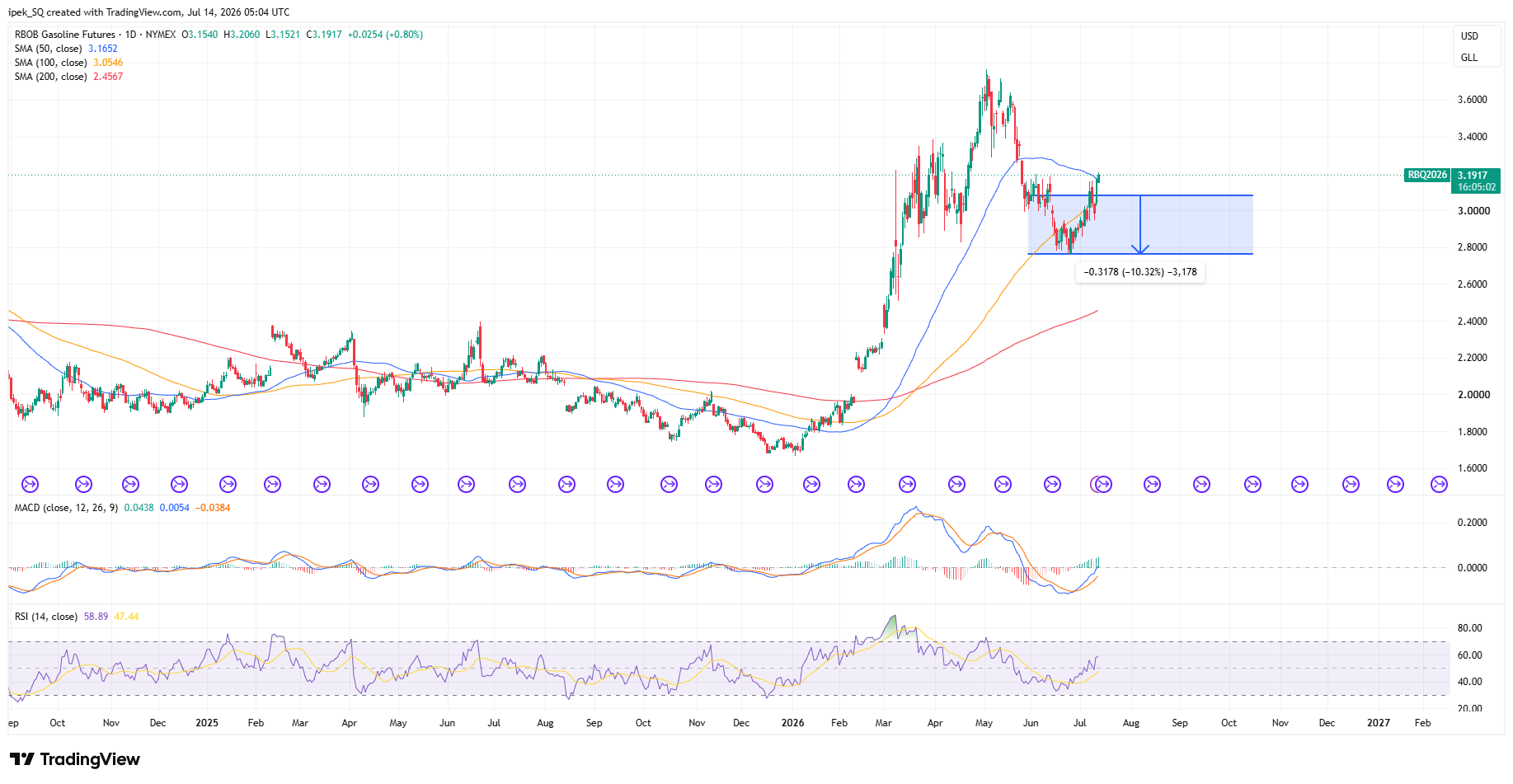
So today's CPI figures may matter less than the re-escalating geopolitical tensions and their impact on inflation expectations and bond yields.
Later today, the new Federal Reserve (Fed) Chair Kevin Warsh will testify before the US Congress and outline how he intends to conduct monetary policy.
At this point, you don't need a master's degree in economics to know that higher inflation calls for higher interest rates. That is exactly what Fed funds futures are pricing, with a 77% probability of at least one 25-basis-point rate hike at the September meeting.
The US dollar rose yesterday and is slightly lower this morning, but the short-term outlook remains tilted to the upside. If oil prices continue to climb, demand for US dollars should increase, as oil is priced in dollars. That, together with the hawkish shift in Fed expectations, should continue to support the greenback.
Higher energy prices are also fuelling inflation expectations elsewhere and could force other major central banks to tighten policy. But differences in economic growth suggest that the Fed has more room to act than, say, the European Central Bank (ECB)—with euro area growth having turned negative in the latest reading—or the Bank of England (BoE), which is dealing with its own political turmoil.
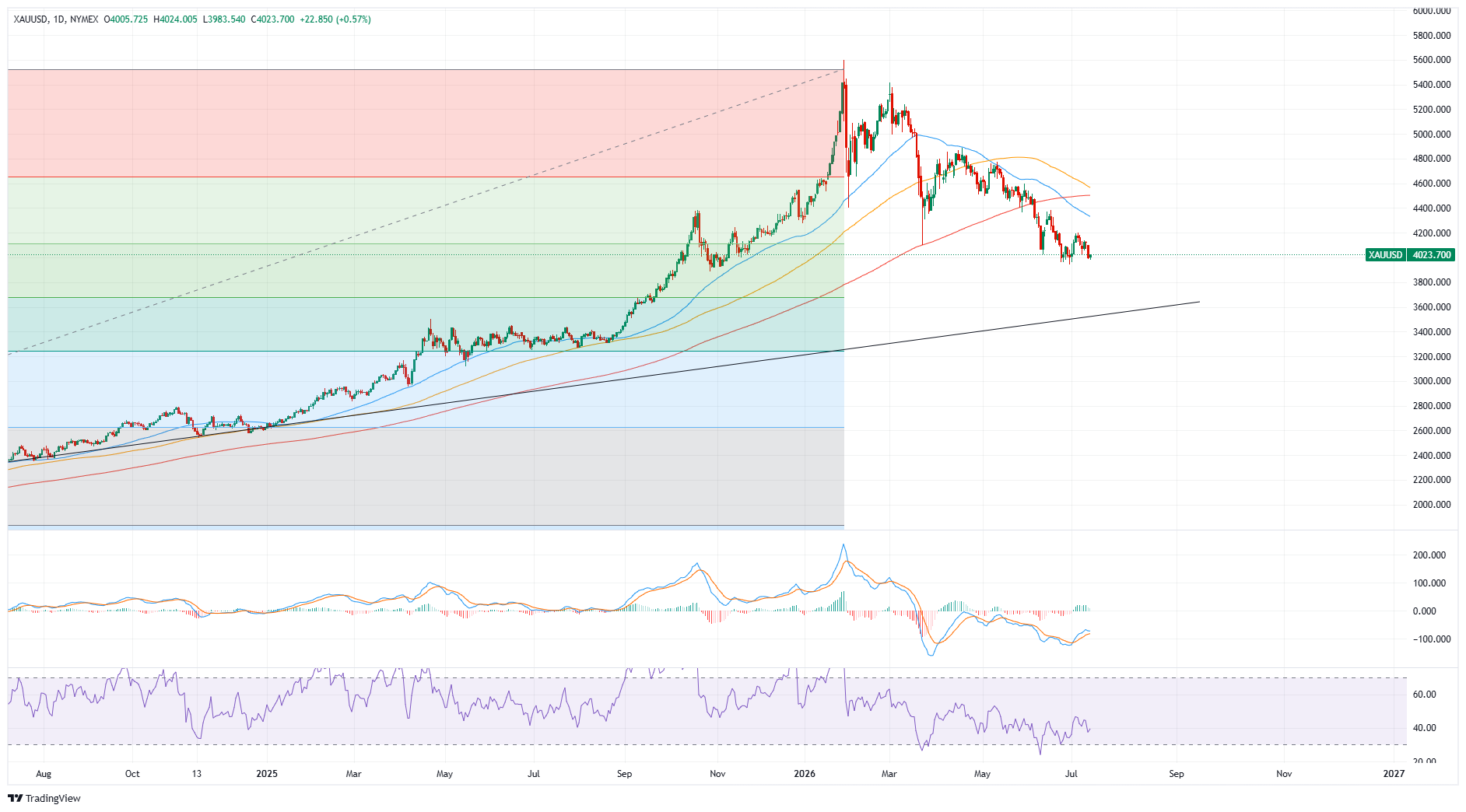
In precious metals, higher yields increase the opportunity cost of holding non-interest-bearing gold. The price of an ounce tested the $4’000 level yesterday, but that support held. Gold is trading around $20 above that level this morning, although there is little conviction that further stress across financial markets will drive significant flows into the precious metal. As we enter another period of rising energy prices, some central banks may once again be forced to sell part of their gold reserves to stabilise their currencies, preventing gold from fully behaving like a safe-haven asset—as was the case during the first four months of this war.
Over the longer run, however, the outlook for gold remains positive. Any pullback in price should be viewed as an opportunity for long-term investors to strengthen their bullish positions.
The content of this website is for informational purposes only and does not constitute financial advice. All opinions expressed are solely my own and should not be considered as recommendations to buy, sell or hold any financial instruments. Readers should consult a qualified financial advisor before making any investment decisions.
With love,
Ipek Ozkardeskaya