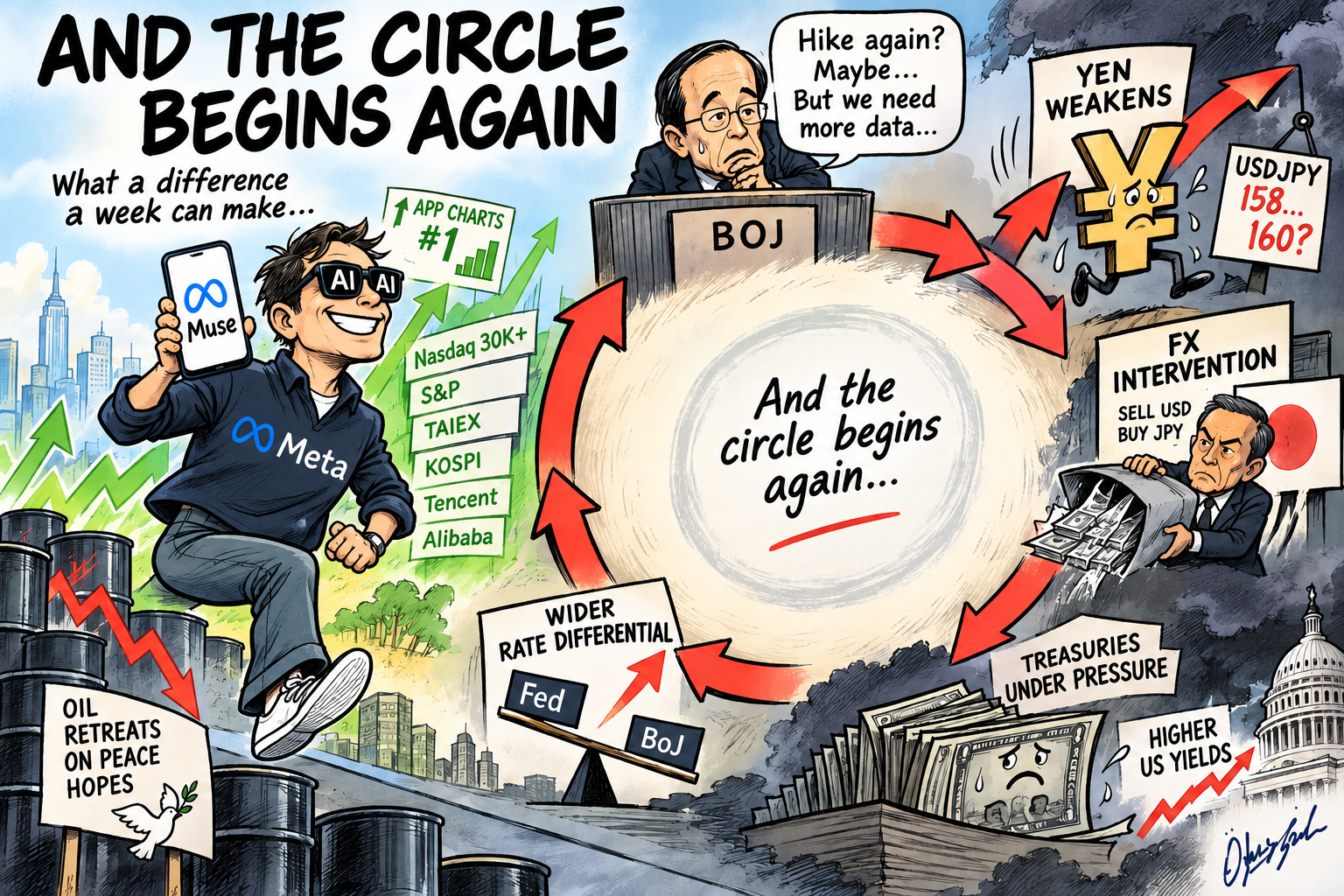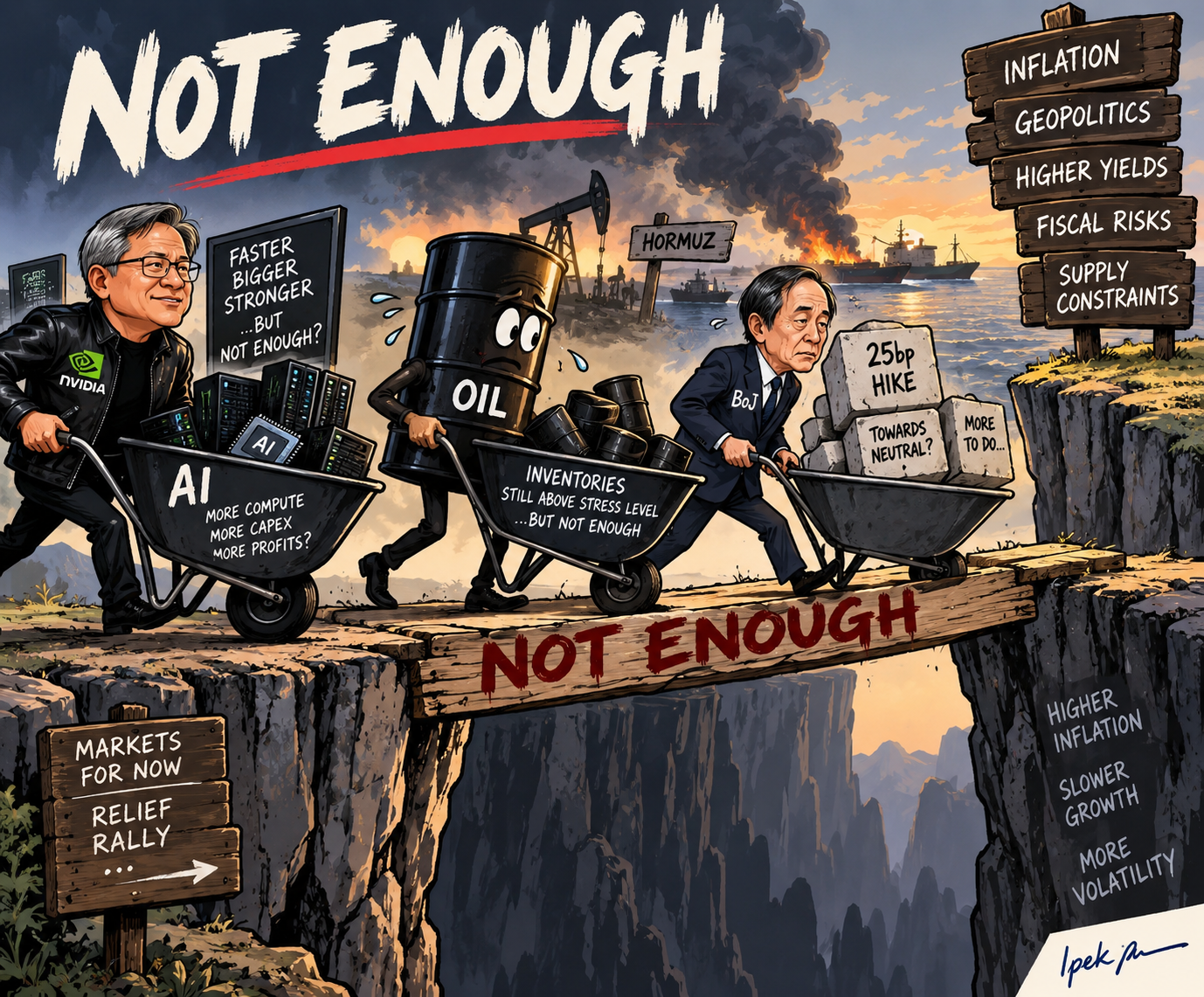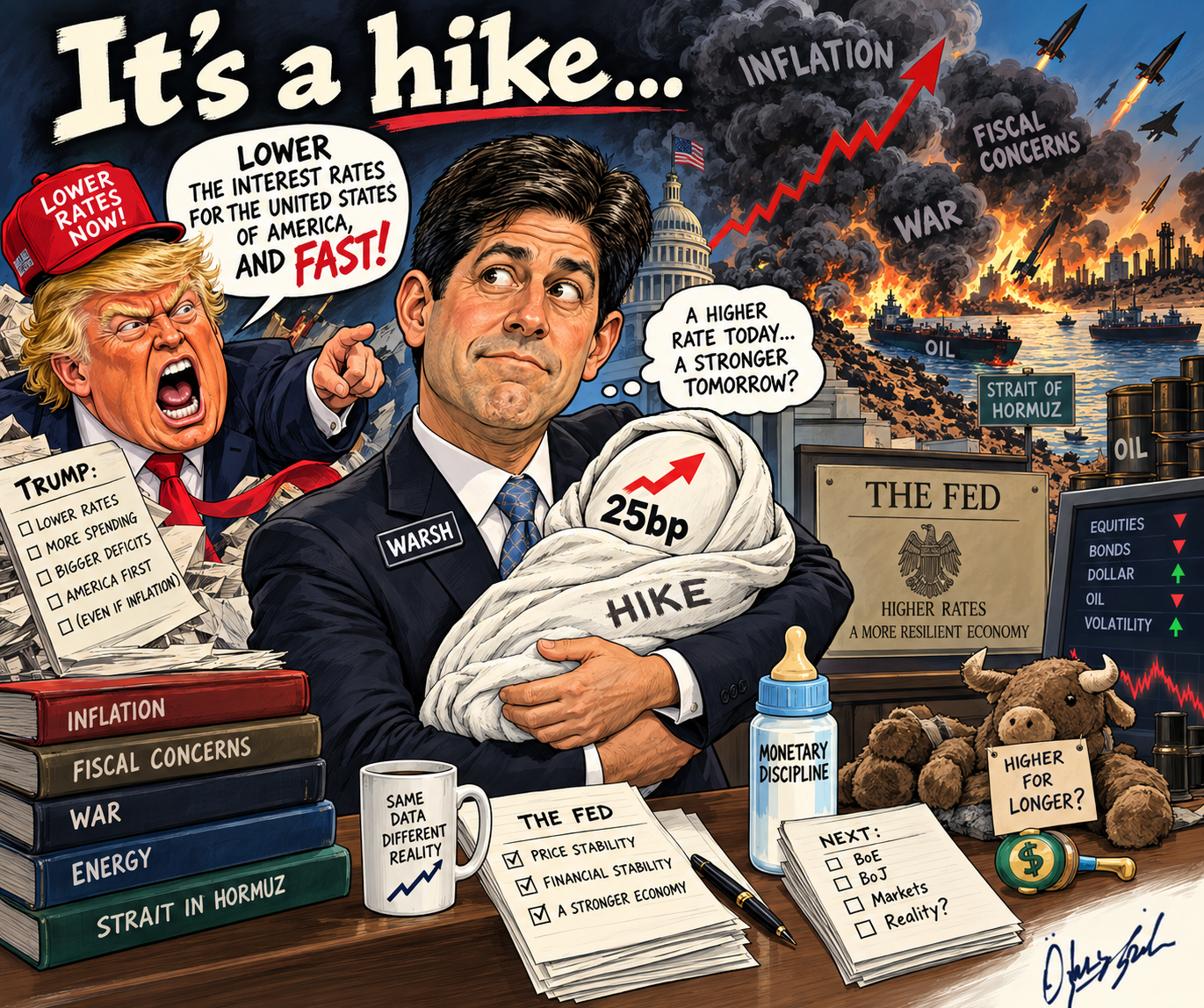

Further pullback in oil prices pulled global yields lower and gave support to equities, while the technology complex was also fuelled by Muse AI-led euphoria. The Nasdaq Composite hit a record high. Banks, insurers and travel agencies felt the pinch, however — scared that Muse AI (and the likes) would disrupt businesses that have so far benefited from consumer inertia (habits that keep consumers stuck with a service even when there are better deals out there!).
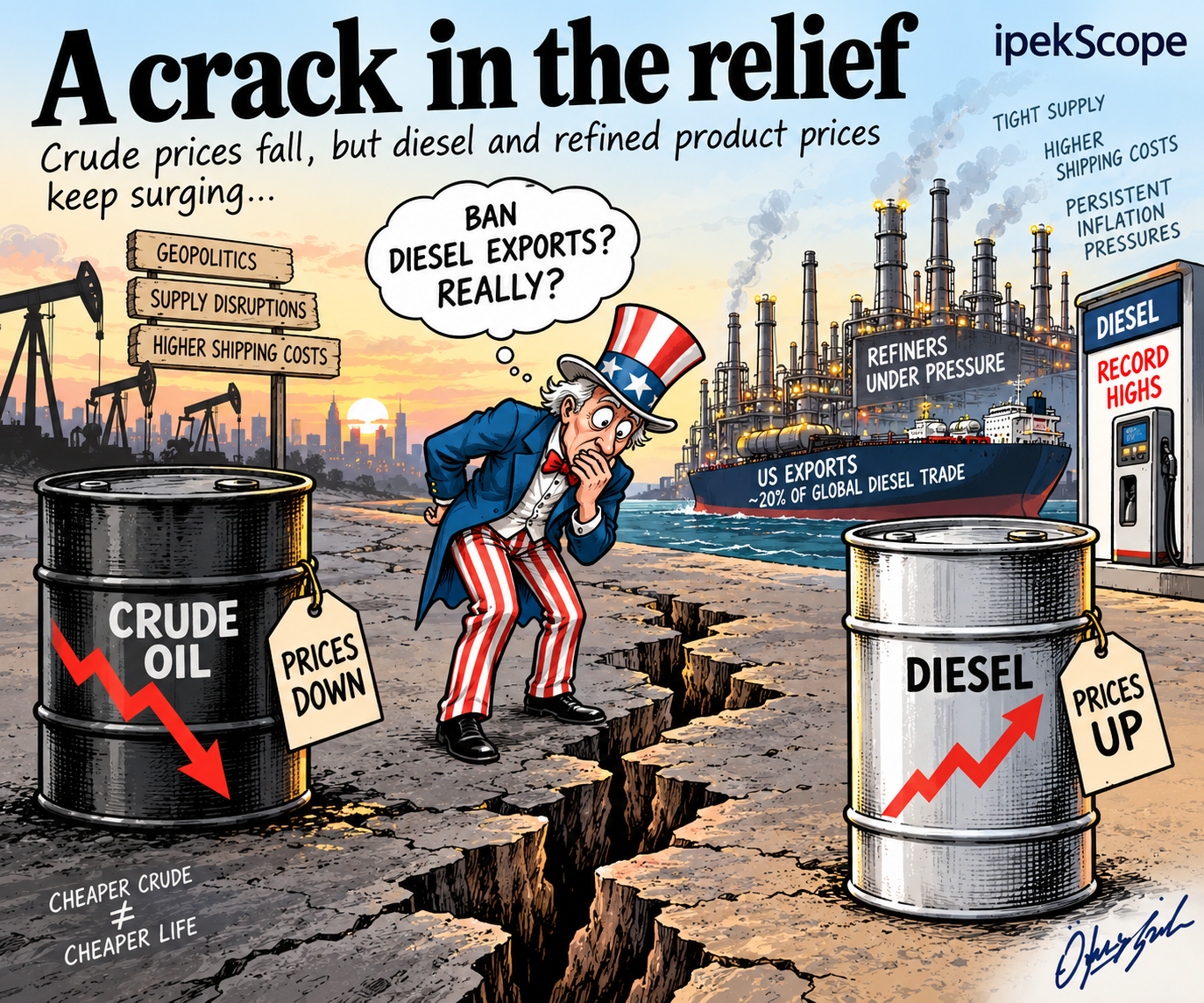
Interestingly, cheaper oil hasn’t translated into a cheaper US dollar so far this week, perhaps because refined product prices simply keep surging. Diesel prices, for example, hit a fresh record high despite the pullback in oil prices, warning that crack spreads — the difference between crude oil and refined product prices — will be harder to compress as long as supply is not restored.
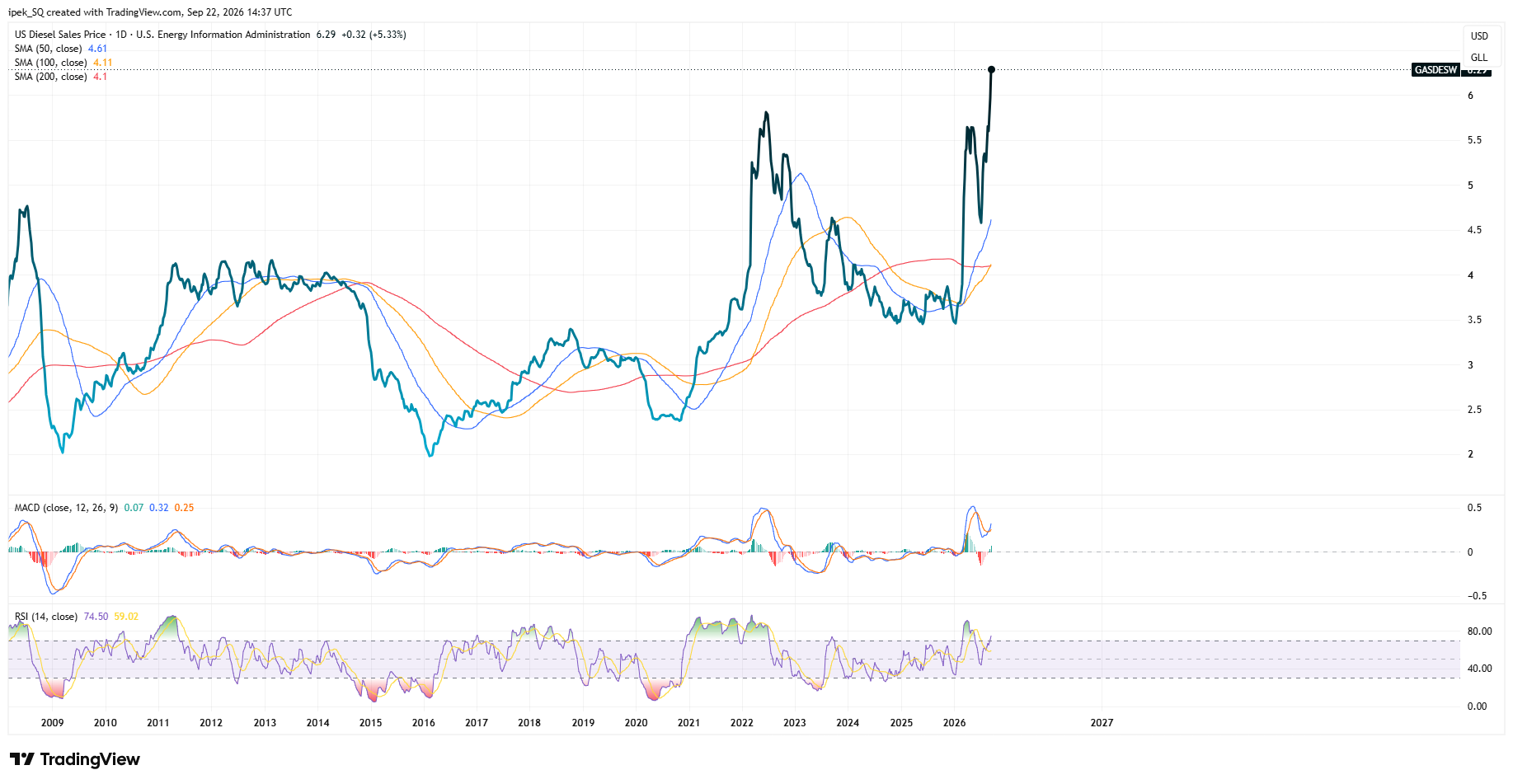
Note that soaring shipping costs are — and could continue to be — weighing on refinery demand for crude, too. The headline crude price doesn’t capture the full cost of getting a barrel to a refinery: freight costs have risen sharply, making the effective cost of crude significantly higher than benchmark prices suggest. That can also weaken refinery demand and weigh on crude prices even as cost pressures further down the supply chain remain intense, helping explain why refined product prices can keep surging while crude prices ease, and why inflation expectations won’t necessarily ease in tandem with spot crude/gas prices.
Oh, US President Donald Trump backed the idea of a ban on US diesel exports to ease prices — an announcement that leaves me open-mouthed, as it is not only coming from a country deeply involved in the Middle East conflict, hence partly the energy crisis, but also because it won’t work!
The US currently supplies roughly 20% of globally traded seaborne diesel, making it the world’s largest single source of diesel exports. If it restricts exports, global diesel prices could simply spike. And because US refiners would lose part of their export market, they could simply produce less — eventually tightening the supply of other fuels at home. The chickens would come home to roost. Terrible idea.
US dollar gains field
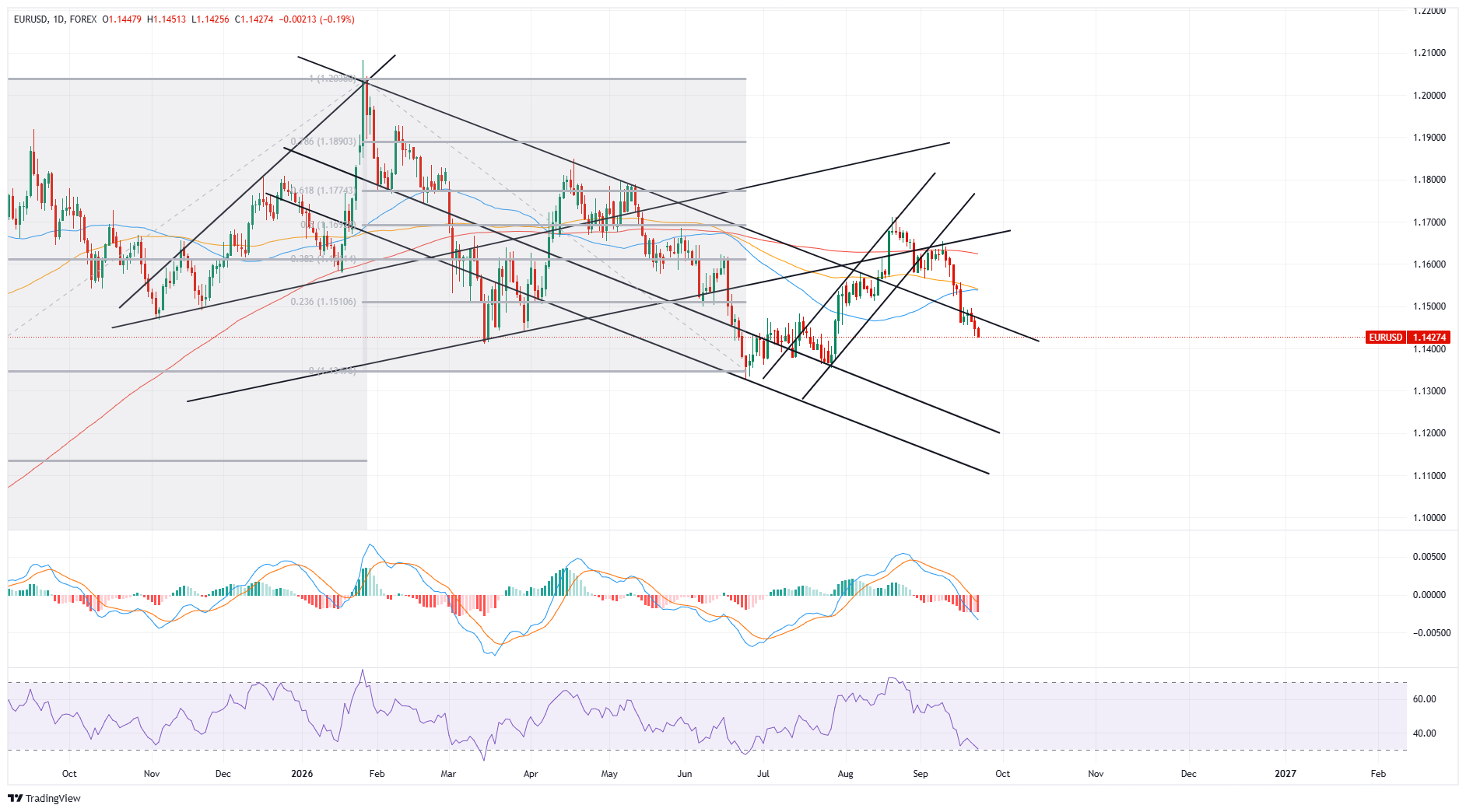
So in this context, the US dollar remains well bid. The EURUSD slipped below the 1.1450 level — which was acting as support last week — and the pair retreated to its lowest levels in five weeks. European gas futures fell another 3% yesterday before recovering on Middle East peace hopes. But here too, the decline in the benchmark price may overstate the relief for European energy buyers, as elevated LNG shipping, insurance and rerouting costs mean that the effective cost of getting gas into Europe remains higher than TTF alone suggests. Later today, the euro area PMI numbers could confirm a challenging first half of September, which could further soften the ECB hawks’ stance, paving the way for further euro softness against a broadly firm US dollar.
Swiss to hold
Nestled in the middle of the euro area, small Switzerland is also preparing to welcome the SNB’s latest policy decision this Thursday. Swiss policymakers will likely keep rates unchanged at 0%, as inflation in Switzerland has picked up momentum due to higher energy prices, accompanied by a cheaper Swiss franc. Yet price pressures remain well within the SNB’s price-stability range, giving policymakers time to adapt. Some expect the SNB to start sounding more hawkish at this meeting, reflecting the hawkish shift in the policy outlook of major central banks and preparing the market for an eventual rate hike next year. And given the geopolitical and macroeconomic backdrop, the balance of risks is increasingly tilted towards the next SNB move being a rate hike rather than a cut.
But the SNB is dancing to a fine tune nowadays. Sound too hawkish, and the franc strengthens — note that the Swiss don’t want that. Don’t sound hawkish enough, and the franc softens, potentially sending inflation up in the elevator. In short, the SNB will have to strike a very fine balance.
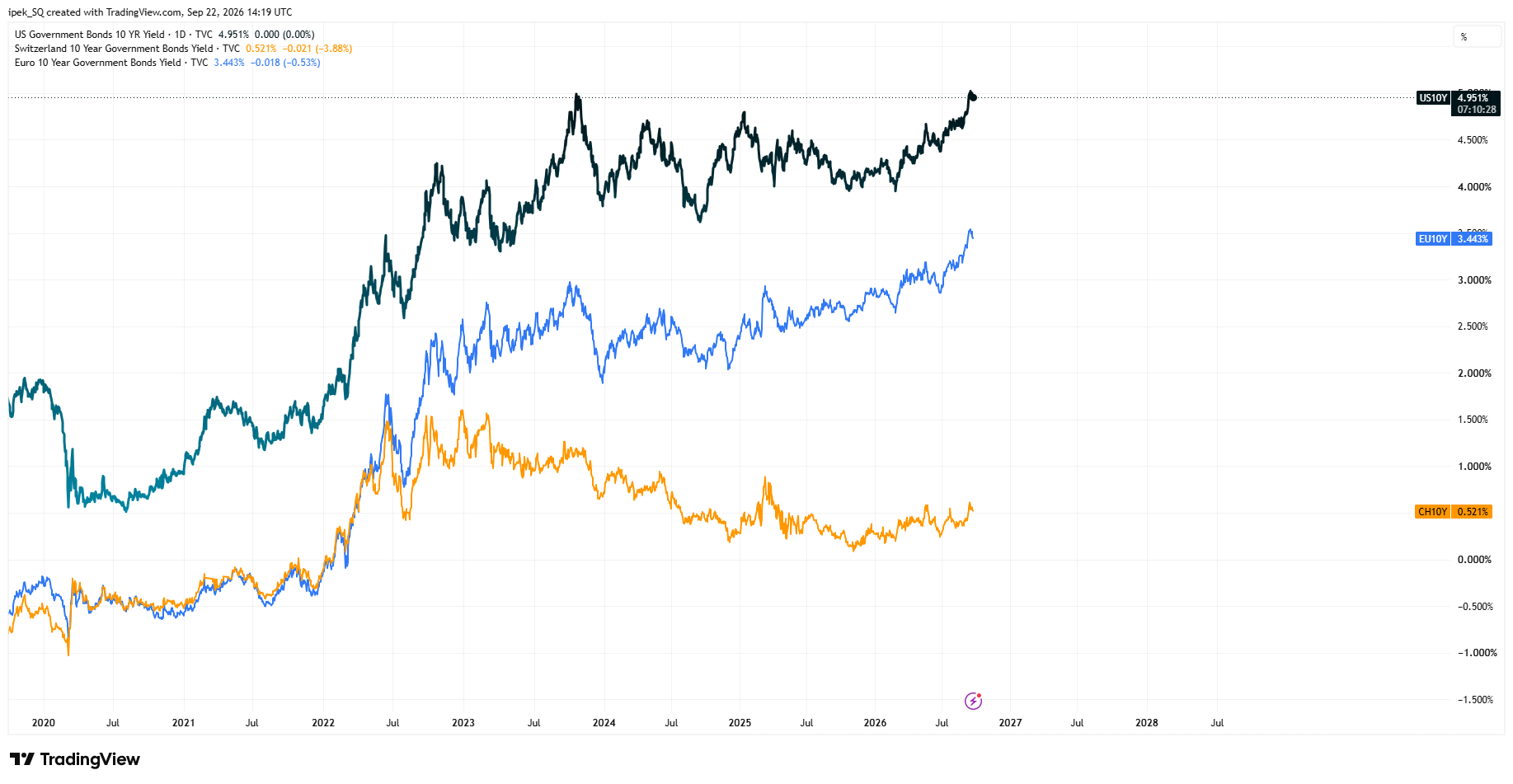
One important thing to note is that Swiss yields have been quite immune to the notable rise in global developed-market yields. Switzerland has stricter budget discipline than much of the developed world — and lower inflation — helping keep government yields lower. The widening rate differential is one reason why we have seen the franc soften against the US dollar and the euro. This trend could continue if the SNB delivers a balanced message this week. It’s in no one’s interest to rock the boat at this stage.
Gold, Bitcoin correlation breaks
Speaking of trends, everybody is talking about the curiously high correlation between gold and Bitcoin over the past 90 days. Indeed, gold and Bitcoin prices have moved very closely to each other since the beginning of July. To me, this was simply the outcome of the ‘debasement trade’ — where lower appetite for the US dollar and rising inflation expectations gave support to both assets’ prices. This week, however, we see that positive correlation weaken and even reverse: gold remains under pressure whereas Bitcoin is strongly bid in tandem with technology stocks. The latter divergence suggests that the weight of the dominant macroeconomic drivers could be weakening. Oil prices and central bank decisions have been major drivers of prices across many asset classes. As the most intense phase of the global rate-hiking cycle fades, we could see fresh trends emerge as markets refocus on asset-specific fundamentals.
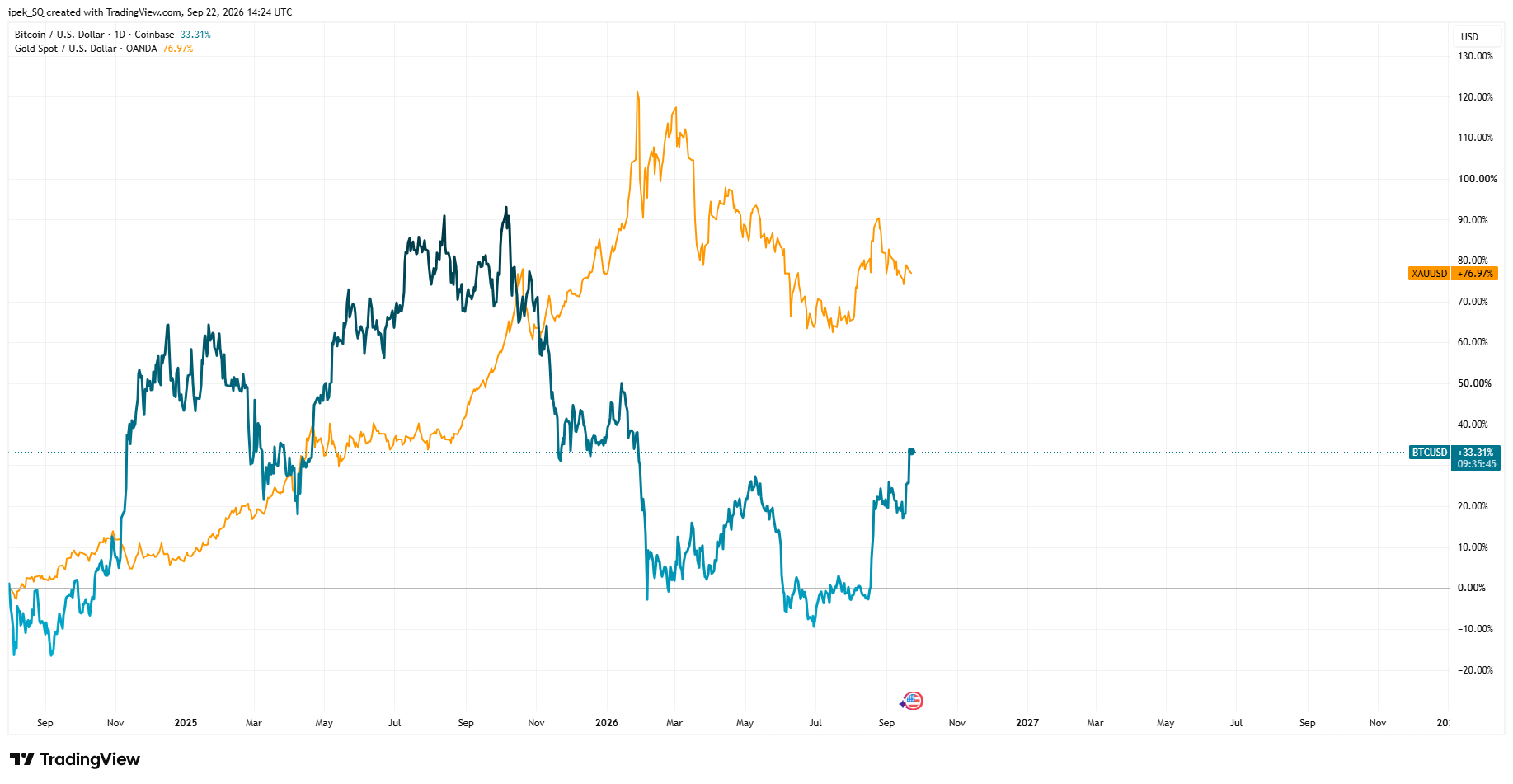
For Bitcoin, the latest price rebound brings up the question of whether we’re nearing the end of the ‘crypto winter’. From a technical perspective, Bitcoin’s price cleared an important Fibonacci resistance on Monday — the major 38.2% Fibonacci retracement of the October 2025 to July 2026 selloff ($83’800) — suggesting that the price has now stepped into the medium-term bullish consolidation zone, supporting further recovery. From a macroeconomic perspective, improved risk appetite and elevated inflation expectations could continue to support the digital coin.
Yet Bitcoin is still searching for its identity: it is not gold, and it is not yet the go-to asset of global central banks and broader investors. On the contrary, Bitcoin stands on the opposite side of the risk spectrum in a portfolio: it is an additional risk added to a balanced portfolio, rather than a replacement for gold. Make sure you add the coin to the right pocket!
The content of this website is for informational purposes only and does not constitute financial advice. All opinions expressed are solely my own and should not be considered as recommendations to buy, sell or hold any financial instruments. Readers should consult a qualified financial advisor before making any investment decisions.
With love,
Ipek Ozkardeskaya